A flip box lives or dies on one detail: whether the lid stays down. Everything else — the paper, the print, the
bow — is judged after that.
These five mistakes come up often enough that we now raise them at quotation stage rather than after a sample has
been cut.
Mistake 1: Judging the Closure by the Ribbon
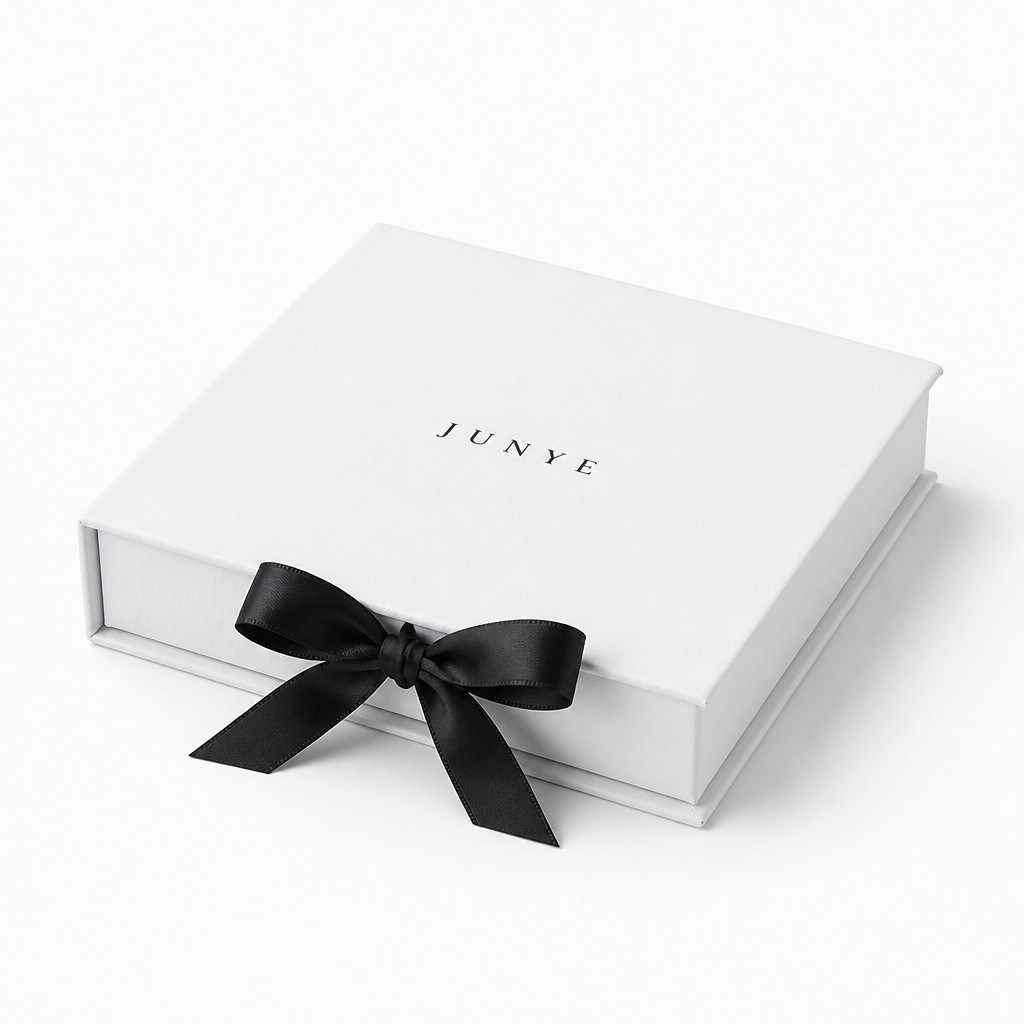
The ribbons are the most visible part of the box, so they get treated as the closure. They are not.
On a magnetic box the lid is drawn shut by magnets sitting in the front edge, and the ribbons are anchored separately
on the lid and the base so they can be tied into a bow. Untie it, cut it, or leave it in the box — the lid still
sits flat and stays shut.
Why it matters commercially
If the closure really depends on the ribbon, the box arrives open in a bag, the shop tightens the bow before every
display, and the customer has to retie it to close the box. A magnet removes that whole routine, and the bow goes back
to being a decorative detail.
How to check it
Open the sample, drop the lid from a few centimetres above the base and let it go. It should pull itself down and
stay down with the ribbons hanging loose.
Mistake 2: Treating the Magnet as the Fragile Part
The assumption is that a magnet makes a paper box weaker, or that it will fail in transit. In practice the magnet is
the most repeatable part of the build; the failure points in a flip box are the crease and the glued edges.
What actually decides how well the closure works is where the magnet sits and how much paper sits over it.
Hidden, not visible
Magnets are set behind the wrapped surface, so a closed box shows nothing but paper. There is no metal plate to
catch on a bag lining and nothing to scratch a neighbouring box in a display.
What we open on a sample
On the sample you can test the pull by hand as many times as you like. A closure built this way is meant to survive
years of opening at a counter, not one presentation.
Mistake 3: Looking for Hardware Hinges on a Paper Box
Buyers sometimes expect a metal hinge, because that is what a jewellery case made of wood or plastic would use. A
rigid paper box has none, and it does not need one.
The lid and the base are cut from a single piece of board and joined along one edge by a crease. That crease is the
hinge: it holds the two halves aligned for the life of the box and cannot come loose, because there is nothing to
loosen.
If the lid has to come off completely
Then a flip box is the wrong build. Two-piece boxes are the answer there — the lid lifts away, which is the
right choice for a shallow presentation set. Our lid and base box and the two-way drawer box box cover those two motions.
Mistake 4: Choosing the Tray Before the Lid Shuts
The tray is bought after the box, almost always. That order is what produces the commonest fit problem on a flip
box: a piece that sits proud of the tray and presses against the underside of the lid.
The magnet has to pull the lid down against whatever is inside. If the jewellery presses back, the lid does not sit
flush, the edges no longer line up, and the closure starts to look weak even though the magnet is fine.
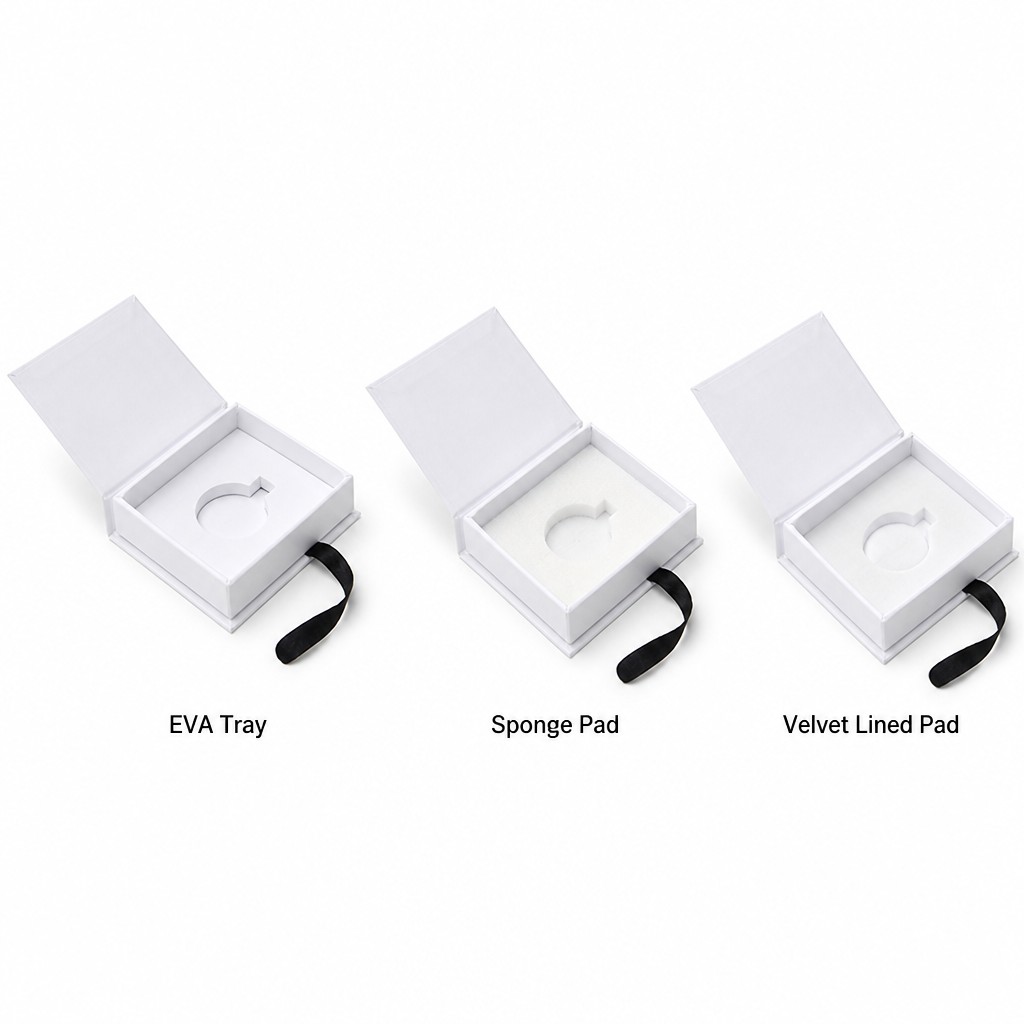
Three trays, one base
An EVA tray, a sponge pad and a velvet lined pad all fit the same box, so the tray can change between SKUs without
touching the artwork or the ribbon. What cannot change is how high the piece sits.
The sitting height rule
Whatever the material, the piece should finish below the rim of the base, with a few millimetres left over. That is
the number to fix before a tray die is made, not after.
Mistake 5: Signing Off the Sample With an Empty Tray
An empty sample tests the paper and the print. It does not test the closure, because a magnet closing on nothing is
the easiest case there is.
Put the real piece in the tray, close the lid, and then do what a courier will do: shake it gently, turn it over, and
put it in a bag. If the lid stays shut and the piece does not move, the sample is doing its job.
Weight is the variable
A ring and a heavy bracelet load the tray differently, and a chain packed loosely can shift as the box is tilted.
Worth testing the heaviest piece in the range, not the lightest, especially on a ring box or a
necklace box line where the tray footprint stays the same while the weight changes.
How We Check a Magnetic Flip Box Before It Ships
| Closure | Lid closes under magnet pull alone, with ribbons loose |
| Alignment | Three edges meet evenly when shut |
| Crease | Opens and closes freely without cracking the wrap |
| Tray | Cut matches the drawing; the piece finishes below the rim |
| Finish | Mark position and finish match the approved sample |
Checks run after assembly rather than during it, and the specification is filed so a repeat order is built the same
way as the first.
What to Send With an Enquiry
Three things are enough to start, and none of them needs to be technical.
| 1. The piece | The item itself, or its measurements with a rough sketch |
| 2. How it should open | Flipped open on a hinge, lifted away, or drawn out of a sleeve |
| 3. How it will be used | Shop display, mailed to a customer, or both |
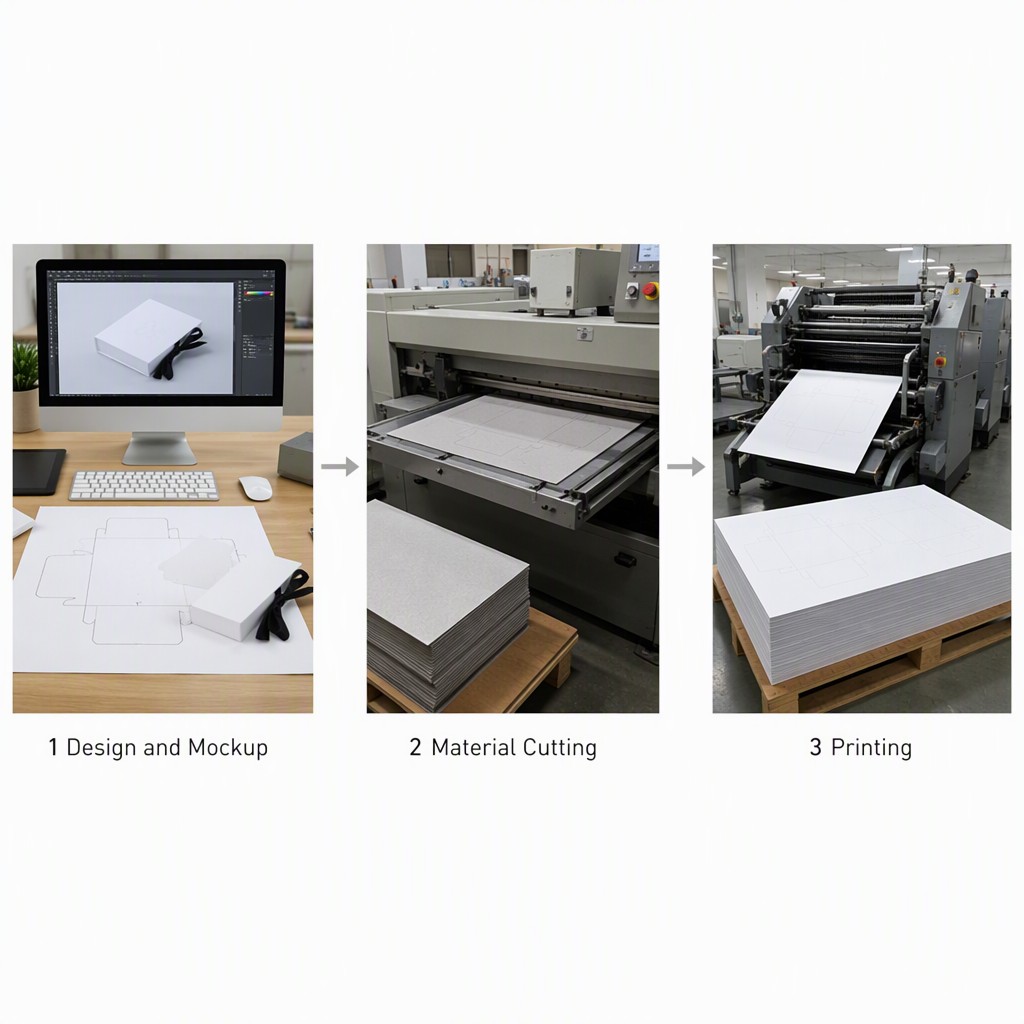
From there you get a cutting drawing, a tray layout and a physical trial of the
flip top box to approve — request one through the free sample
page if you want to test the closure in your own hand.
Questions Buyers Ask About Magnetic Flip Boxes
Does it stay shut without the ribbon?
Yes. The magnet in the front edge holds the lid; the ribbon is decoration.
Is the magnet visible when the box is closed?
No. It sits behind the wrapped surface, so a closed box is all paper.
Can the tray be changed later?
Yes, as long as the footprint and the sitting height stay the same. Each new outline needs its own die.
What is the smallest order?
300 pcs, the same as the box. Sampling takes 5-7 days.
More structure questions are collected on our FAQ page.