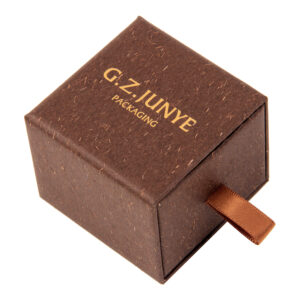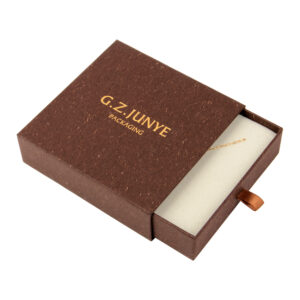
On a drawer box, most of the problems that come back after delivery start at the insert, not at the print. The sleeve
and the tray are settled quickly; the insert is where assumptions survive longest.
Five mistakes come up again and again. Each one is cheap to avoid before a sample is cut, and expensive to fix after
the bulk run.
Mistake 1: Treating the Insert as an Afterthought
Buyers choose the box and colour first, then add an insert at the end. In production it is the other way round: the
insert decides what the box can hold, and the tray shell follows from that.
Why the cut slot, not the tray, sets the limit
Because the outline is what governs fit, a single tray can present a ring set for one order and a pendant for the next. Nothing but the cut shape moves.
One shell across a range
Nothing about the sleeve, the lining or the foil has to change between models, so a bracelet line and a necklace line can share one construction and differ only in the insert. A collection stays visually consistent and the tooling bill stays low.
Mistake 2: Assuming a Deeper Box Holds More
Depth rarely adds capacity. It adds foam around the same piece, and it changes the way the box reads on a shelf.
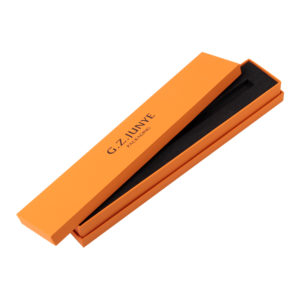
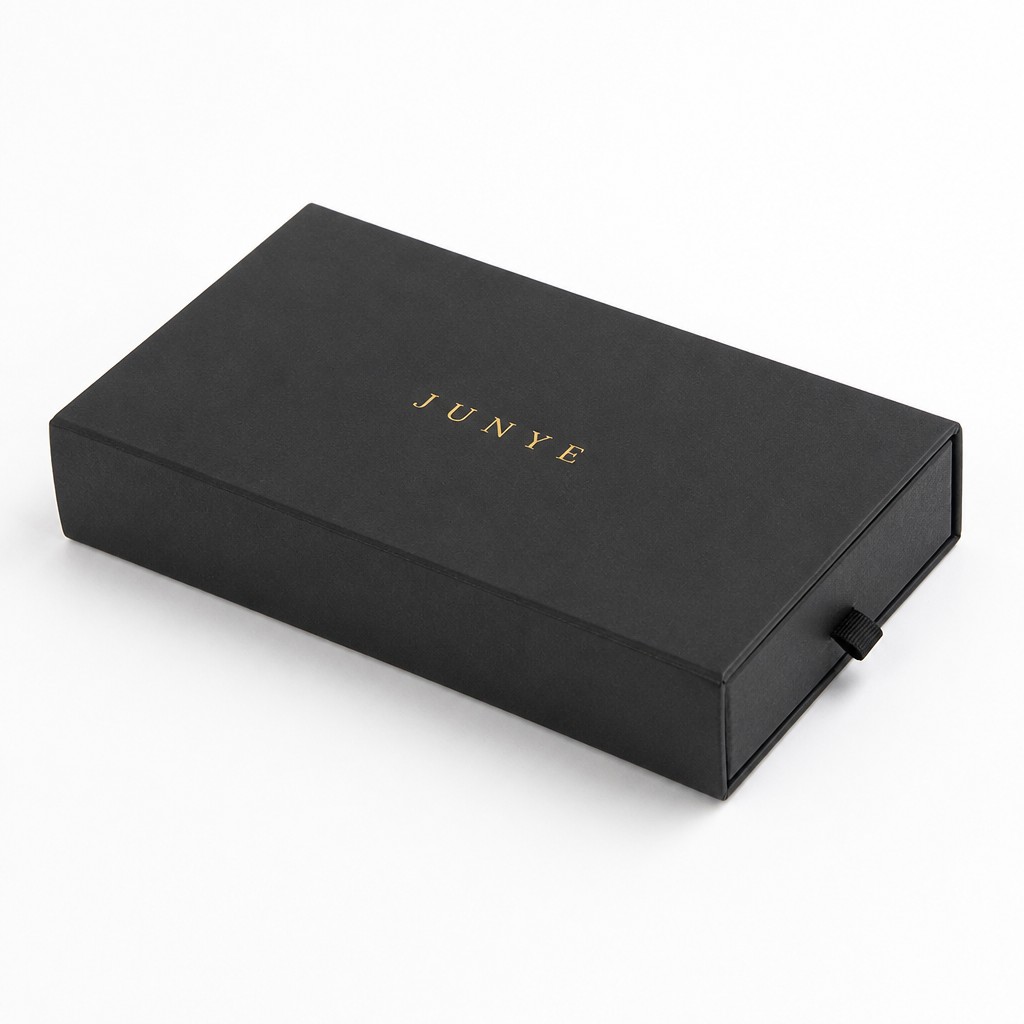
At 2.5 cm the tray keeps the piece in a single plane, so nothing is hidden under a second layer. On a counter the box
takes almost no vertical space, and in a photograph the piece stays in the same focal plane as the box edge.
Depth earns its place only for pieces that are tall in themselves, such as a wide bangle or a watch. Even then the practical fix is to deepen the slot inside a taller tray, not to add empty volume to the box.
Mistake 3: Picking an Insert Before You Know How the Box Opens
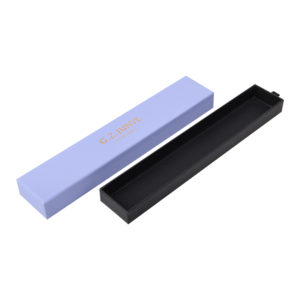
The insert has to survive the way the tray travels. A single-end drawer box slides open along the long edge, and a
piece sitting proud of the tray rim will rub the sleeve every time it is opened or closed.
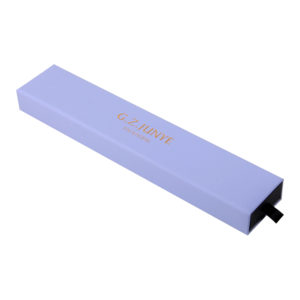
The pull direction and the insert therefore get settled as one decision. A slim woven ribbon on the front face also fixes how much of the tray comes into view — around six to seven centimetres — which is the reach a hand has.
If you need the box to open from both ends, that is a different sleeve; it should be settled before an insert drawing
is made, not after.
Mistake 4: Forgetting the Pouch Is a Second Product
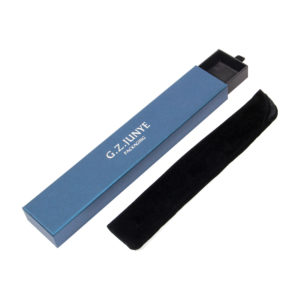
A velvet drawstring pouch is often specified as “the default insert” and then treated as packing material. It is not:
it lifts out of the tray, and it can be handed to the customer as the bag the piece travels home in.
Two things follow from that. The pouch needs a branding decision of its own — printed, plain, or colour matched to the paper. And it should be specified as an orderable item, because a buyer who likes it will come back for the pouch alone, without the box.
A velvet drawstring pouch ordered on its own is a normal item for us, so the same pouch can serve as box insert and gift bag.
Mistake 5: Judging the Sample on the Print Alone
A sample goes through artwork, die cutting, wrapping and assembly. Buyers often open it, check the logo and sign it
off. On a drawer box that leaves three things unchecked: slide, flushness and insert fit.
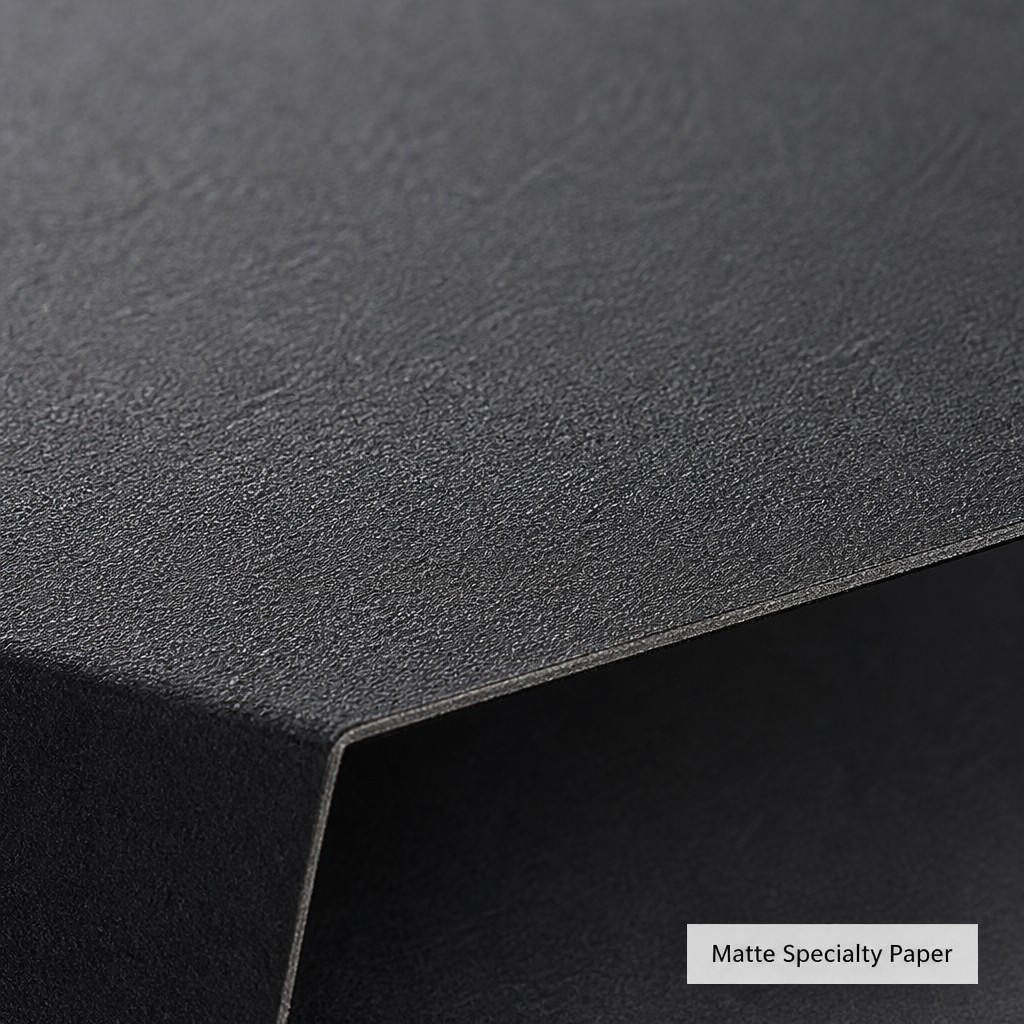
Matte laminated paper also behaves differently from a proof on screen — a gold foil mark on matte black reads
brighter or flatter depending on the angle, and that is only visible on the physical sample.
What We Need Before an Insert Is Cut
| 1. Outline | A tracing, a photo on graph paper, or the physical piece |
| 2. Depth | How far the piece sits below the tray rim |
| 3. Clearance | Clasps, curves or charms that could catch on the sleeve edge |
| 4. Range | The other pieces that should share the same shell |
Give us these four and the cutting drawing can be made in one pass. For a bracelet box or a necklace box line, one shell is simply re-cut to a different outline.
Questions We Get About Drawer Box Inserts
Does the pouch count as the insert?
Yes. It is the standard insert on this box and it also works as a stand-alone gift bag.
Can we mix inserts in one order?
Yes, provided the tray itself stays the same. Each different outline needs its own die and one trial round.
What is the smallest order?
Minimum order matches the box at 300 pcs, and a trial piece takes 5-7 days.
Will the piece move in transit?
Not if the slot depth and the foam density match the weight of the piece. It is verified on the trial piece.
Ordering a Flat Drawer Box With the Right Insert
Give us the piece and the range to be covered, and you see the cutting drawing before the first box is made. Structure questions sit on our FAQ page, and a trial piece can be started from the free sample page.