The Insert Is the Part Buyers Decide Last
Most drawer box orders are placed on the outside: colour, size, logo, ribbon. The insert is left open, and it is the part that decides whether the piece arrives centred or arrives loose.
There are three practical ways to hold a piece inside a shallow tray, and they are not interchangeable. One centres anything; one grips a specific outline; one is chosen because of what the packaging must not contain.
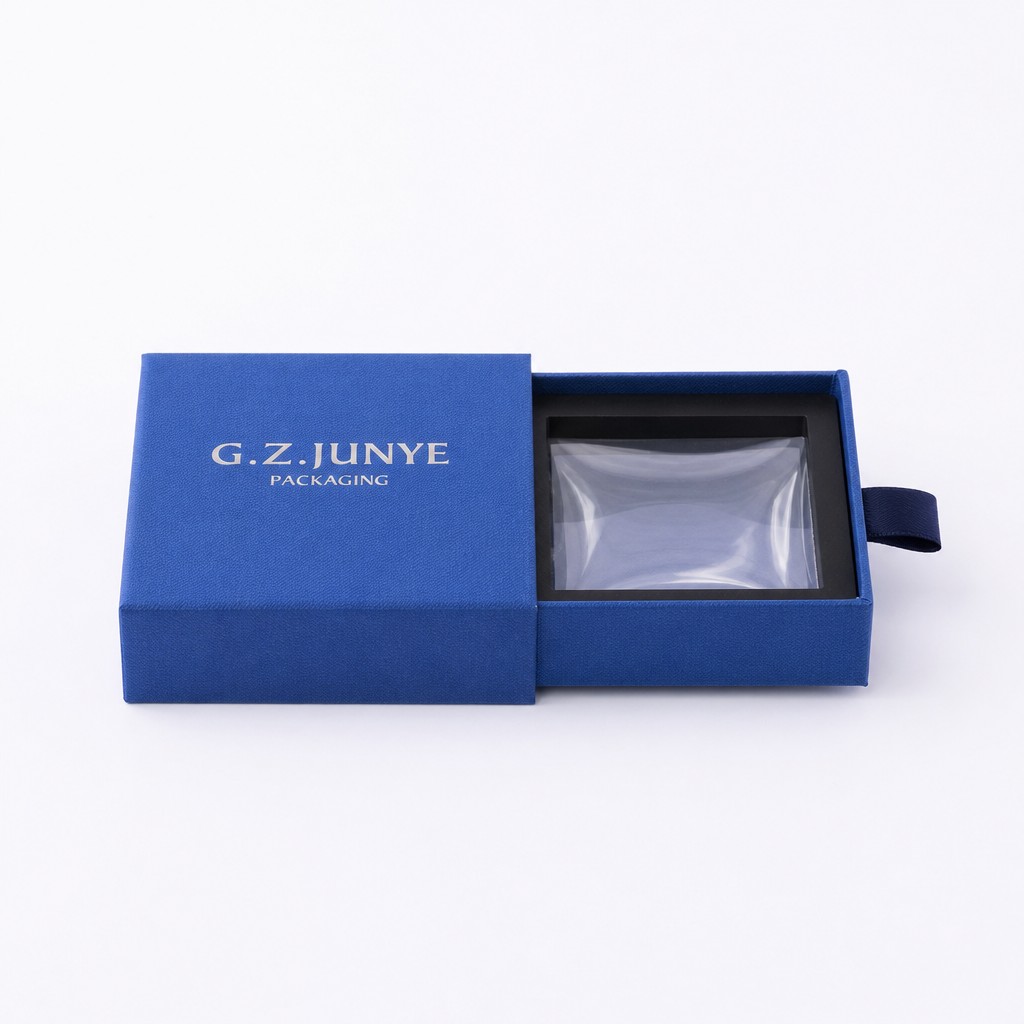
| Black blister frame | Centres a piece of almost any shape |
| EVA slot | Grips one outline precisely |
| Moulded paper tray | Sits between the two, without plastic |
What the Black Blister Frame Actually Does
A blister frame is a shaped holder that sits inside the tray with a clear bag over the top. The frame sets where the piece sits; the bag keeps dust off it and stops it lifting.
Its advantage is indifference to shape. A brooch, a pendant or a single earring can all be held in a tray that is otherwise empty, because the frame is formed to the item rather than the item fitted to the frame. For a line that changes pieces often, that flexibility is the reason the frame is the default.
Plastic Free: EVA Versus a Moulded Paper Tray
Where a market asks for packaging without plastic, the box does not have to be redesigned. The sleeve, the tray, the ribbon and the print stay as they are; only the layer inside the tray changes.
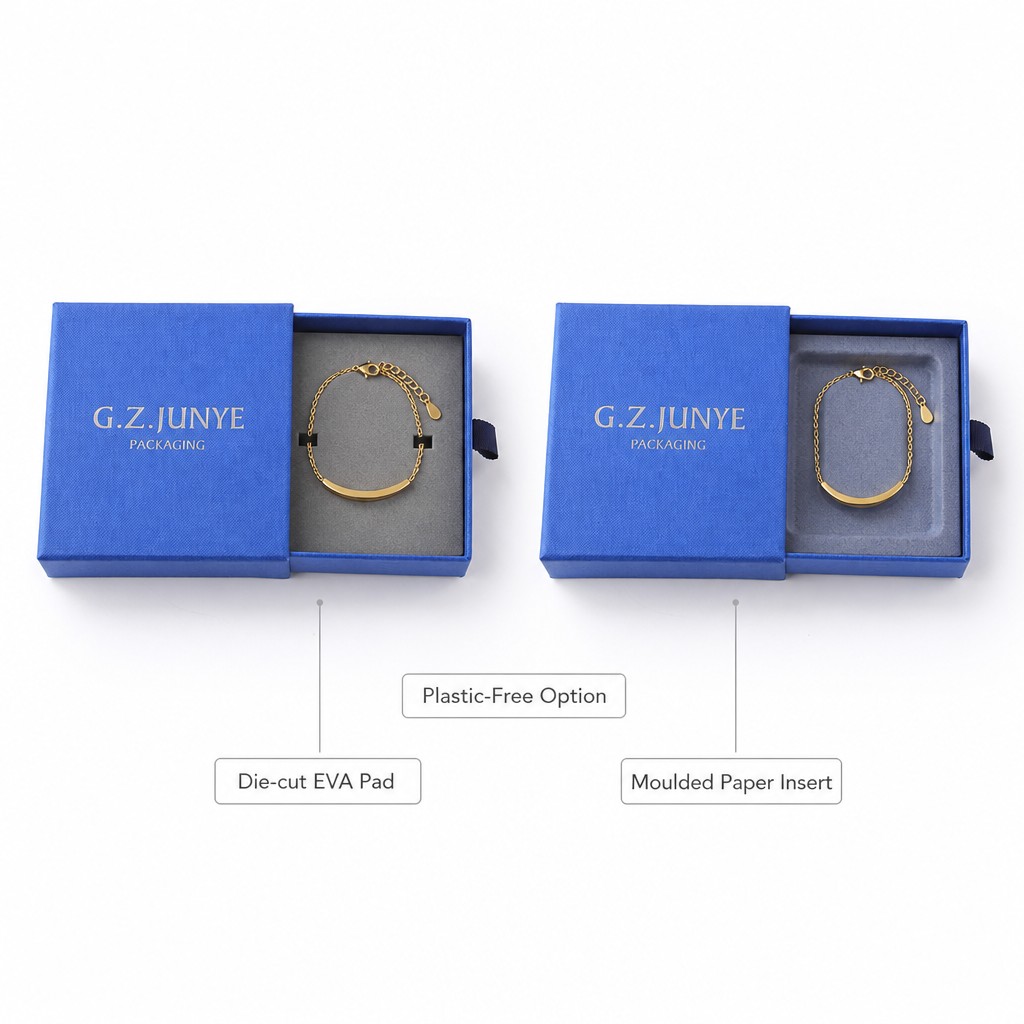
| EVA foam | Firm, precise grip; cut to the outline of the piece |
| Moulded paper tray | Paper based, holds a formed shape, no plastic |
| Velvet covered pad | Softest contact surface where the piece touches |
The trade-off is tooling: a blister is formed to a shape, while a slot has to be drawn and cut for the outline you actually sell. Where a line carries several outlines in one tray size, that is more drawings than a buyer expects at first.
When the Tray Ships Empty on Purpose
Not every order wants an insert. A drawer box can be quoted with the tray empty, which suits three situations: a piece that arrives in its own pouch, a retailer who fills the box in store, and a sample set that has to take whatever is on the bench that week.
An empty tray is also the cheapest version of the box, because nothing is cut inside it. It is worth asking for both figures in the same quote so the difference is visible before you commit.
Matching the Cut to a Bracelet or a Bangle
A shallow 8 x 8 cm tray usually holds a bracelet or a bangle, and the cut is drawn from the piece rather than from a catalogue.
| Outline | Tracing, or a photo of the piece on squared paper |
| Diameter | Outer diameter of a bangle, so it seats without pressure |
| Clasp | Whether the clasp needs its own recess |
| Range | Smallest and largest piece that will share the tray size |
Where a range is wide, one cut fits none of the pieces well. We either open the slot to the largest piece or draw two inserts against the same tray.
How the Insert Changes the Carton, Not the Sleeve
Changing what sits inside the tray does not change the outside of the box, and that matters for artwork. A printed sleeve produced for the blister version stays valid for the plastic free version, so a switch mid-season does not mean new print plates.
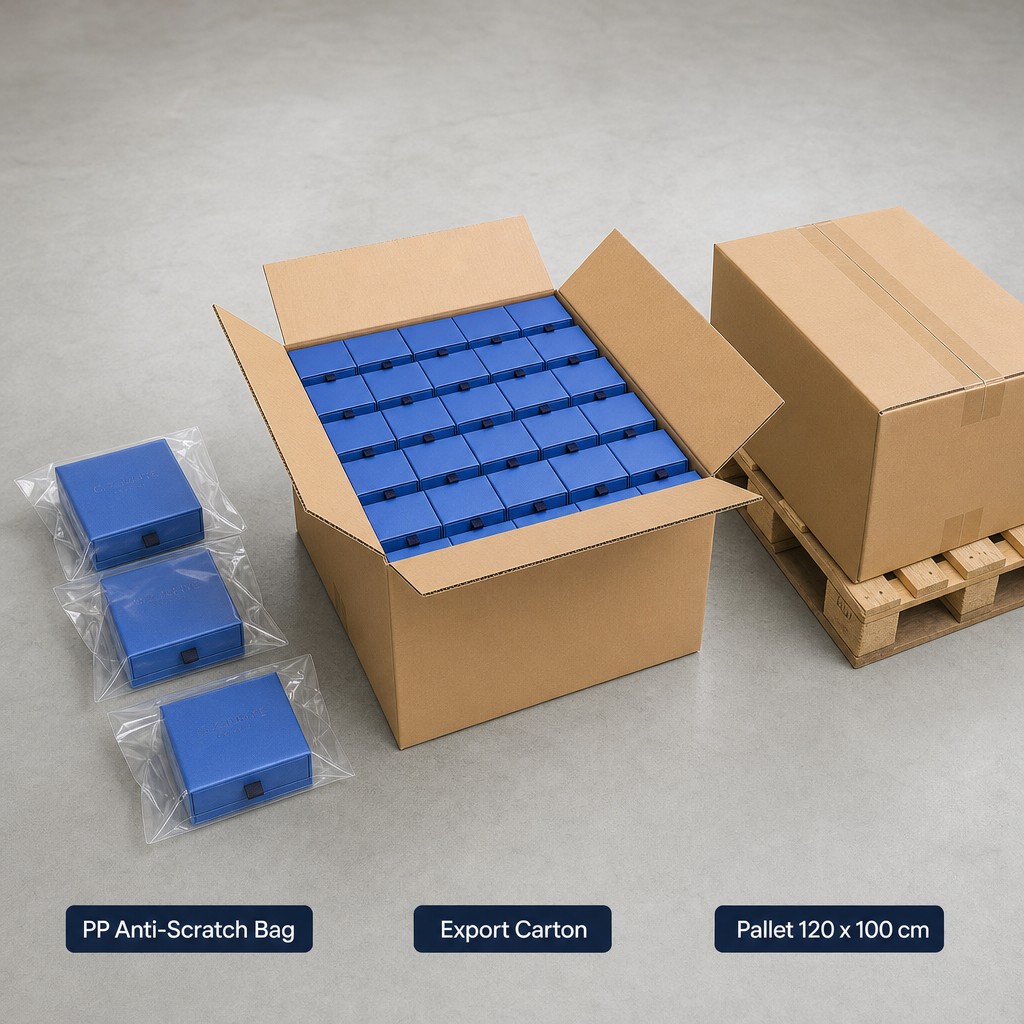
What does change is the carton. Inserts add height and weight, and a run of trays with frames packed loose needs more separation than a run of empty trays. Tell us which version you are shipping and the packing is built for it.
Sampling an Insert: Five to Seven Days
The drawing comes first and is free, normally inside one to three days, with revisions until the shape is right. The physical sample then takes five to seven days, and for an insert it is worth sending the piece: a slot that releases cleanly on a drawing can still be a millimetre tight in the hand.
Production after approval is 18 to 25 days for a standard run, with a new insert die or the pre-holiday window pushing that to 25 to 30 days.
Questions We Get About Drawer Box Inserts
Does the insert have to be black?
No. Black is the usual choice because it contrasts with gold and silver, but the frame or pad colour follows the lining you choose.
Can I use one insert for several products?
Within limits. A frame holds a range of shapes; a cut slot holds one outline well. Where a line runs to several outlines, ask for two inserts against one tray.
Is a plastic free insert as protective?
For jewellery in a rigid box, yes. The box takes the load; the insert only has to stop the piece moving, and EVA or a moulded paper tray does that without plastic.
What is the minimum order for a custom insert?
300 pcs on the standard box, 500 pcs where the size or insert is new to us, and 1,000 pcs where a printed logo is added.
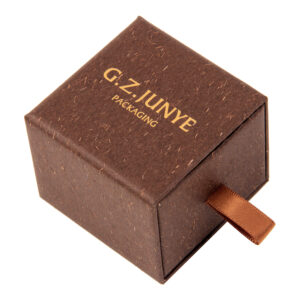
The box this insert sits in is the blue square drawer box; the wider drawer box family range covers the other drawer formats we build, and the bracelet box box takes the bracelet-specific cuts. Send the piece with the enquiry, or start with the free drawing on the sample page page. Questions that come up most are collected on the FAQ page.