
A Lid That Drops Over Four Fifths of the Base
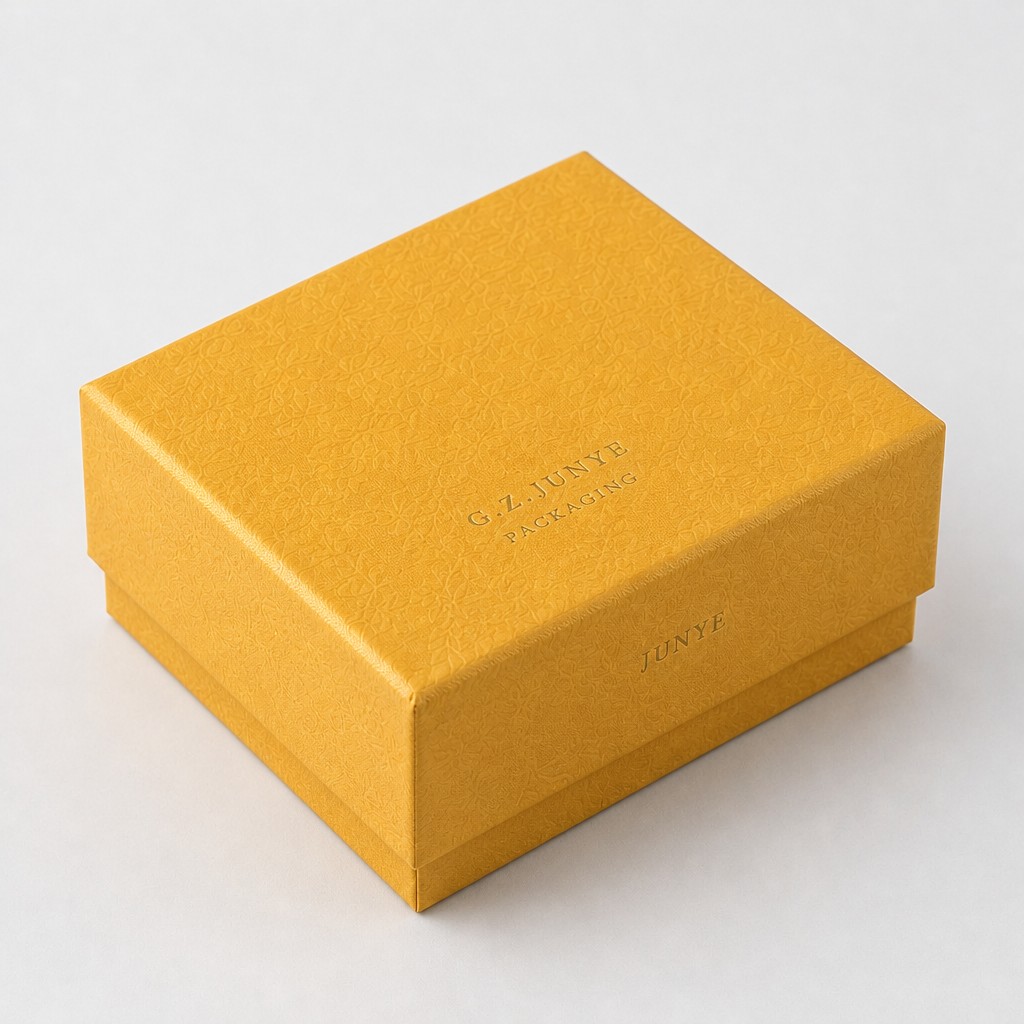
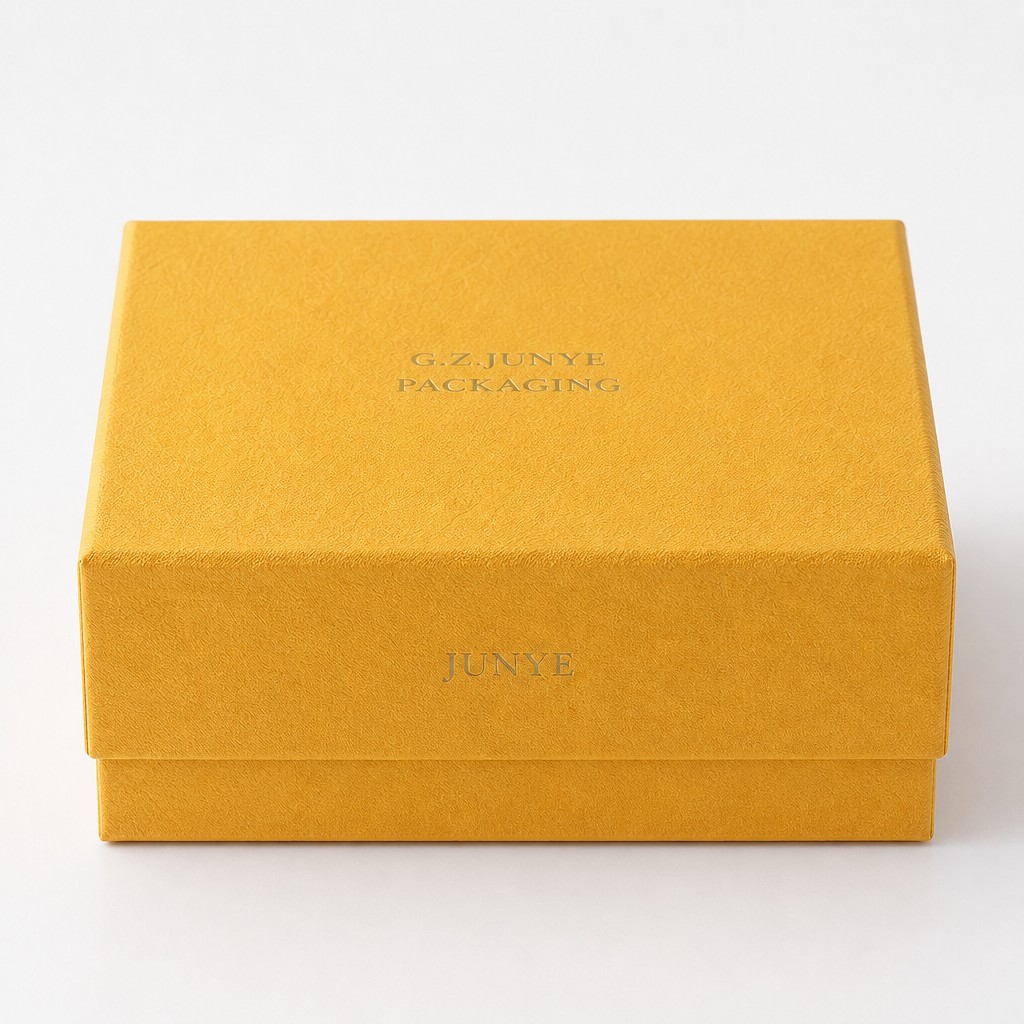
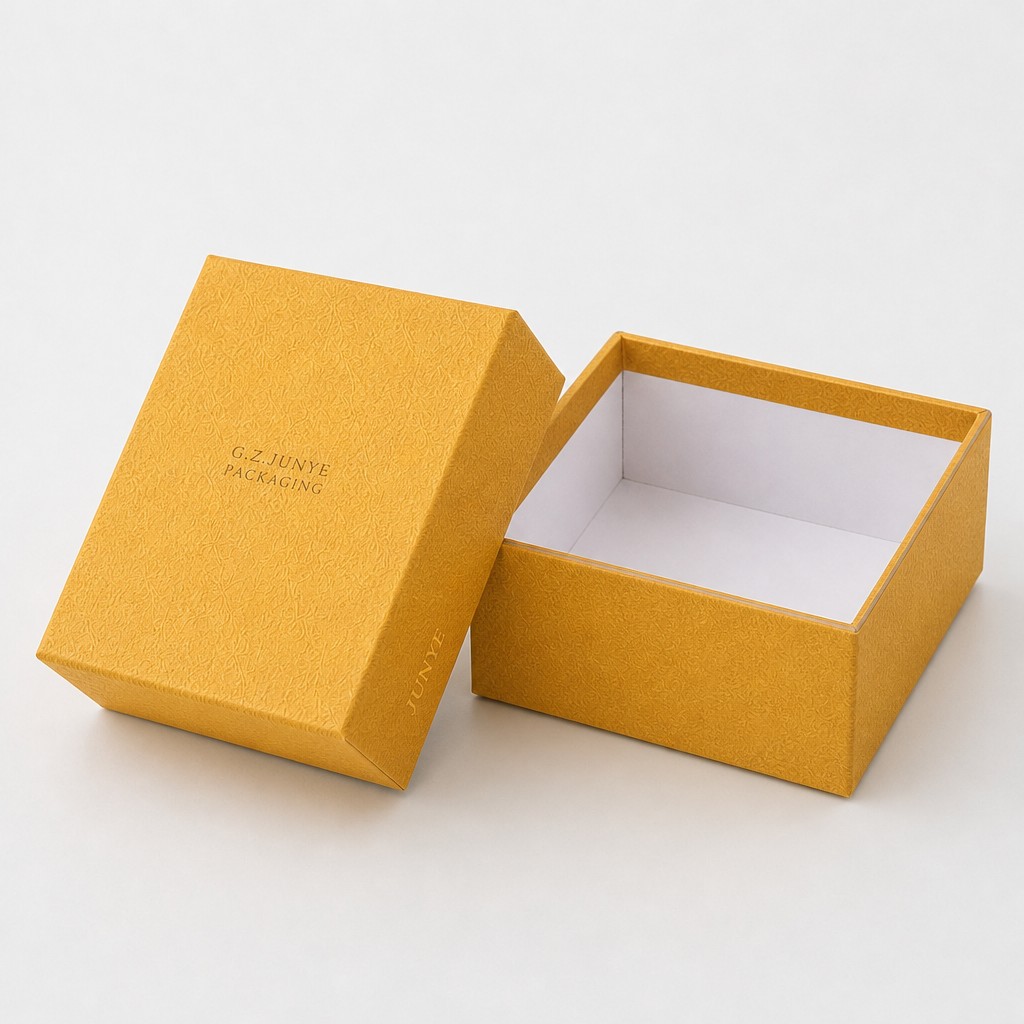
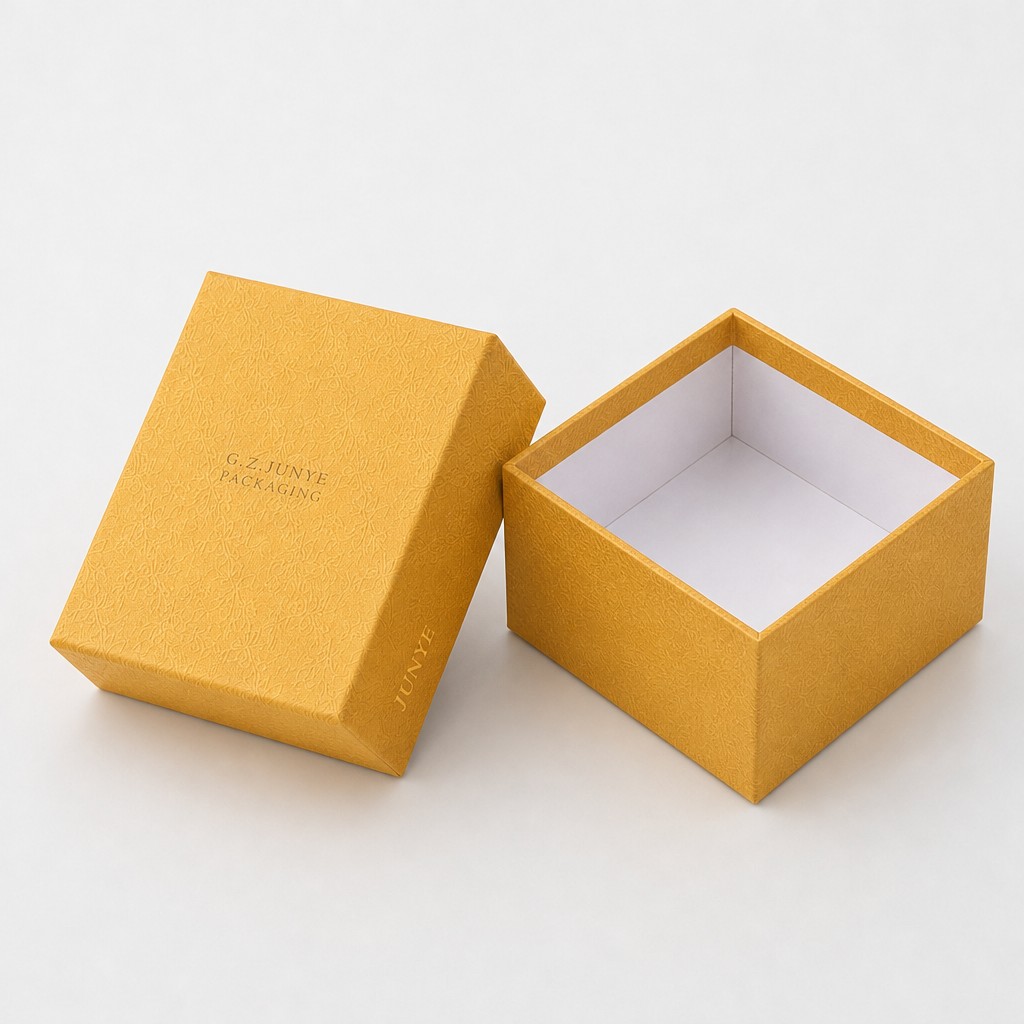
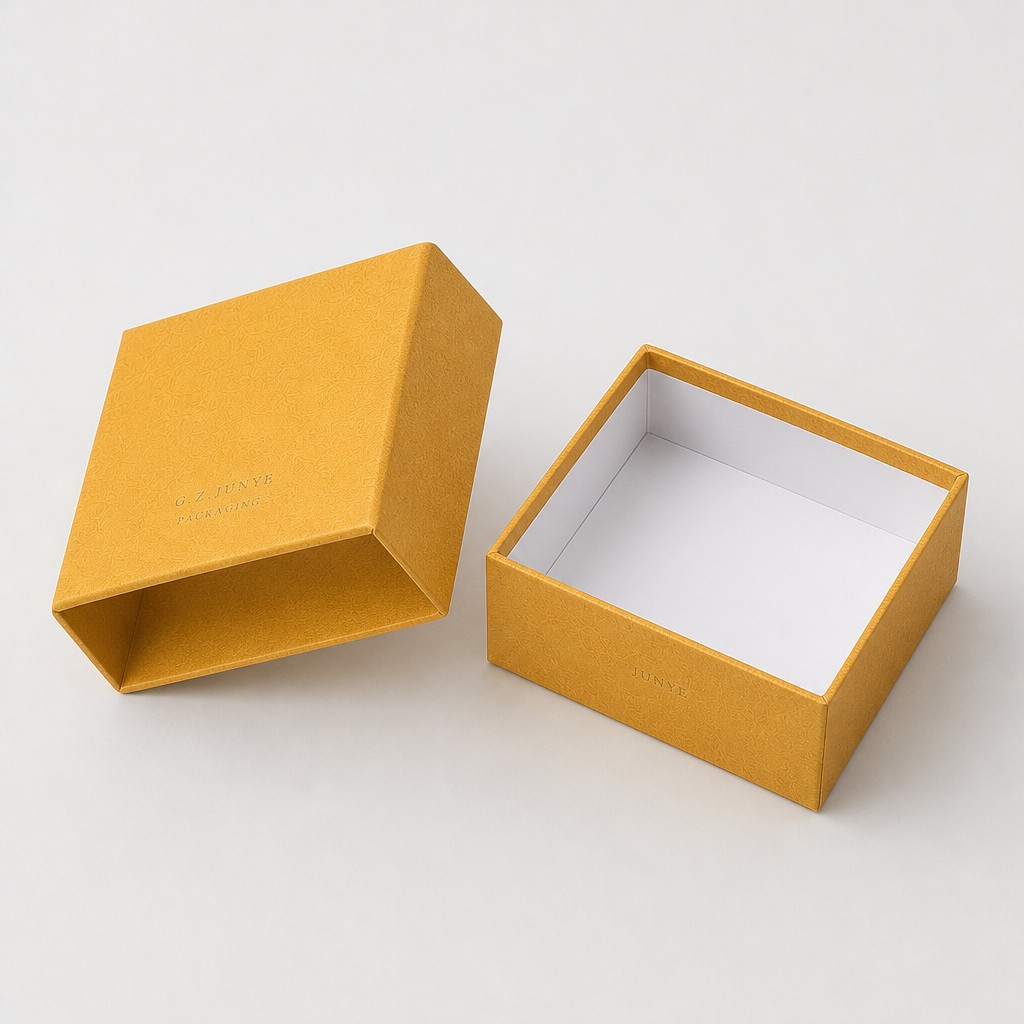
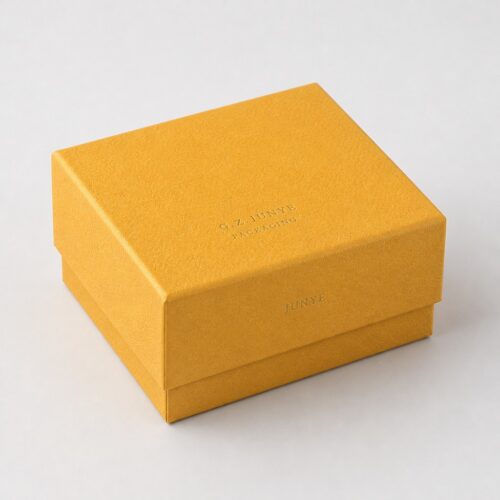
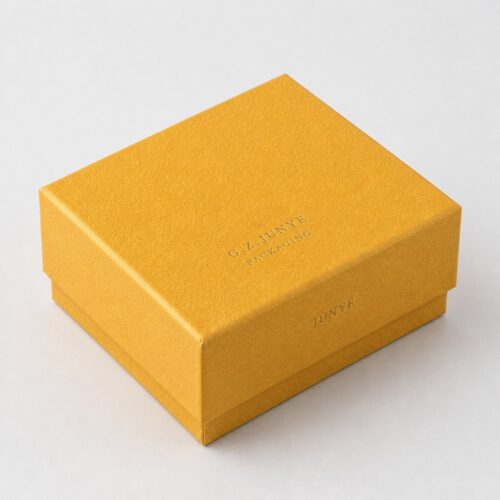
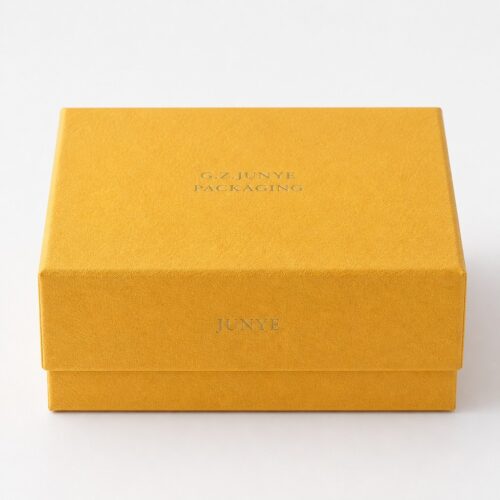
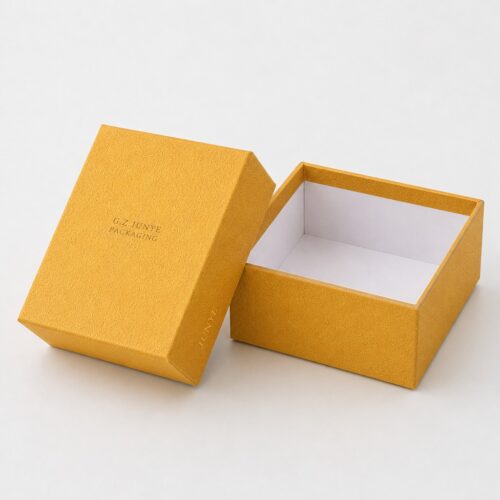
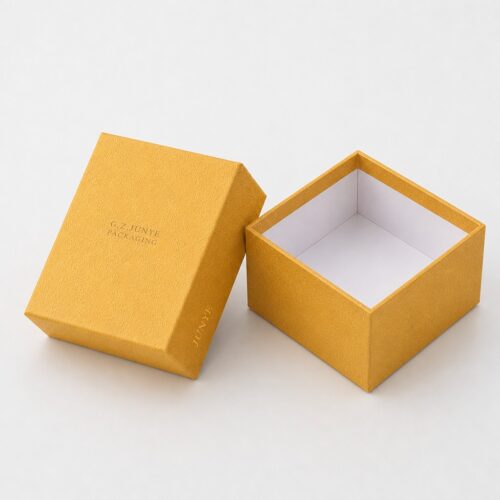
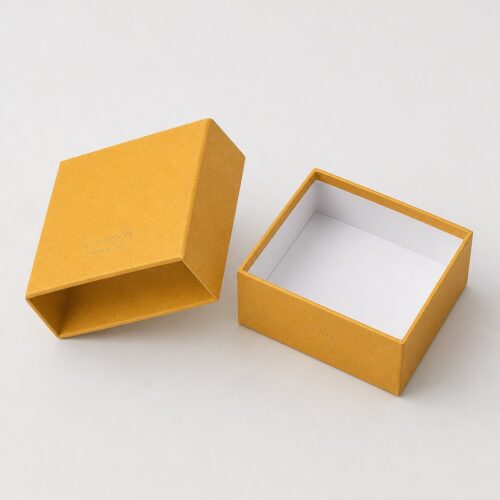
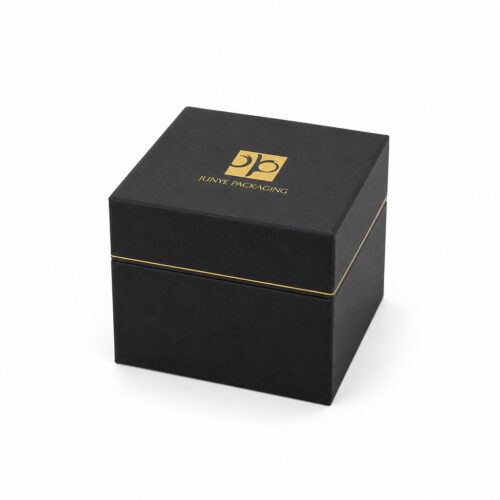
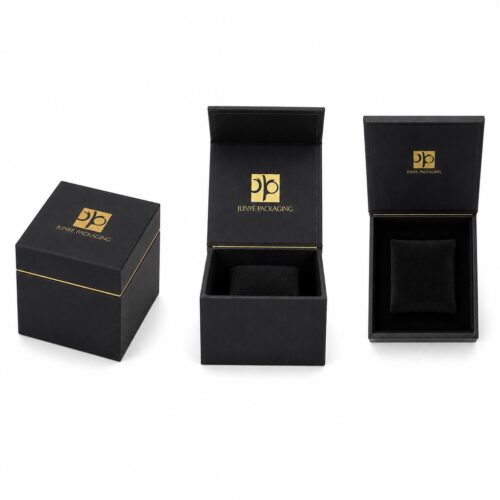
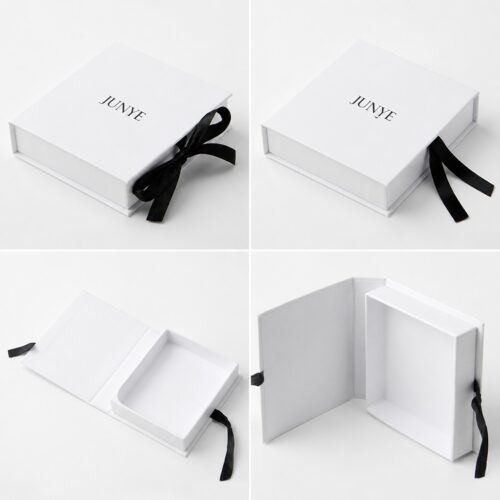
This gold embossed rigid box is two pieces of board, not one folded sheet. The lid is a full cover with a top board and four walls, and it drops over the upper four fifths of the base. The lower fifth of the base stays visible as a step, and that step is the tell: a wrapped rigid box always shows it, because the lid cannot be squeezed past a board wall.
| Lid stop point | Fit on the base | What it shows |
|---|---|---|
| Higher than four fifths | Loose | Less tray, more chance of a rattle |
| Four fifths (this box) | Firm | The common retail proportion |
| Lower than four fifths | Tight | More tray, harder to open one handed |
Greyboard, Corner Tape and a Wrap of Gold Embossed Paper
Each half starts as greyboard: cut square, the corners taped, then wrapped in gold embossed specialty paper. Taping the corners before the wrap is what keeps a board box square; the wrap then covers the tape and carries the pattern across the faces.
| Step | What it does |
|---|---|
| Cut the board | All four walls and the floor for each half |
| Tape the corners | Holds a true 90 degrees before the wrap goes on |
| Wrap in embossed paper | Carries the pattern across faces and walls |
| Turn in at the mouth | Finishes the rim of the lid and the base |
The Square Corner That Thin Stock Cannot Hold
A corner made from thick board holds its 90 degrees because there is material behind it. Thinner stock bends before it reaches the corner, which is why a light box rounds off and a board box does not. On a retail pack that difference is visible from a metre away.
Turned In at the Mouth: The Gold Edge Inside Both Halves
The wrap does not stop at the rim. It folds inward over the mouth of the lid and the base, so the first thing you see when the box opens is a clean gold edge, not the cut edge of the board.
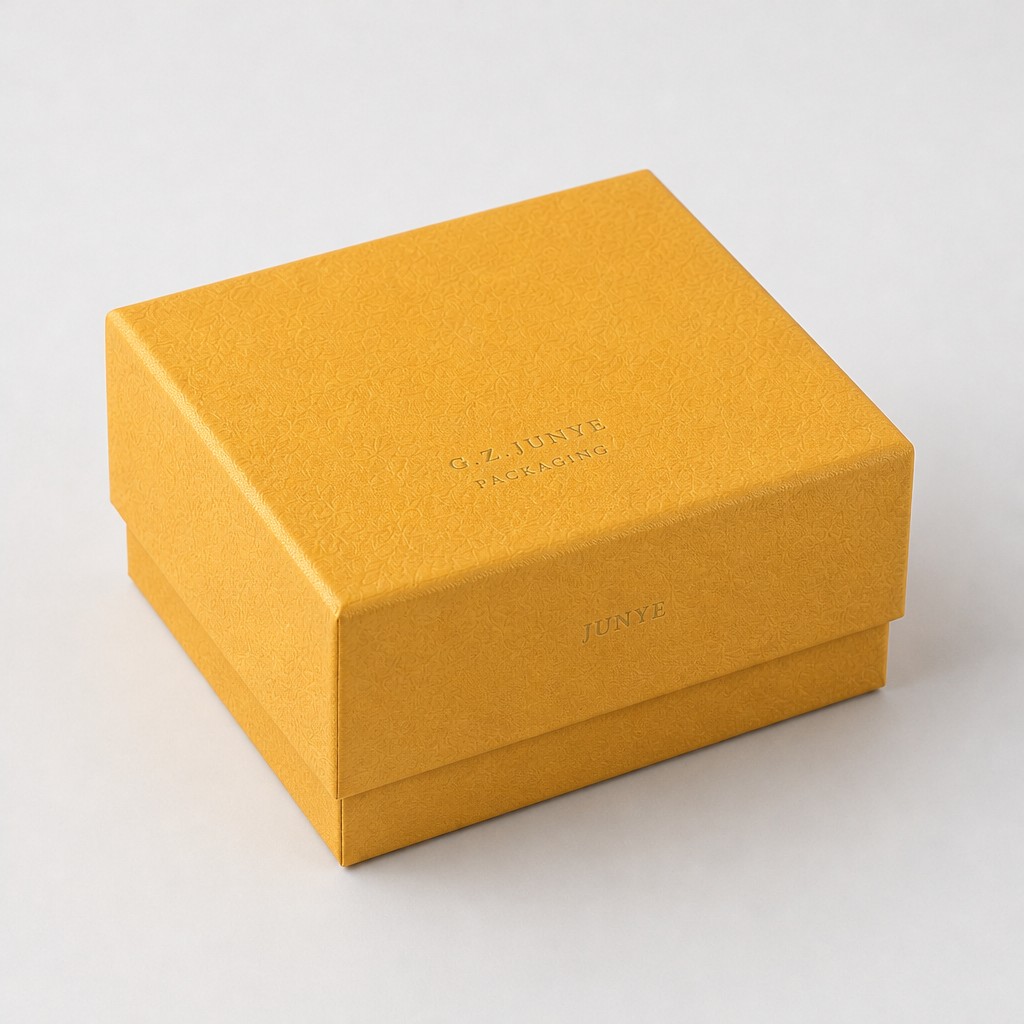
It also protects the rim from catching on the other half every time the box closes.
| Turn-in depth | What it does | When to use it |
|---|---|---|
| Shallow | A thin finished edge | Fine paper and light boxes |
| Medium | Covers the board edge fully | Most rigid boxes |
| Deep | A visible inner band | Where the inside is part of the design |
Reading the Step Where the Tray Shows Below the Lid
On the closed box the seam sits at roughly four fifths of the height, and everything below it belongs to the tray.
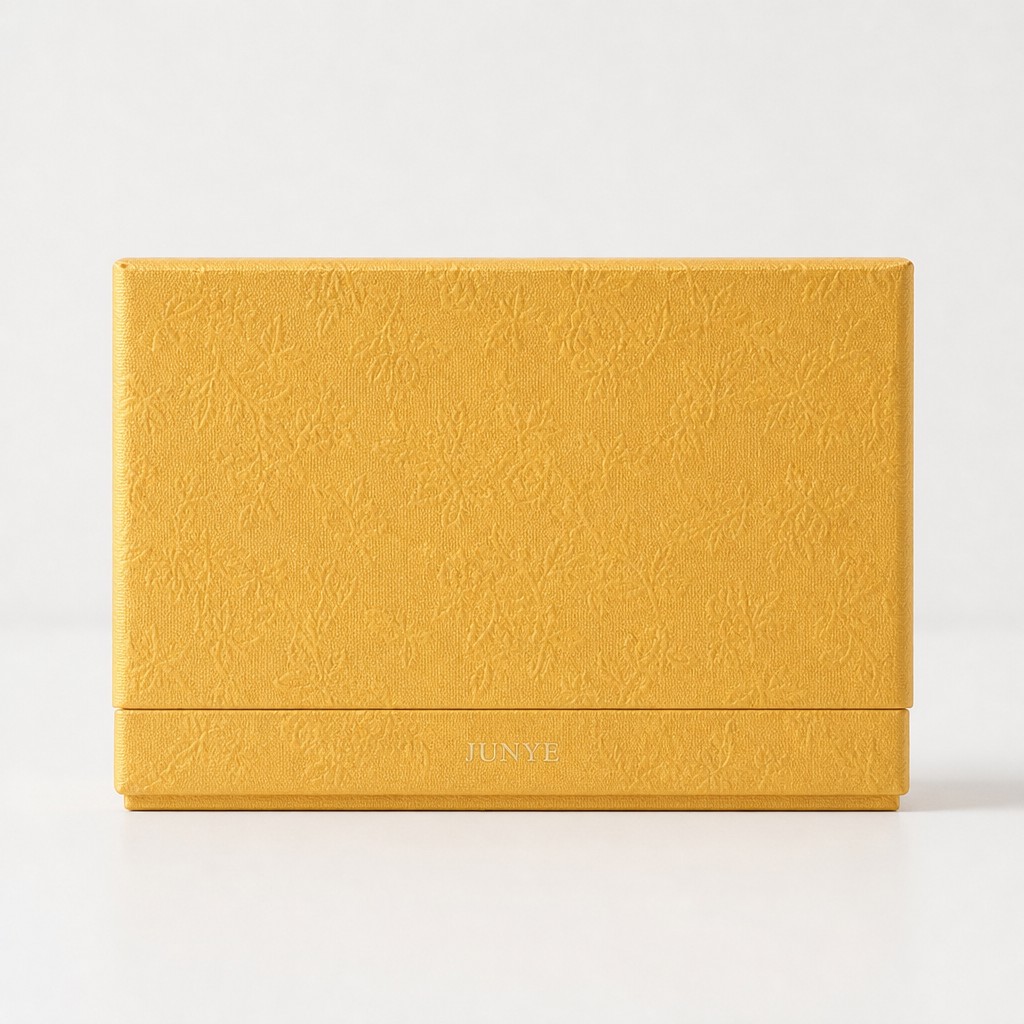
Brands often ask us to hide it; we usually advise against it, because a lid that swallows the whole base needs a looser fit, and a loose lid rattles.
White Liner Paper Across the Floor and All Four Walls
The tray is lined in white paper: the floor and all four walls, with the liner folded into the corners. It means the open box never shows raw board, and it gives light contents a clean background in photographs.
9 x 8 x 4 cm: A Retail Pack, Not a Carton
Four centimetres deep is the working depth of a single retail unit. Deeper and the box starts to read as a shipping carton; shallower and it cannot take a watch or a small candle. At 9 x 8 cm the footprint sits in one hand.
| Contents | Fits at 4 cm deep | Note |
|---|---|---|
| Rings and small jewellery sets | Yes | Best selling use of this size |
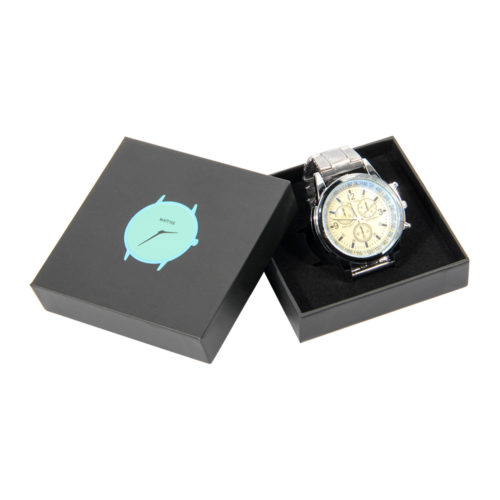
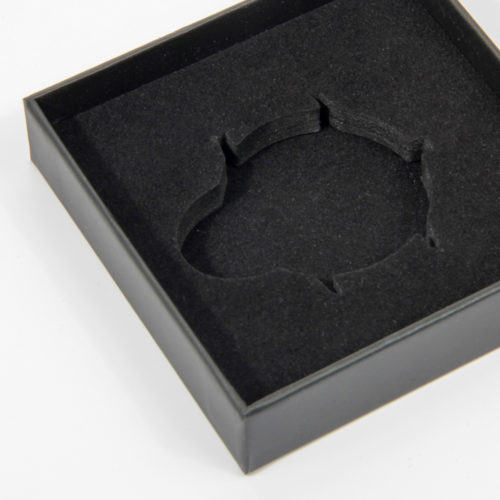
| A watch | Yes | Cushion not included as standard |
| A small candle or a jar | Yes | Check the diameter against 9 x 8 cm |
| A folded scarf or a set of tea bags | Yes | Flat contents suit the depth |
| Tall profile items | No | Needs a deeper die |
What the Embossing Is, and What It Is Not
The relief on this box is in the paper itself: a cloth grain with a flower pattern pressed into the sheet. It is a material finish, not a printed image, so it does not add a colour or a print pass. If you want a printed pattern on top of it, that is a second decision.
Foil, Screen, Emboss or UV: Choosing a Print Method
Four methods cover most jobs. Foil gives a mirror line and suits a logo. Screen printing holds a flat colour over a large area. Embossing raises a shape without ink. UV varnish gives a gloss against a matte sheet. The choice is usually made on how fine the smallest detail is.
| Print method | Best for | Watch out for |
|---|---|---|
| Foil | Logos and fine lines | Cost rises with the number of passes |
| Screen print | Flat colour over a wide area | Fine type fills in |
| Emboss | A raised mark with no ink | Needs a counter die |
| UV varnish | Gloss against a matte sheet | Reads best under direct light |
Paper Colour, Pattern and Size Made to Order
The paper, the embossing pattern, the liner and the print can each be swapped, and the die can be cut to your own footprint instead of our stock 9 x 8 x 4 cm. Artwork is set from your files.
Why This Box Is the Quickest to Reorder
Rigid lid and base boxes cover more products than any other construction we run, so the tooling, the folding routines and the wrap stations are all in daily use. A repeat order rarely waits on a new technique, which is why the lead time is shorter than for a one-off shape.
What Fits at Four Centimetres Deep
A ring or a small jewellery set, a watch, a compact cosmetic item, a small candle, a set of tea bags or a folded scarf all sit inside the depth. Anything with a tall profile needs a deeper die.
Board, Paper and the Recycling Stream
The box is board with paper wrapped around it, so it separates into one paper stream rather than a mixed one. That is one reason a rigid box is often chosen over a moulded pack for the same job.
From Sample Approval to the First Carton
A sample fixes the wrap position, the depth of the turned-in mouth and the print register. Once it is signed the run follows the same settings, and a repeat order reuses them.
| Stage | What is fixed | What comes next |
|---|---|---|
| Drawing | Size, paper, embossing, liner, print file | Die cut |
| Sample | Wrap position, mouth depth, print register | Approval |
| Run | Wrapping, turning in, packing | Carton and freight |
What to Confirm Before We Cut the Board
Four decisions fix the drawing: the outer size, the paper and embossing, the liner, and the print file with its colour count. A sample request is the usual first step, the FAQ covers the common questions, and the workshop can quote straight from a drawing.


Reviews
There are no reviews yet.