
A Soft Printed Lid Over a Rigid Folded Base
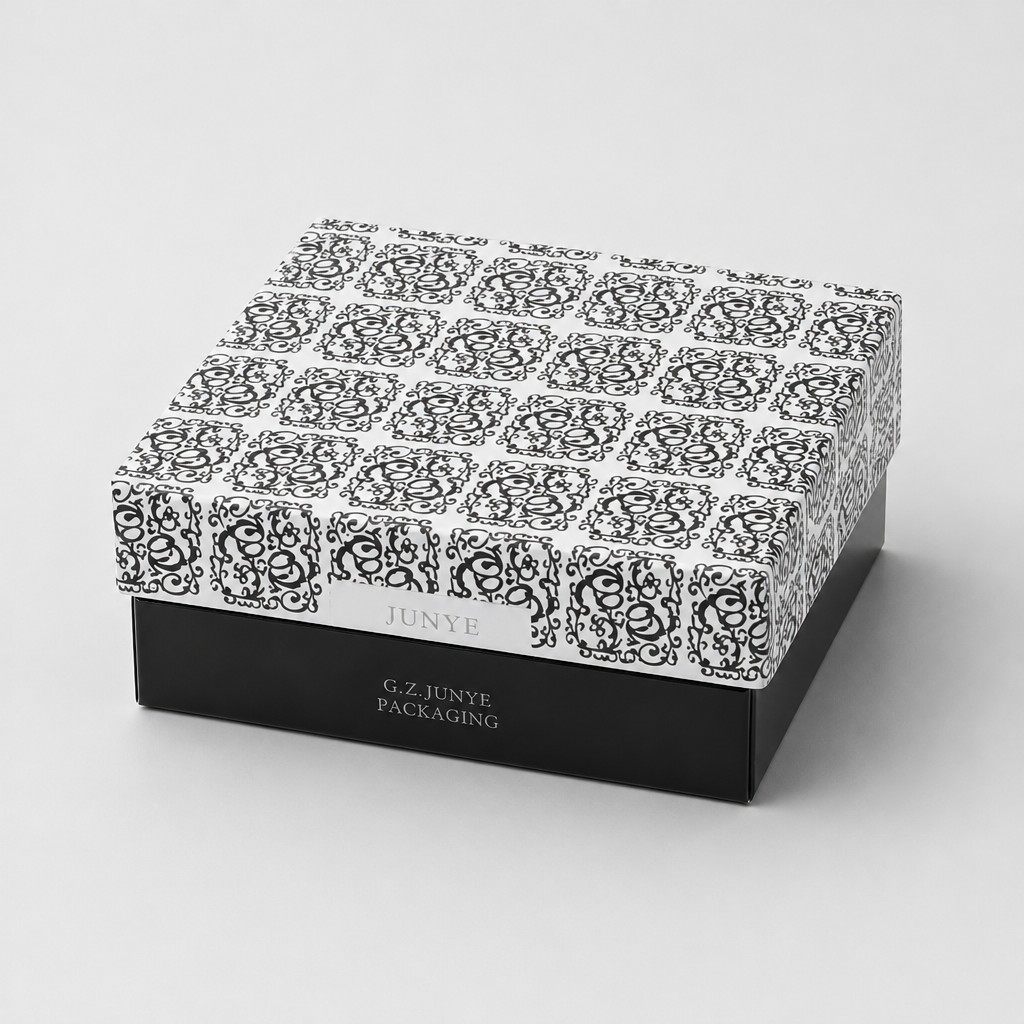
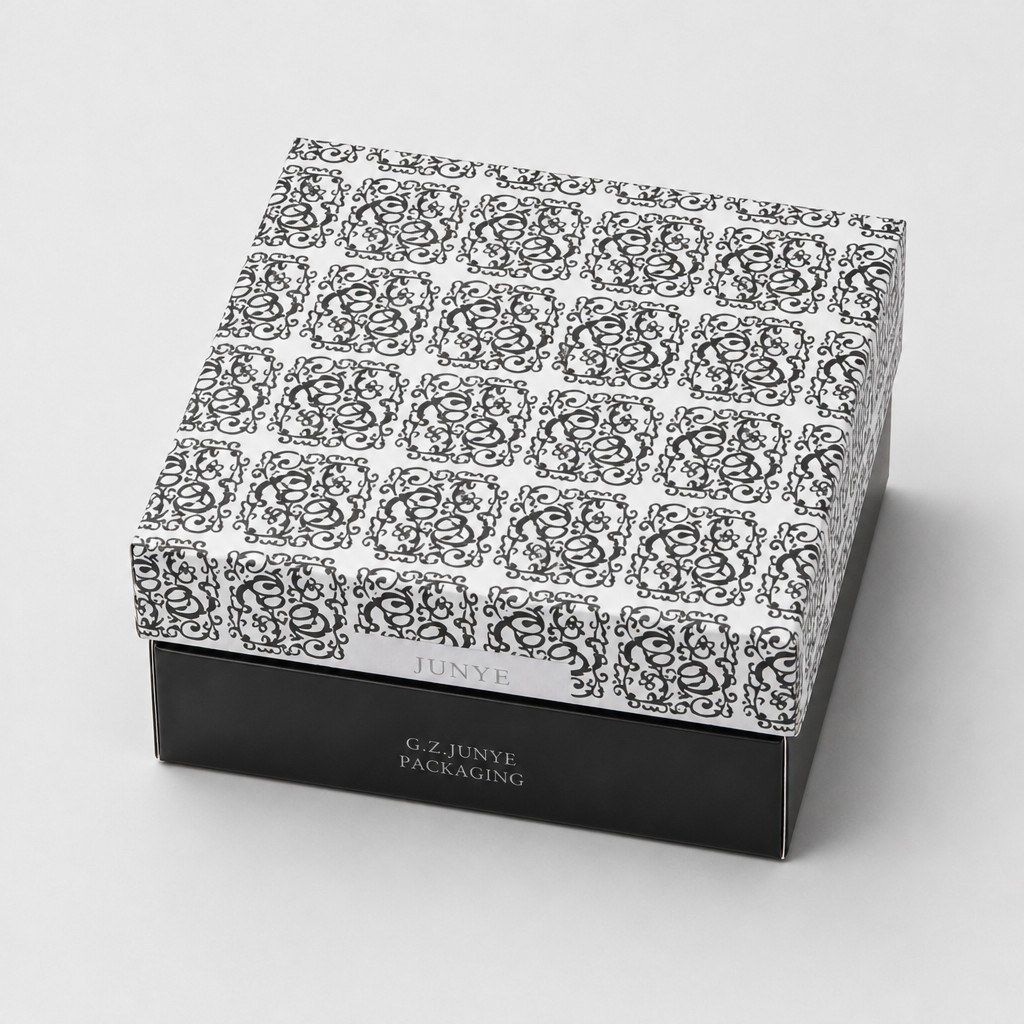
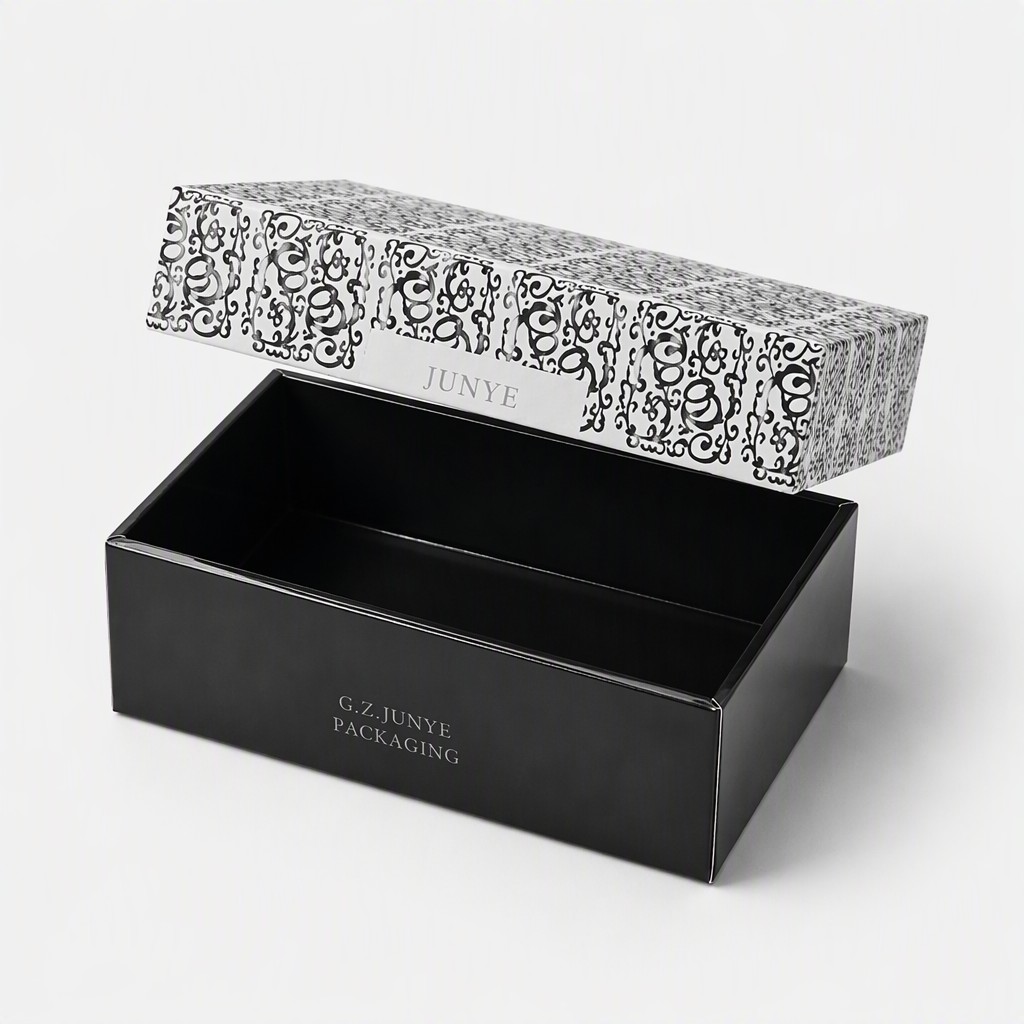
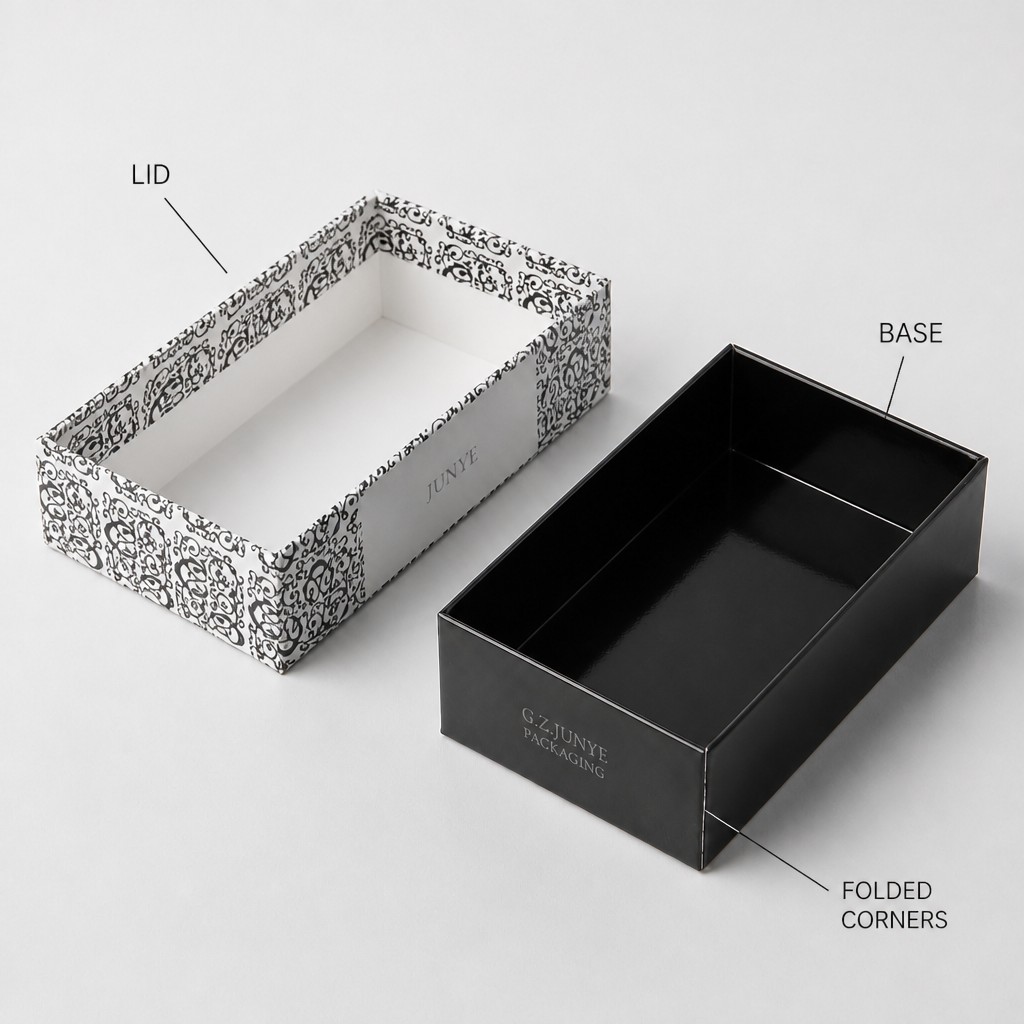
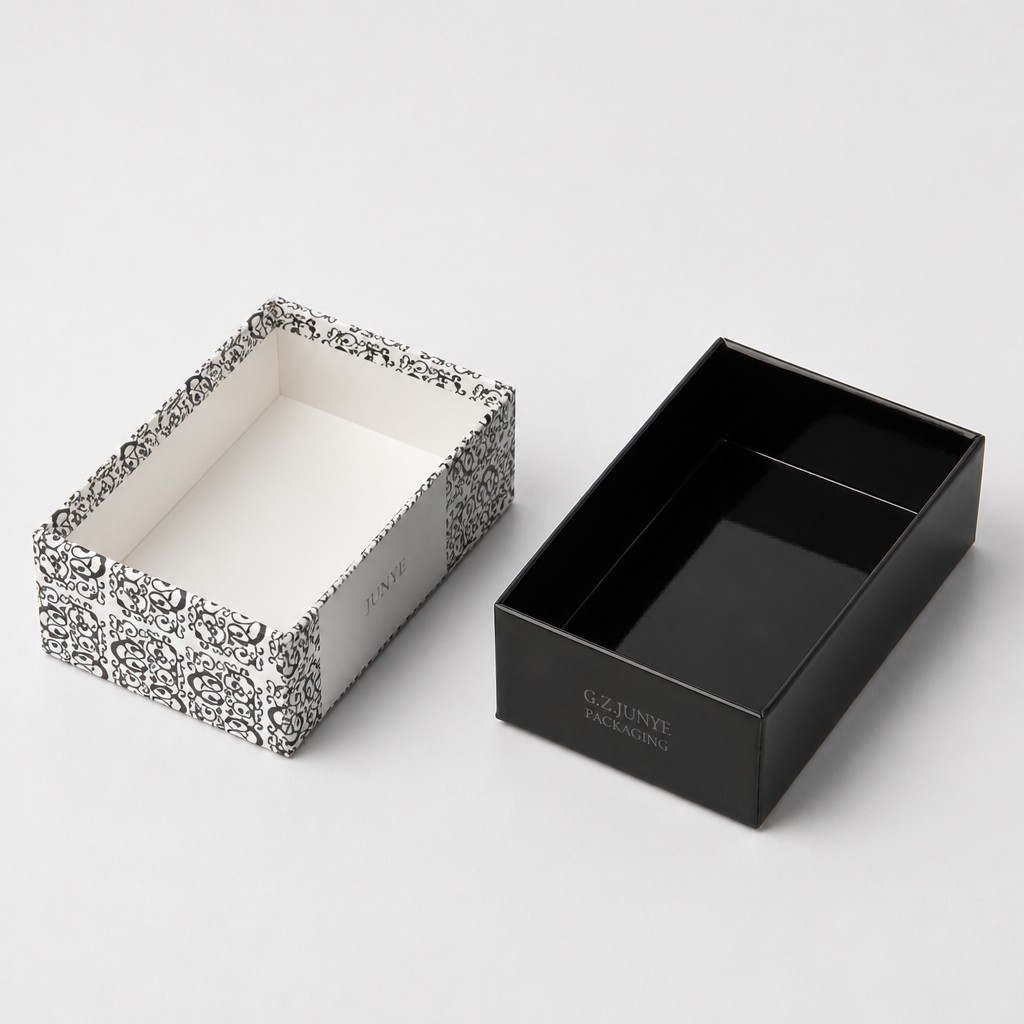
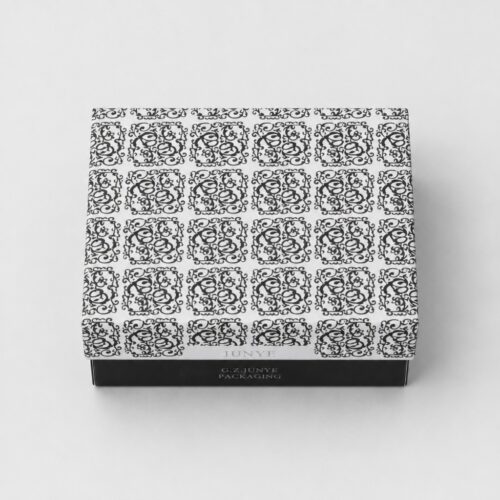
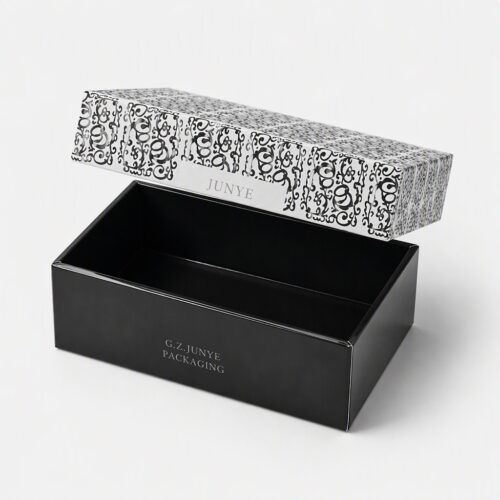
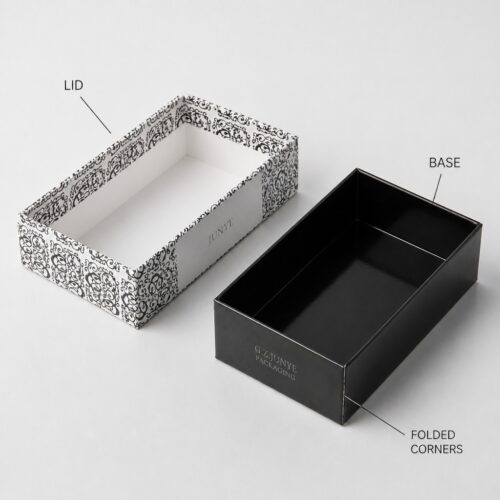
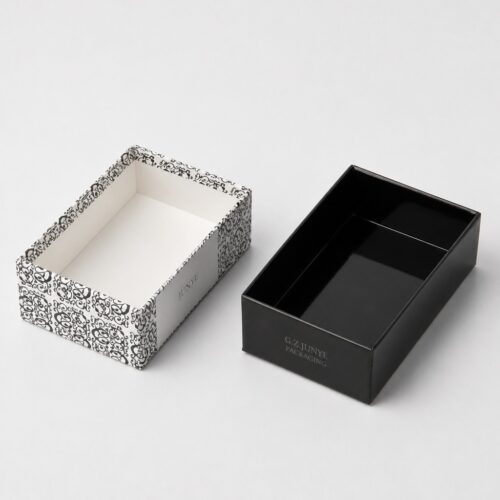
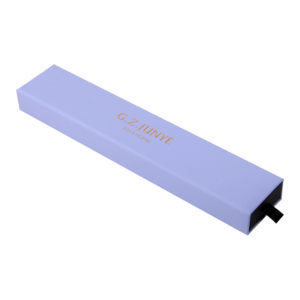
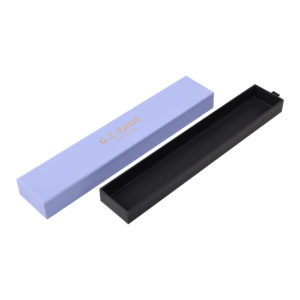
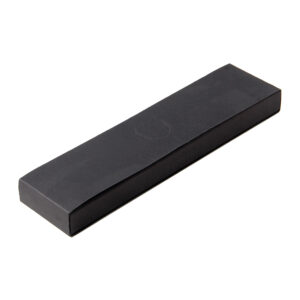
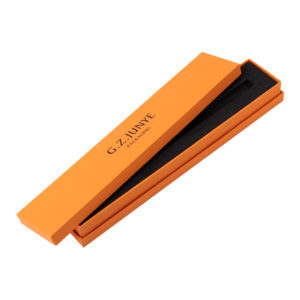
This telescopic lid box is a paper box in two halves, and the halves are deliberately not the same material. The lid is the soft piece: pattern-printed paper with a turned-in fold, so it gives slightly and settles onto the base. The base is the rigid piece: a black card box folded from one die-cut blank, thin walled and square at the corners.
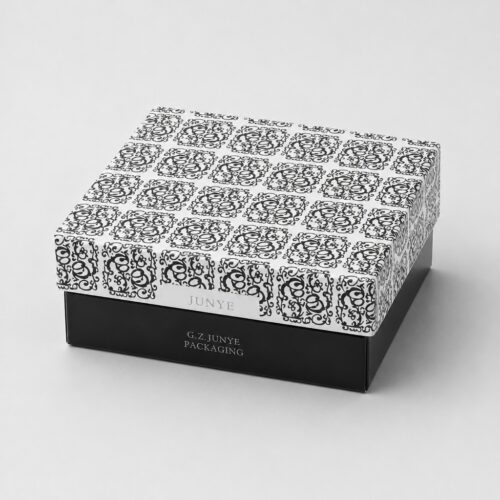
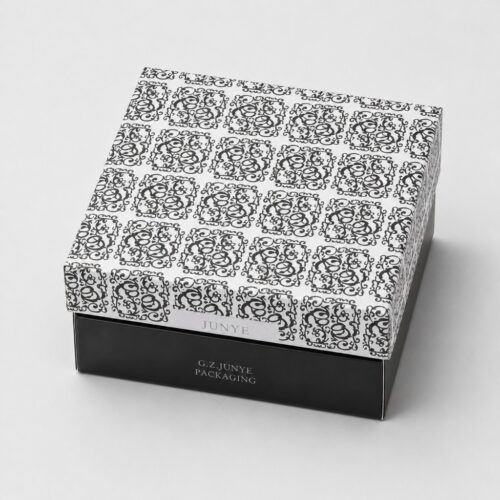
The lid wraps the base rather than pressing into it. That is what telescopic means here, and it is why the closed box shows a clean two-tone edge: printed white on top, black below.
Telescopic Fit: The Lid Wraps the Base, It Does Not Snap
A telescopic lid travels down over the outside of the base. Nothing clicks and nothing has to line up, so the box opens and closes without a break-in period. There is no hinge, no magnet, no ribbon and no metal part anywhere on the box.
Because the lid is the soft half, it also packs flat without holding a memory of the last box it sat on. That keeps freight volume down on a box that is bought by the thousand.
| Item | Detail |
|---|---|
| Box style | Telescopic lid box (two-piece, lid wraps the base) |
| Size | 12 x 7 x 4 cm (L x W x H) |
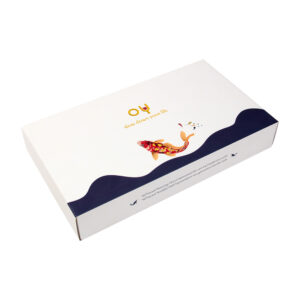
| Lid | Soft pattern-printed paper, ring and scroll print on white ground, turned-in fold |
| Base | Black card, die-cut and folded, thin single wall, inward folded top rim |
| Construction | Mitred corner folds; no grey board, no glued flaps |
| Interior | Bare board as standard; divider, EVA foam or lining on request |
| Foil, screen print, emboss or UV; artwork made to order | |
| Packing | Gross weight 0.5 kg per unit; shipping carton 14 x 9 x 6 cm |
Diagonal Corner Cuts and the Mitred Fold Behind Them
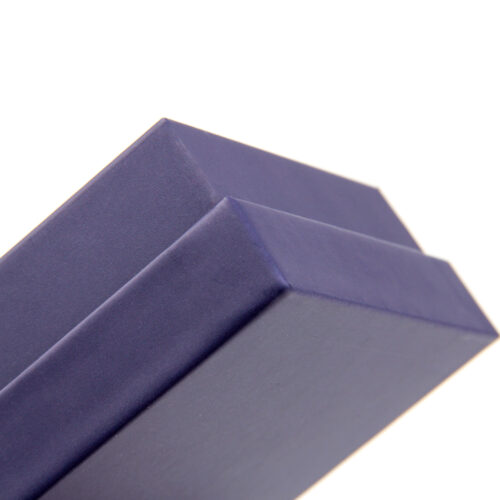
Each corner starts as a diagonal cut on the blank. The two cut edges fold toward each other, meet, and close the corner without a raw edge or a tab. The result is a crisp 90 degree corner instead of the rounded or taped corner you get from a wrapped box.
The same mitred fold runs on both halves. The lid and the base are built the same way; the difference is the paper and the finish, not the geometry.
| Construction step | What it does |
|---|---|
| Diagonal corner cut | Removes the overlap so two cut edges can meet |
| Mitred fold | Closes the corner without a raw edge or a tab |
| Inward rim fold | Finishes and stiffens the opening on the base |
| Single-wall ply | Keeps the unit light; no grey board section |
The Inward Folded Top Rim on the Base
The base rim turns inward, so when you look into the open box you see a folded edge, not the raw cut of a single sheet. That folded rim stiffens the opening: it resists the wall bowing out when the box is lifted with contents inside.
It also finishes the edge a customer sees first. On a plain outer pack this is often the one place where the box looks cheap, and the cost of folding it in is close to nothing.
Thin Single-Wall Card: What “No Board” Actually Means
There is no grey board in this box. The walls are a single ply of folded card, which is why the unit is light and why the walls look thin end-on.
The trade-off is honest: a folded box carries less weight than a board box of the same footprint. It is the right choice for an outer pack, a presentation pack or a gift pack, not for a shipping carton. 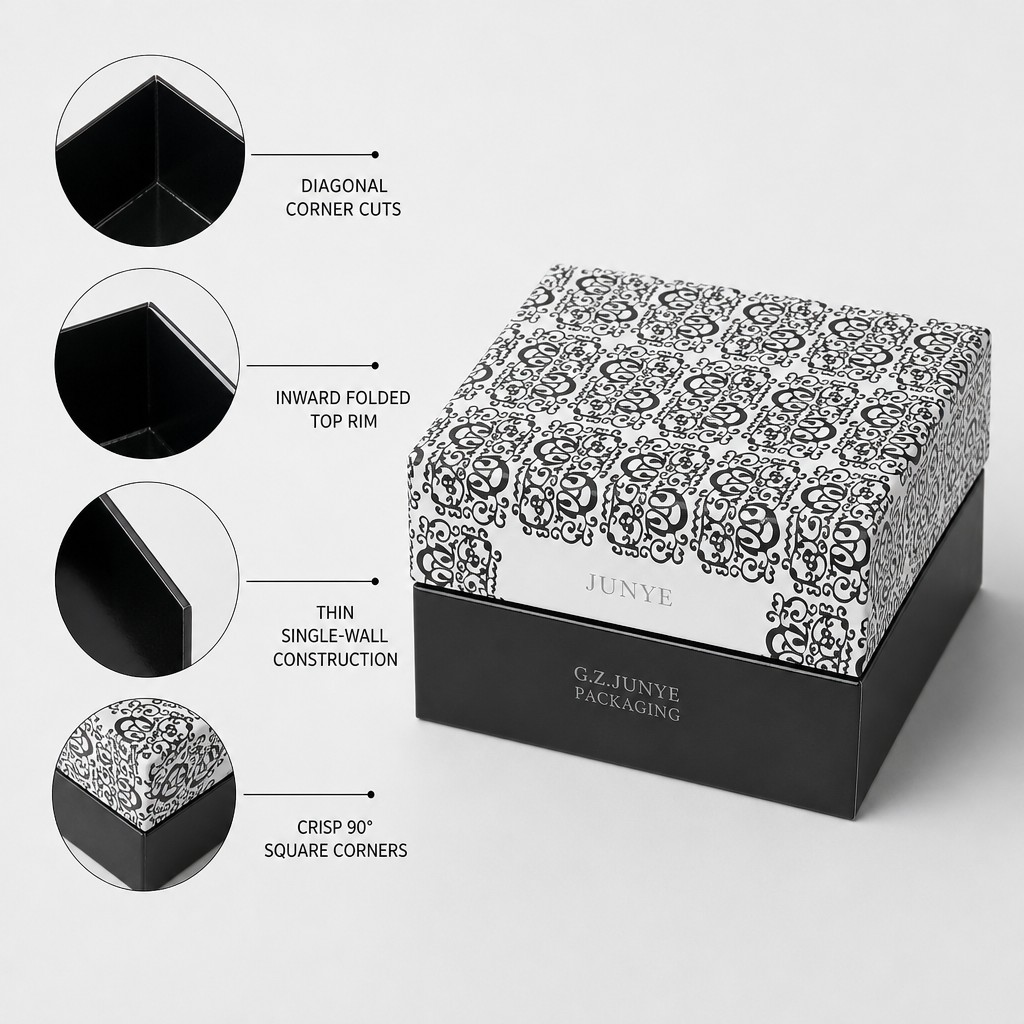 A plain card build would show material thickness at the section and a straight-cut corner; this box shows a mitre and a folded rim instead.
12 x 7 x 4 cm: What a Flat Lidded Box Carries
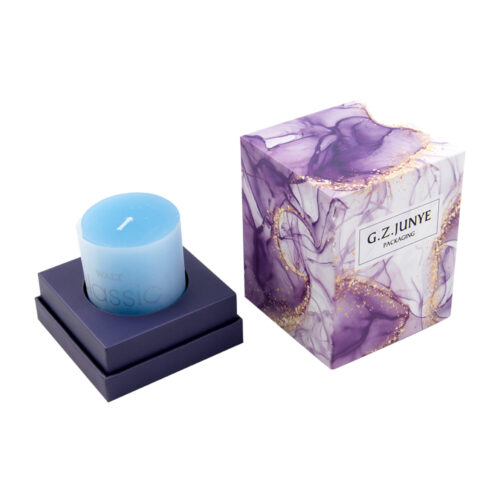
At 12 x 7 x 4 cm the box is flat and wide rather than deep. The depth suits a folded garment, a candle, a jar, a small cosmetic set, a pair of flat shoes or a single retail unit that would otherwise ship in a plastic sleeve.
It is also a stock proportion, so a short run can start from the existing die rather than paying for a new one. Custom footprints are available; see the sizes below.
| Size | Best for | Depth |
|---|---|---|
| 12 x 7 x 4 cm | Folded garment, candle, jar, flat retail unit | 4 cm |
| 12 x 7 x 4 cm + divider | Two small items kept apart | 4 cm less insert |
| Custom footprint | Own artwork and own product | Made to order |
Ring and Scroll Print on a White Ground
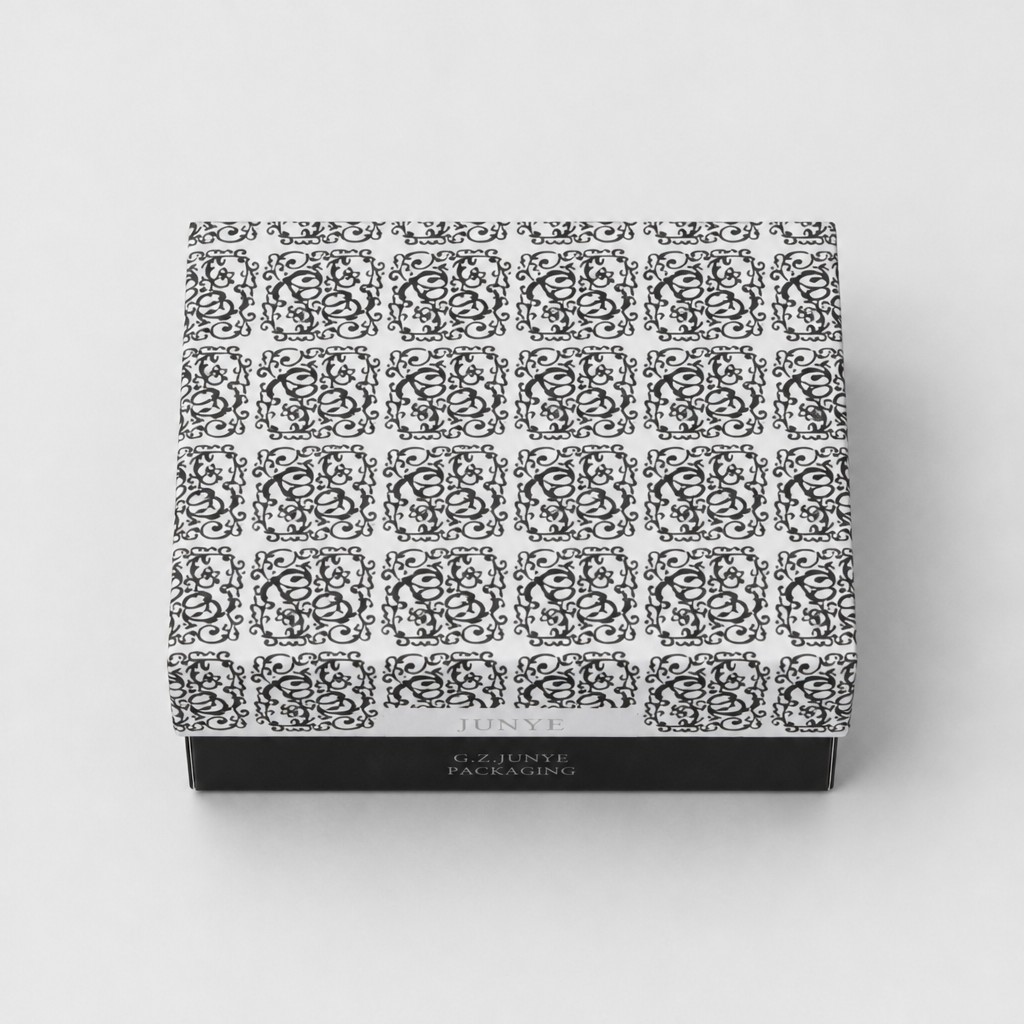
The printed lid on our own stock is dense ring and scroll work on a white ground. The pattern is the paper, not a customer name, so it survives as a stock design or disappears under your own artwork.
For a buyer, a patterned lid is usually the cheaper way to look branded without committing to full coverage print. One colour on a white sheet reads strongly at a distance.
Why the Lid Takes Print Better Than the Base
Advertising works best on the lid because the lid is the flat, soft panel that folds gently. A folded card base has to bend tightly at the rim, and tight bends are where ink cracks.
So the practical split is: put the detailed artwork, the foil and the fine register on the lid, and keep the base either plain or lightly marked. That is how our own stock is printed, with our mark on the base and the patterned artwork on the lid.
Paper Finishes: Matte, Textured Linen or Soft-Touch
Finish is chosen separately from the print. Matte is the everyday option and the lowest-cost one to run. Textured linen adds a visible grain that hides handling marks on a white sheet. Soft-touch gives the lid a velvet hand that photographs well but shows fingerprints, so it suits a retail box more than a warehouse one.
| Surface | Best use | Watch out for |
|---|---|---|
| Matte | Everyday outer pack, lowest cost | Shows scuffs on dark sheets |
| Textured linen | White and light sheets | Grain hides fine type below 6 pt |
| Soft-touch | Retail and gift | Fingerprints on handling |
Lid Print Options from Ring and Scroll to Plain
The lid face can carry the ring and scroll pattern, a fine geometric repeat, or nothing at all. A plain lid with a single foil line is common where the customer prints a label instead.
Inside the Base: Bare, Divider or Foam
Standard is bare board, which is what most outer packs need. Where the contents need to stay put, we can add a paperboard divider, an EVA foam insert or a lining. Adding an insert changes the internal depth, so it is worth fixing with the sample rather than at the bulk stage.
| Interior option | What changes |
|---|---|
| Bare board | Nothing; the box is a plain outer pack |
| Paperboard divider | Contents stay apart; depth unchanged |
| EVA foam insert | Contents sit fixed; usable depth drops |
| Lining | Soft contact surface; smallest usable depth |
Custom Size, Custom Print and Foil Stamping
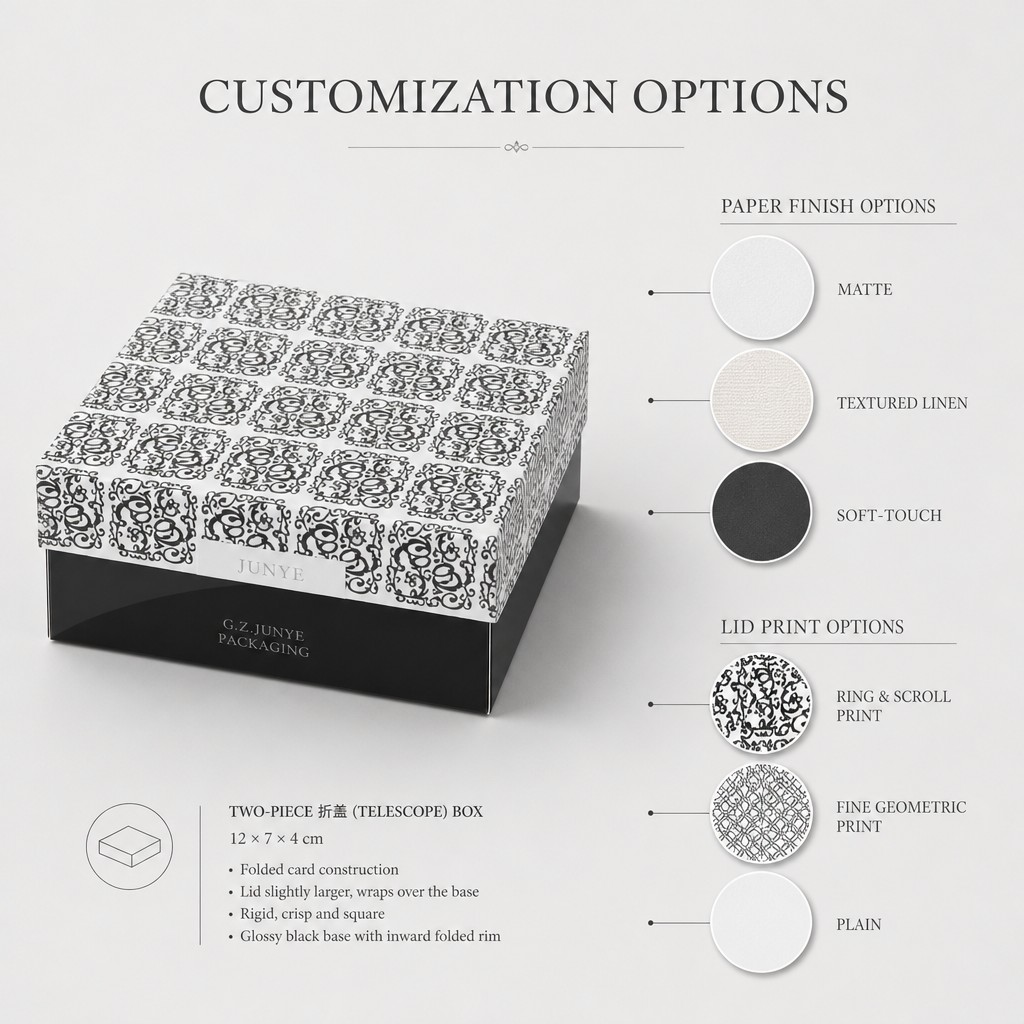 Sizes are cut to order from 12 x 7 x 4 cm upward on the same construction, and print can be foil stamped, screen printed, embossed or UV coated. Artwork is set from your own files, and a sampling stage sits between the drawing and the run.
Print, Board and Recycling for an Eco Outer Pack
Both halves are paper, wrapped and folded rather than moulded, so a used box separates into one paper stream instead of a mixed one. That is the reason this construction is common as an eco outer pack: it replaces a plastic sleeve with a paper box that folds flat again after use.
The workshop holds ISO 9001:2015 (certificate ZYC24Q00141R1S, valid until 28 November 2027) and has been producing in Guangzhou since 2004.
| Stage | What is fixed | What comes next |
|---|---|---|
| Drawing | Size, skirt depth, print file, base colours | Die cut |
| Sample | Print position and fold behaviour | Approval |
| Run | Print, fold, pack | Carton and freight |
Sample, Order Gate and Carton Data
Samples come first, because the point of this box is how the lid meets the base. A sample request is usually the first step, and the FAQ covers the rest. One approved sample then sets the print position, the lid skirt depth and the corner fold for the whole run.
What to Confirm Before the Dies Are Cut
Four decisions fix the drawing: the outer size, the lid skirt depth, the print file and the number of colours on the base. Send those and the die can be cut and a sample made.
Reviews
There are no reviews yet.