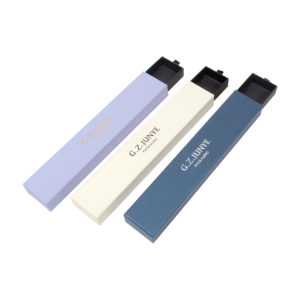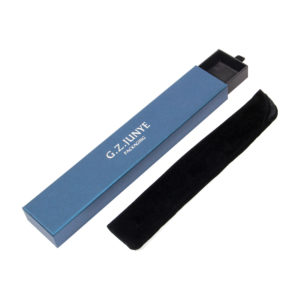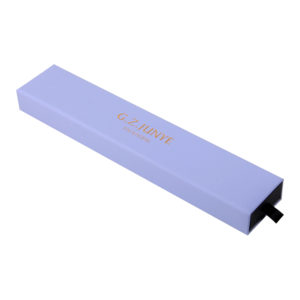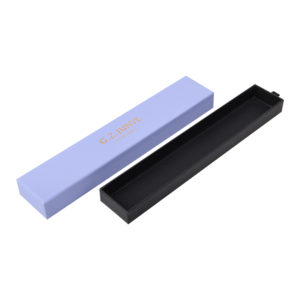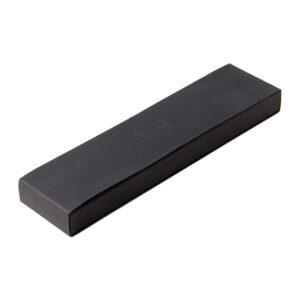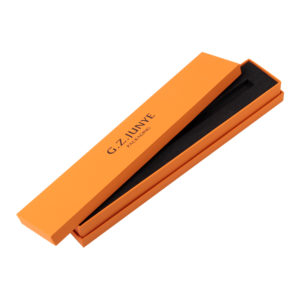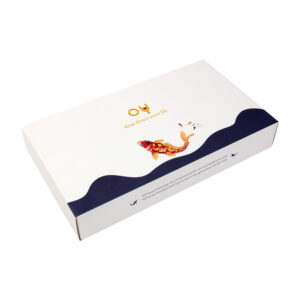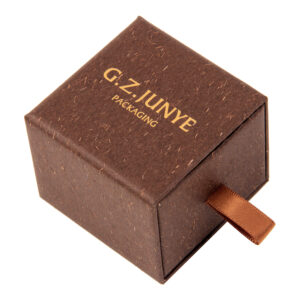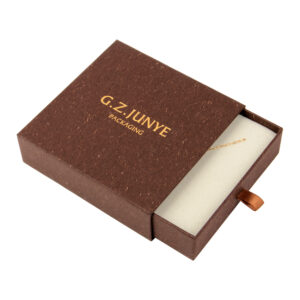
A rimmed box does not have to show its rim. In a closed rimmed lid-and-base box the rim band sits inside the tray wall, so the side shows two segments and one hairline seam. When the band is wrapped round the outside of the tray, the same side reads as three. The position of the rim, not the amount of board, is what you are looking at.
What the Side of a Closed Box Actually Shows
Turn a closed box so the corner is toward you and look at one flat face. Only a few things can appear: the lid skirt, the body below it, and any band between them. Count the tone changes from the top edge to the bottom edge and you have read the box.
Two tone changes means the skirt meets the body directly — one joint line, nothing in between. Three means something is exposed: either the tray sits proud of the skirt, or a rim band runs around the outside. Buyers often treat the three-band look as a sign of a heavier build. It is not a measure of weight; it is a measure of where the rim was put.
Three Rim Positions, Three Side Profiles
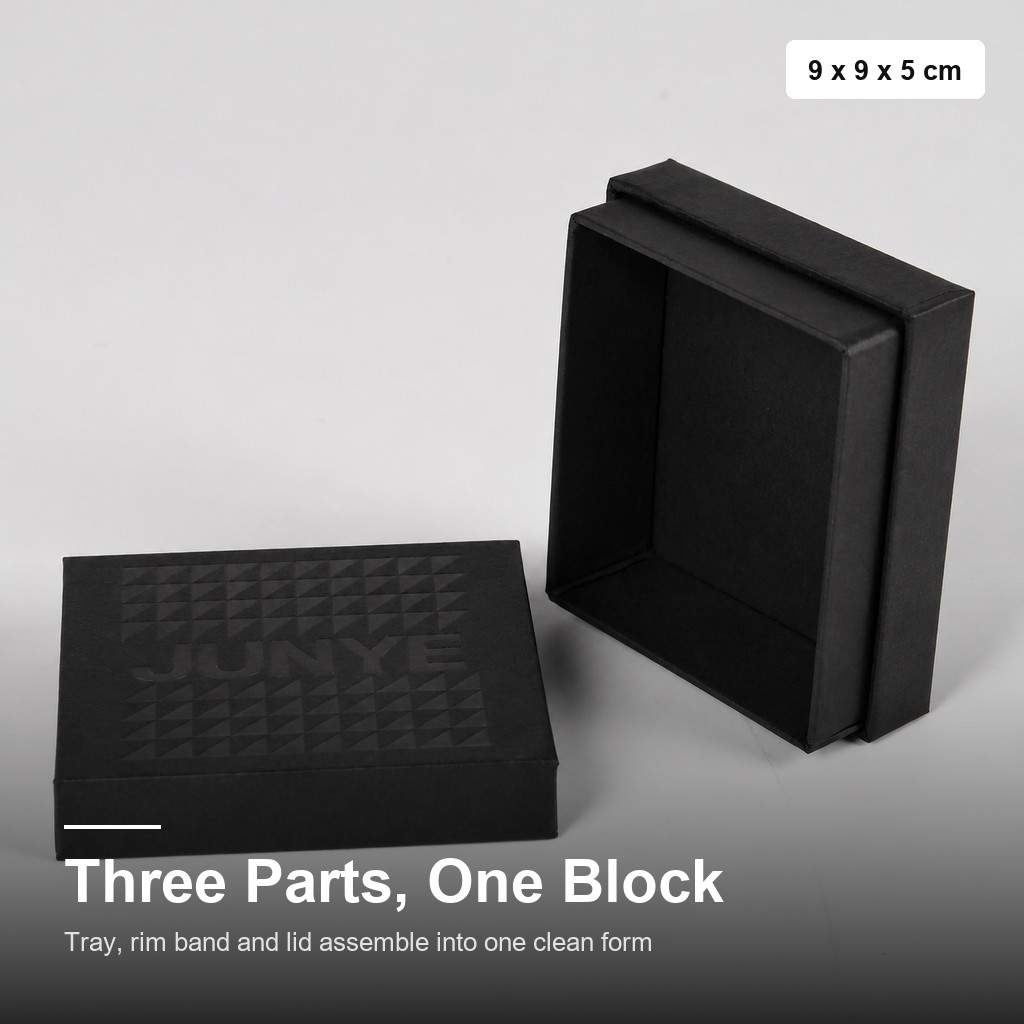
The same three parts — tray, rim, lid — assemble three ways, each producing a different profile on the shelf.
| Rim position | What the closed side shows | Typical use |
|---|---|---|
| Wrapped round the outside of the tray | Three bands: skirt, rim, tray | Boxes where the band colour is part of the design |
| Set inside the tray wall, short of the mouth | Two bands, joint slightly above mid height | Boxes where the lid skirt is shallow |
| Set inside the tray wall, rising past the mouth | Two bands, joint near mid height | Boxes that need a stiff mouth and a quiet outer face |
The third row is the layout used on this 9 x 9 x 5 cm box. Nothing about it is hidden for the sake of appearance alone: a band set inside the wall doubles the paper thickness at the mouth, which is the part of a small box that moves first when a heavy item is lifted out.
Why a Rim Sits Inside the Tray Wall
The rim has no floor and no top panel
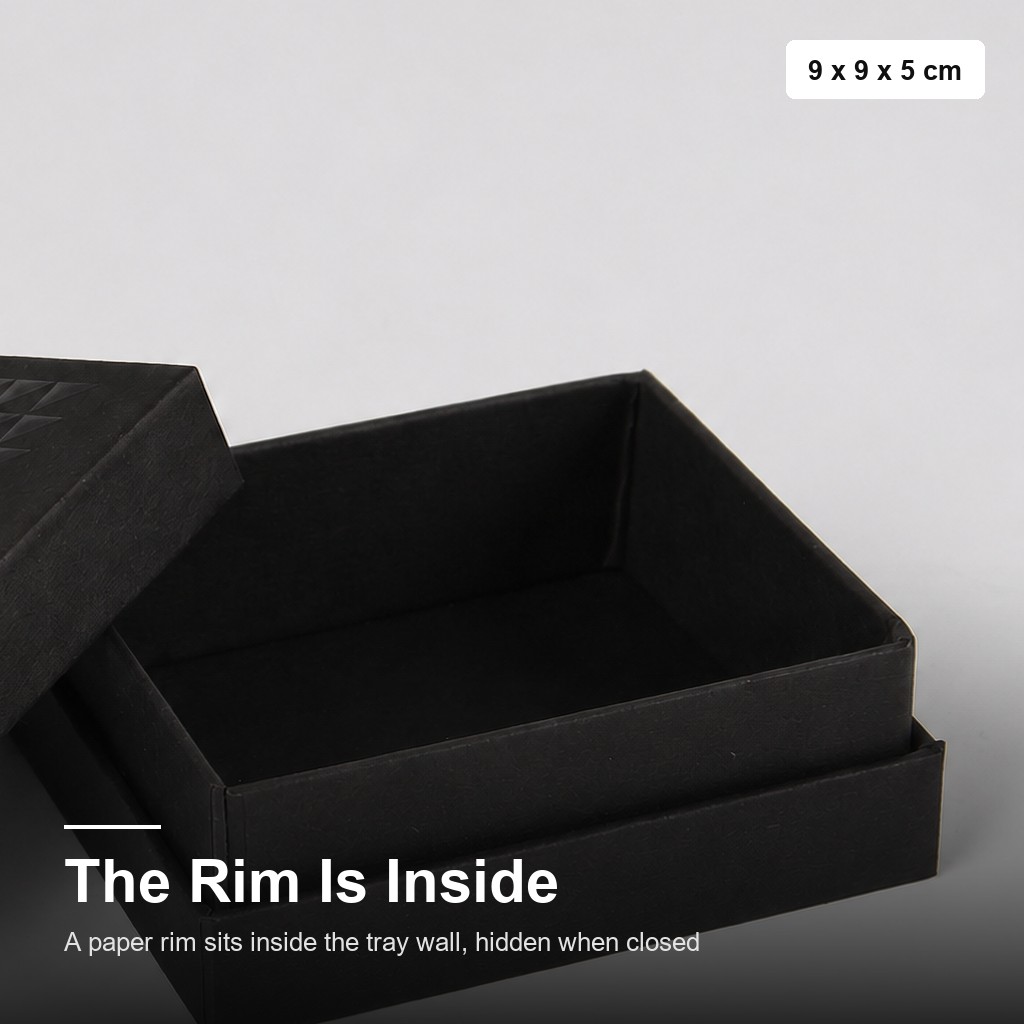
It is a ring of board, open at both ends. Because it carries no panels, it cannot show through the outside surface; the only place it reveals itself is the inner edge visible when the lid comes off.
The lid is a cap, not a second tray
The lid has one top panel and four skirts, with no bottom panel. It drops over the tray and covers the rim completely, which is why the outer face you touch is lid and tray only.
The mouth gets two thicknesses of board
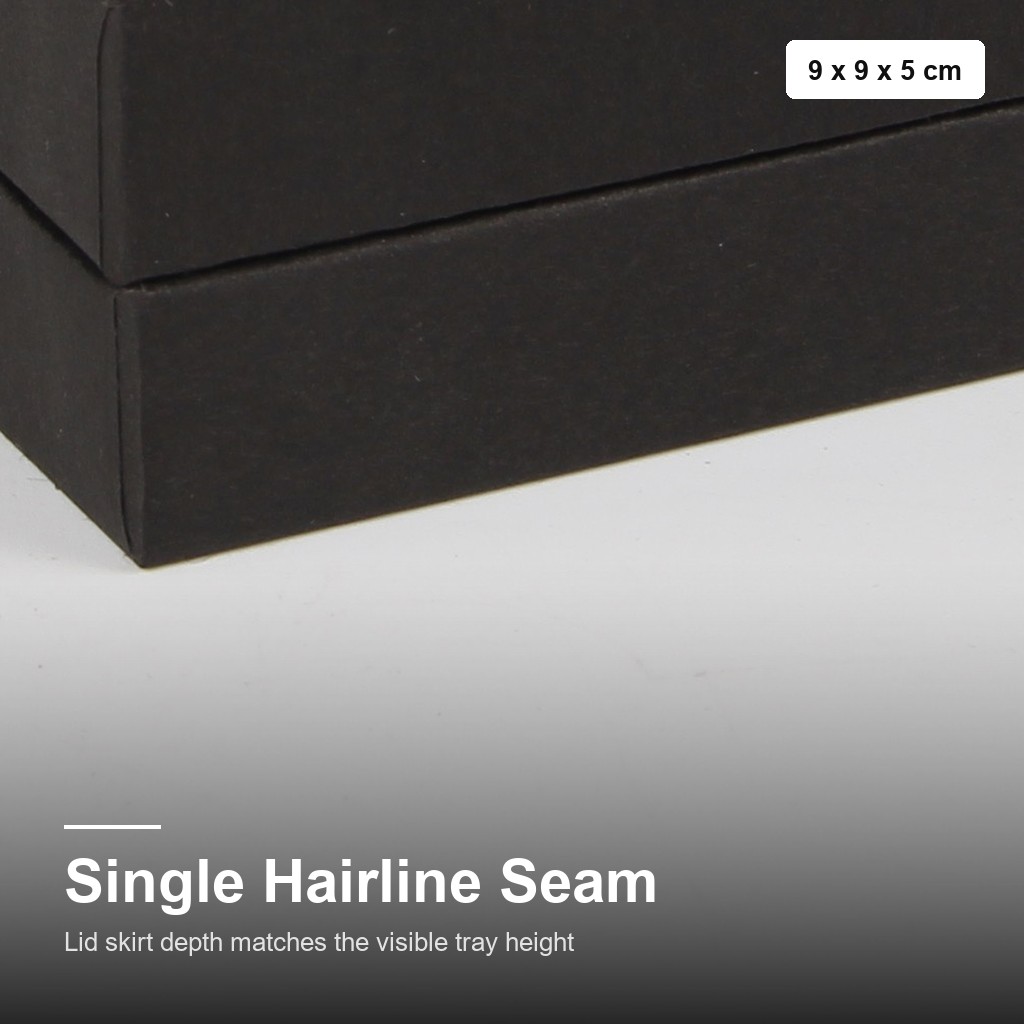
One thickness belongs to the tray wall, the second to the rim pressed against it. The seam you see from outside is the joint between the skirt and the tray, and it is also where the two thicknesses end.
Reading a Sample: The Two-Segment Test
When a sample arrives, do this before you look at the print.
- Close the box and hold it at eye level. Run a finger down one flat face, top edge to bottom edge.
- Count the distinct surfaces you cross. Two surfaces with one crisp joint is the layout described here. Three surfaces means the rim is exposed or the tray is oversized.
- Check the joint height. On a 9 x 9 x 5 cm box the skirt is cut about as deep as the visible tray height, which places the joint close to the middle of the side.
- Open the box and look at the mouth. You should see a wall that runs from the floor up past the tray edge, and a separate inner edge line where the rim ends. If that line is missing, the rim was left out.
Do the same check on the production run, not only on the sample. Wrap and board behave differently at volume, and the joint position is the first thing to drift when a die is worn.
Where the Misreading Comes From
Product photography is the usual source. A box shot at a low angle with a strong side light throws a shadow under the skirt, and that shadow reads as a band. The same box shot flat and evenly lit shows one line. Neither photo is wrong; the light is doing the talking.
The second source is inheritance. Many gift boxes in the same category carry an exposed band because it is printed in a contrast colour — a design decision, not a structural one. Buyers who have seen ten of those expect the eleventh to match.
The third source is the name itself. A rimmed lid-and-base box is one family that contains both the exposed and the hidden layout, and English listings often translate the family name without saying which one is inside.
What the Inside Should Look Like With the Lid Off
Four things belong in the open box, and a sample missing any of them is not the structure you ordered:
- the cavity wall, which is the inner face of the rim band;
- the tray floor, in the same finish as the wall, with a visible junction line;
- the inner edge of the rim, sitting a paper thickness above the tray edge;
- the cut edge of the board at that inner rim, which is the one line that identifies the construction on a same-colour box.
Not expected: a flocked floor unless ordered, dividers, or a second platform. The tray is plain; an insert is a separate item in paper, EVA, sponge or velvet.
Specifying the Box So the Seam Lands Where You Want
Two numbers decide the look of the closed side: the depth of the lid skirt and the visible height of the tray. Give the supplier the ratio you want, not just the outside dimensions. A skirt that matches the visible tray height puts the joint at mid height; a deeper one pushes it down and lengthens the quiet area.
Everything else follows the product. Standard size is 9 x 9 x 5 cm, square in plan so it stacks and packs without waste; any size is built to order from 500 pcs, same structure, re-cut panels. MOQ is 300 pcs standard, 1,000 pcs with a new logo, colour or die. Artwork, mockup and die line are free; a physical sample is approved before the run.
If you want the band to be part of the design rather than hidden, say so at quotation stage — that is a different assembly, and it changes the profile you will see on the shelf. Compare the rimmed lid and base box with an exposed band, or look at how a hidden rim gift box is built. If your display depends on showing the tray colour below the lid, the layout you want is the half-lid one: see the half-lid paper gift box.
Questions Buyers Ask
Is a rimmed box supposed to show a band when closed?
Not always. If the rim is set inside the tray wall, the closed box shows one hairline seam and no band. If it is wrapped round the outside, the band is visible by design.
Does a hidden rim mean less stiffness?
No. The rim adds a second thickness of board at the mouth in either position; only its position changes, not the amount of board.
Why does the seam sit near the middle of the side?
Because the lid skirt is cut about as deep as the visible tray height. Changing that ratio moves the seam up or down.
Can I get the box with a printed band on the outside?
Yes, as a separate assembly. Tell us at quotation stage so the sample matches what you will sell.
What size and quantity can I start with?
9 x 9 x 5 cm from 300 pcs; any custom size from 500 pcs; a new logo, colour or die from 1,000 pcs.
Judge the profile first and the print second. A box that reads as one block when closed, and as a tray with a stiff mouth when opened, is doing what the structure was designed for. See the full lid and base box range for other sizes, or read why a lid sometimes stops above the base.