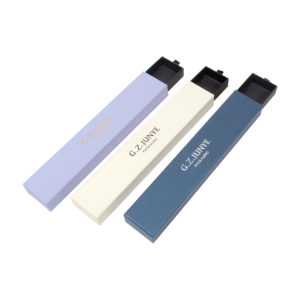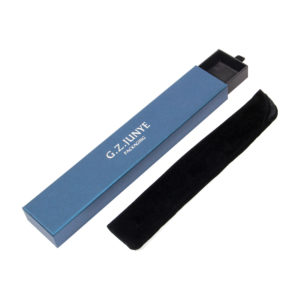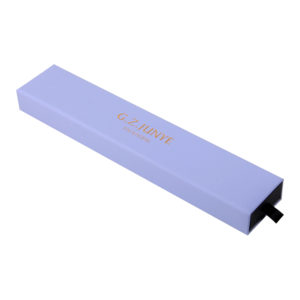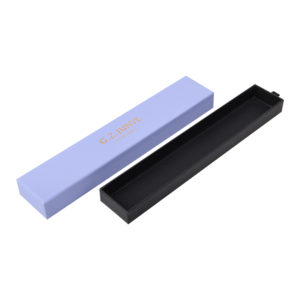
A porcelain packaging box has one problem a jewellery box does not: the piece is heavy, it is breakable, and most of its value is in how it looks rather than how it is protected. A lid that runs to the table makes the box look like a sealed block and hides the one thing that sells the piece, which is the base it sits on. Stopping the skirt above the base is a small structural decision that fixes that.
What a Half Lid Does That a Full Lid Cannot
A full-depth lid covers the whole tray, so the closed box has one continuous side and no visual base. A half lid stops early, so the tray keeps a visible strip of its own wall and the box reads as a lid sitting on a base.
That reads as support. A piece of porcelain presented in a box with a visible base looks like it is standing on something; the same piece in a flush box looks packed. For a gift or a retail display, that is the difference between a product and a parcel.
Reading the Side: Three Levels, One Step
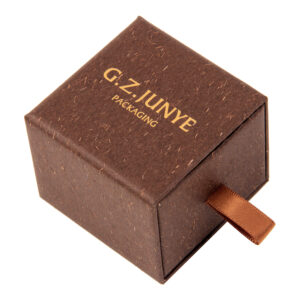
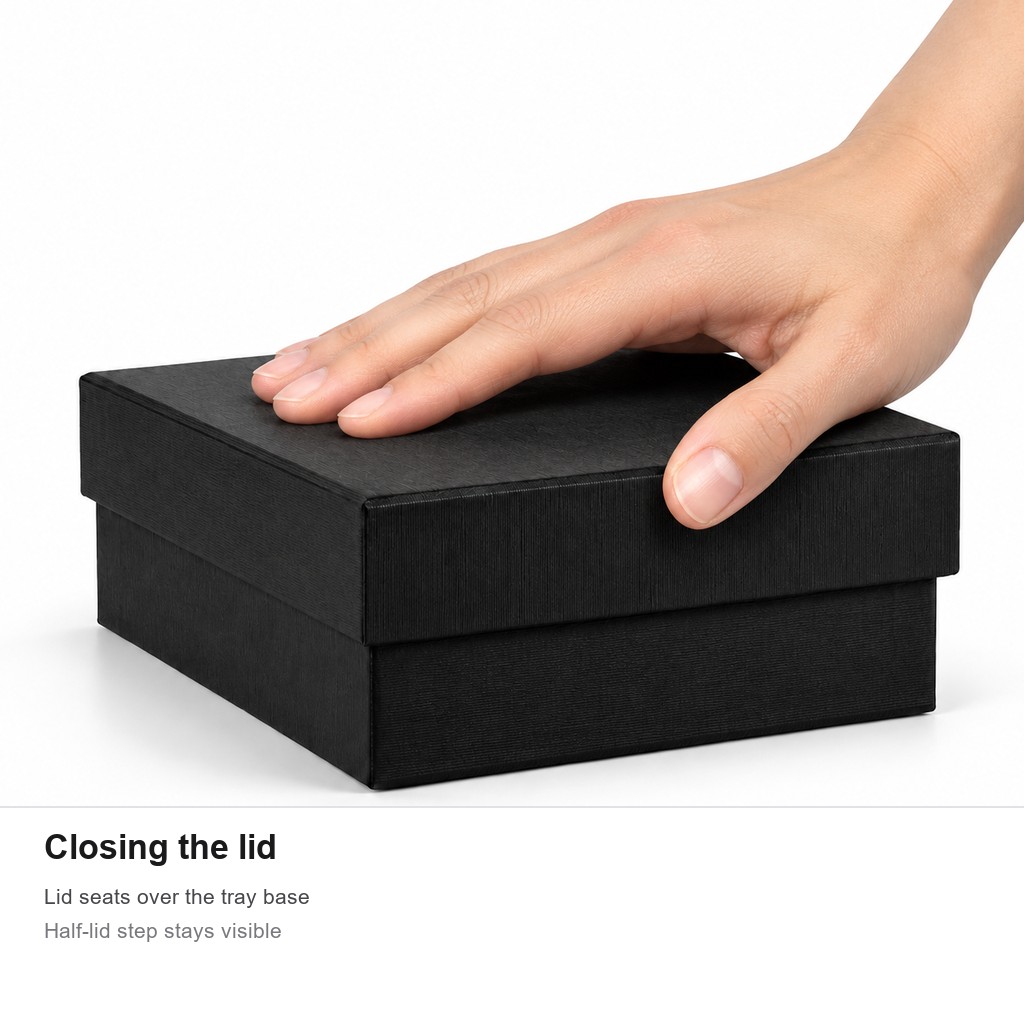
Shut, the side shows three levels, in this order: the lid’s top face, the lid skirt, and the strip of base below it. Between skirt and base there is one step, where the skirt’s lower edge stands proud of the tray wall, and under that edge a fine shadow.
| Level | What it is | Why it is there |
|---|---|---|
| Lid top | the top panel of the cover | the face that carries a mark if there is one |
| Lid skirt | four walls, no bottom board | covers the upper part of the tray |
| Step | the skirt’s lower edge, slightly wider than the tray | throws the shadow that separates the two colours |
| Base strip | the lower part of the tray wall | gives the box a visible plinth |
Why Porcelain Needs a Visible Base
Porcelain is presented, not just carried. A cup or a dish is judged on its foot, its profile and the shadow under it, and all three are lost when the piece sits deep in a well. Lifting the piece on a draped lining and leaving the box visually open at the bottom keeps the object readable from a standing position.
There is a practical side too. A lid that stops above the base is easier to lift: your fingers find the step instead of hunting for a seam on a flush wall. On a heavy piece, that matters when the box is being opened by someone who does not want to drop it.
Satin as a Bed, Not a Bracket
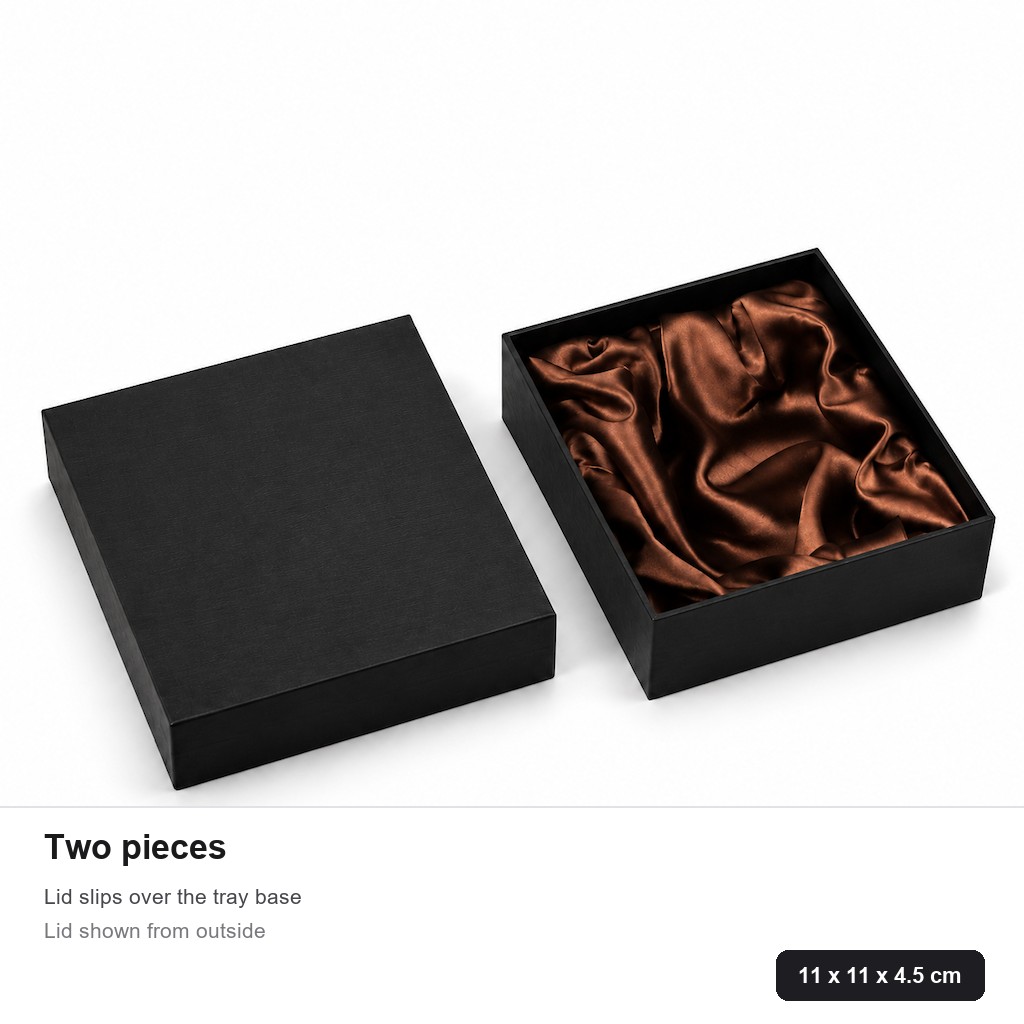
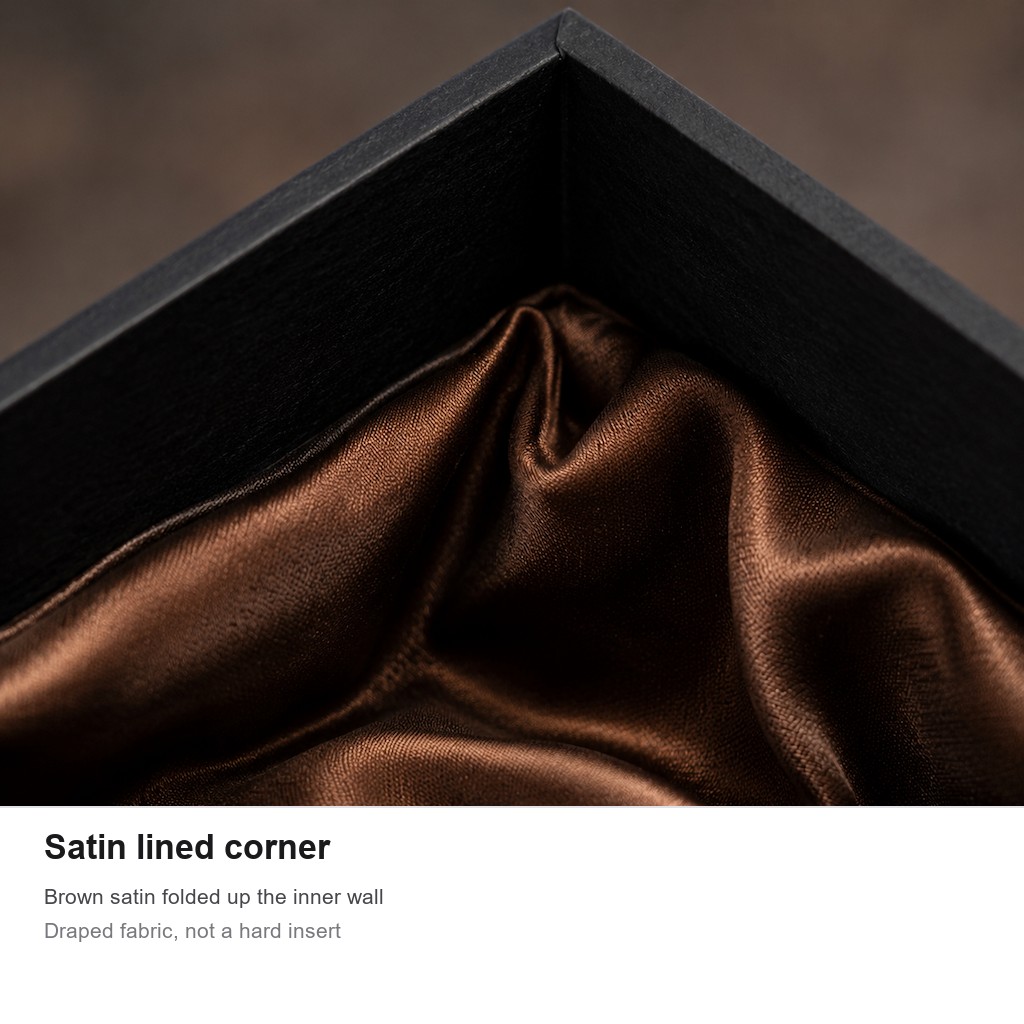
The lining in this box is one piece of satin, laid over the floor and up the walls, folded into the corners and left to fall where it falls. It is not a moulded tray and it is not cut to a shape. The fabric meets the piece along its whole underside and takes its outline.
That is the opposite of a foam insert, and for porcelain it is usually the better answer. Foam grips at a few contact points and holds the piece rigid; satin spreads the load and lets a foot ring settle. What it does not do is survive a courier on its own, which is why this box goes inside an outer carton.
Where a Half Lid Fails
Two places. If the box is expected to look monolithic, a visible base works against you, and the full-depth version is the right call. And if the piece is tall relative to the footprint, the exposed base strip starts to look like a shallow box with a hat rather than a plinth.
The proportion is the whole design. Stop the skirt too high and the box reads as two separate objects; run it too low and you have a full lid with a seam. The useful window is narrow, and the skirt has to be set with the height, not after it.
Height Changes, Structure Does Not
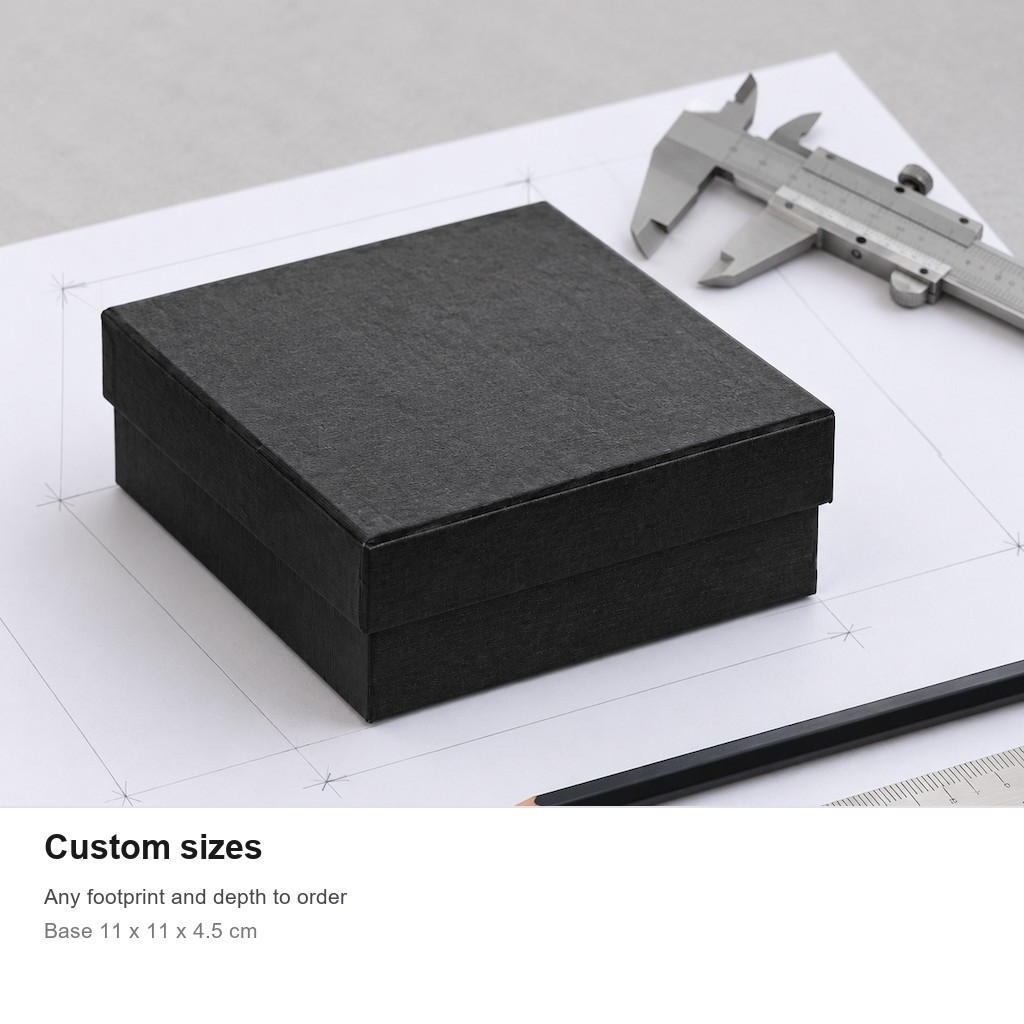
The standard box is 11 x 11 x 4.5 cm, square in plan. Height is the dimension buyers change, because the footprint is usually set by the piece. Raise the wall and raise the skirt with it, and the step stays at the same relative position.
What breaks the design is raising only one of them. A taller tray with an unchanged skirt becomes a full-depth lid by accident, and the three levels collapse into two.
Paper and Board Sourcing
The wrap and the grey board can be specified as recycled content, and paper can come from FSC certified mills on request. The certificate belongs to the mill and this factory does not hold one, so the box itself is not described as certified.
Documents on file: ISO 9001:2015 certificate ZYC24Q00141R1S, German LUCID registration DE2463045771631 and French CITEO registration FR292146_01UOMY.
Four Things to Send With the Drawing
Send the piece’s footprint and height, whether it needs a satin bed or a shaped insert, the height you want closed, and the colour of the lining if it is not brown. The first two decide whether this construction suits the piece at all; the last two are specification, not structure.
The box itself is on the custom paper gift packaging box page, and the rest of the range sits under lid and base boxes. For the same two-piece idea with the lid cut to the table, see the full depth version.