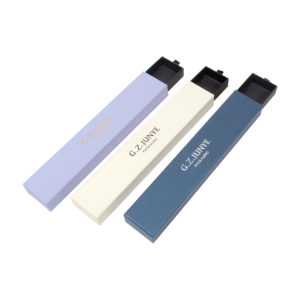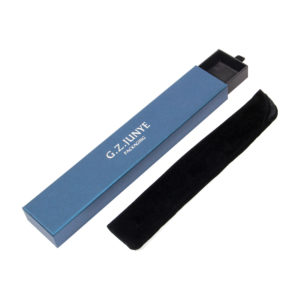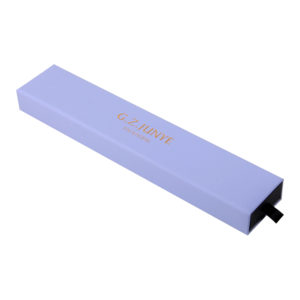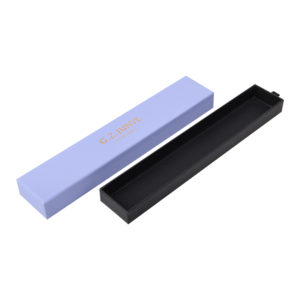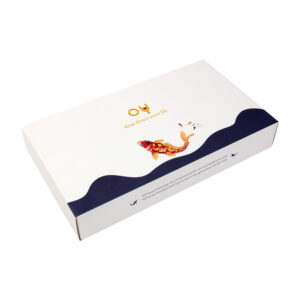
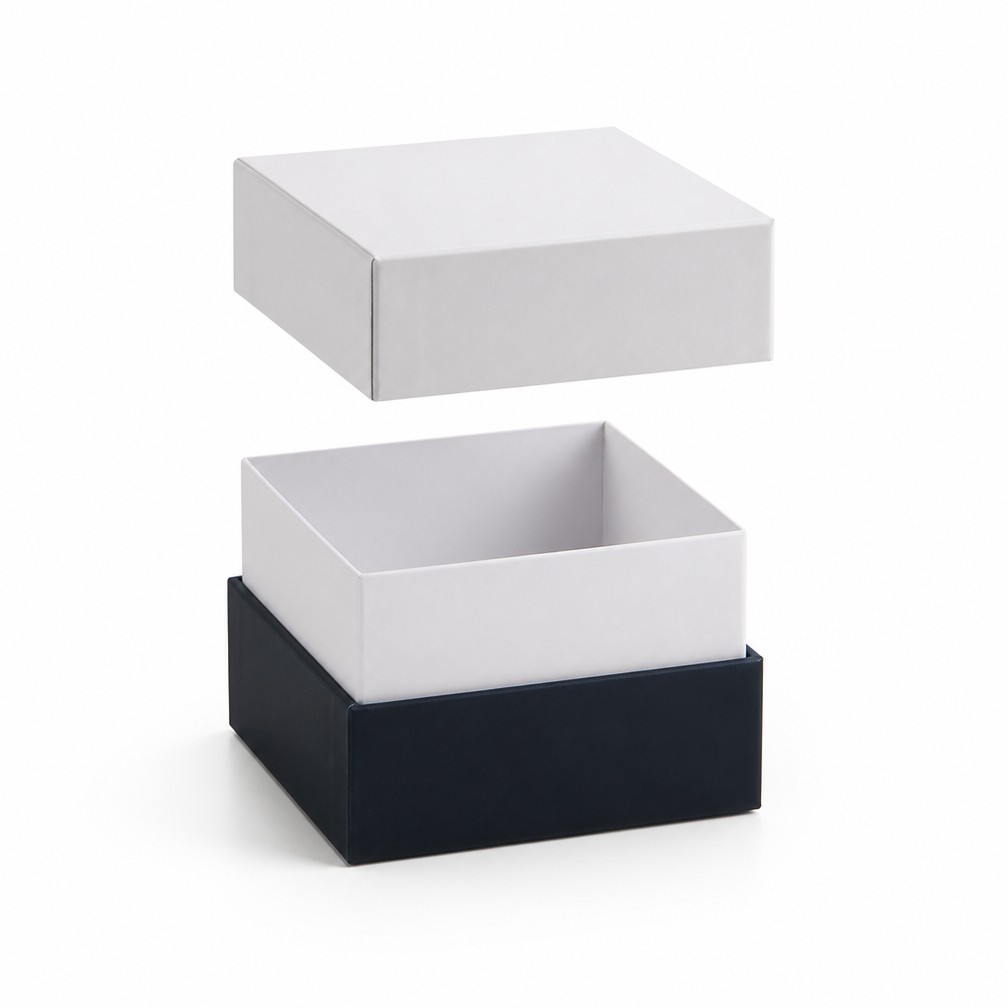
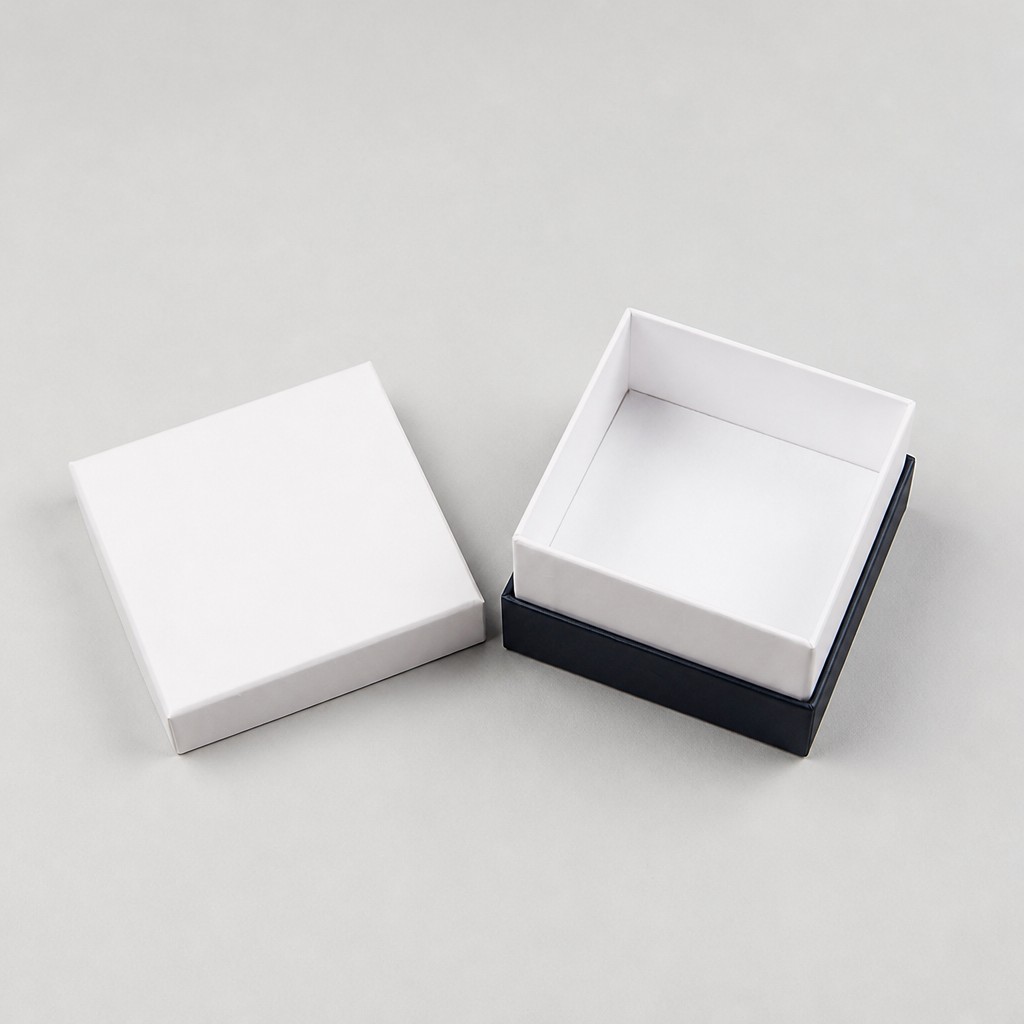
A hidden rim gift box is a small rigid box where the rim band sits inside the base walls, under the skirt, and cannot be seen while the box is shut. It is a three-piece build that reads as two: a lid, a rim, and a base, closed into two blocks and one joint line. This one is 9 x 9 x 5 cm, white over navy.
Why the Rim Disappears When the Box Is Shut
Put a band inside a tray and put a cap over both, and the band ends up in the one place a buyer never looks at first: under the skirt. The skirt only has to be longer than the band is high. Do that, and the rim has no exposed edge on the outside of the box at all.
What is left is the skirt’s lower edge meeting the base’s outer wall. Two blocks, one line. That is the whole reason this construction exists: it gives a full-height white cavity without a third colour turning up in the side elevation.
| Piece | Where it sits | What it does |
|---|---|---|
| Base | the outer tray, walls facing out | carries the box; its wall is the navy band you see below the joint |
| Rim band | inside the base walls, glued to them | forms the cavity wall; rises above the base wall, hidden by the skirt |
| Lid | over the outside of the base | its skirt is longer than the rim stands, so the rim never shows |
Two Tones From Three Pieces
Three pieces, two colours. The lid and the rim are wrapped in the same white; the base is wrapped in navy. That is not a cost trick, it is the only way to get this look: the visible white is the lid, the white cavity is the rim, and one paper serves both.
It also means the count is wrong when people describe it as “a two-piece box”. Two pieces is what you see. Three is what you handle when you build it, and the third one is the reason the inside is white.
What Happens at the Joint
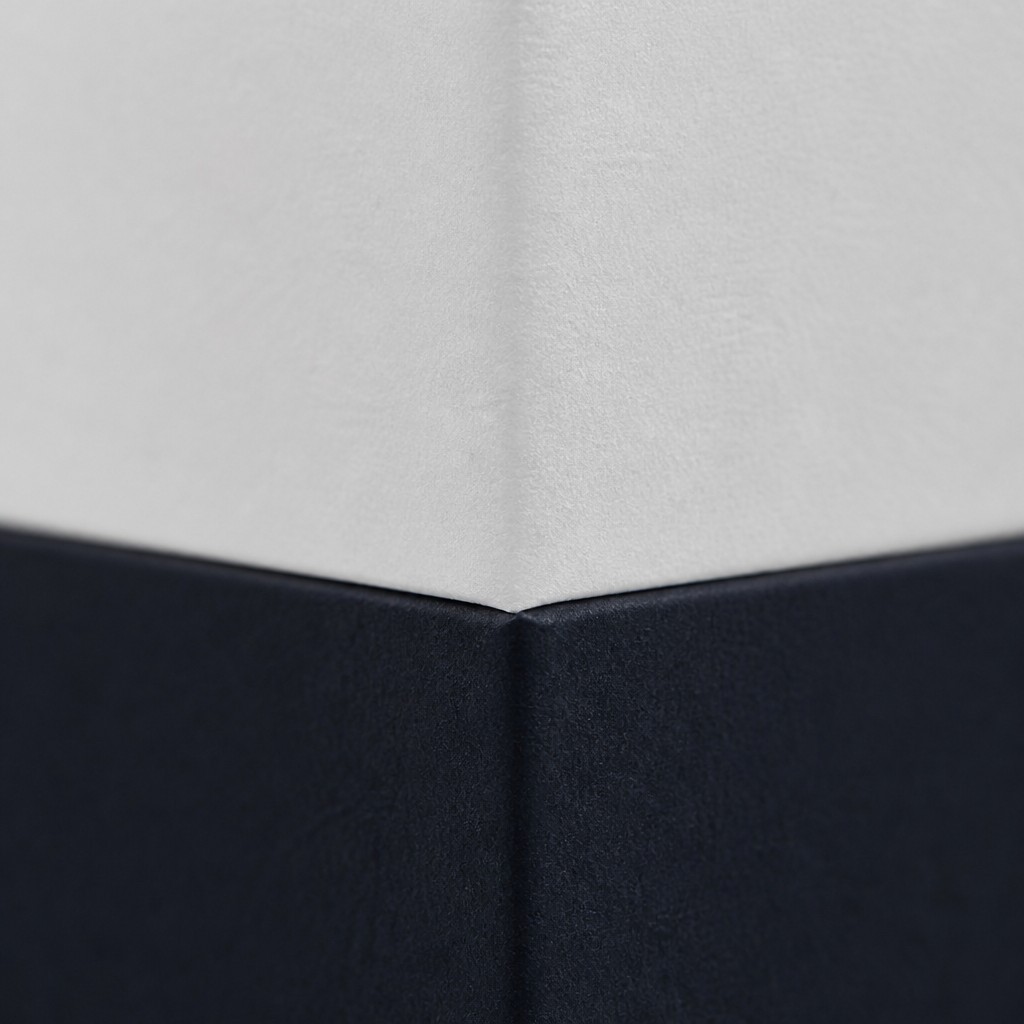
At the joint, the skirt’s lower edge lands on the base’s outer wall. There is no step and no ledge there, because nothing protrudes: the rim is behind the skirt, not under its edge. The line is a paper edge on paper, and the only thing that makes it read is the colour change from white to navy.
That has a practical consequence. A joint with no ledge cannot hide a bad fit, so the skirt-to-base clearance is set tight; on a 9 cm box a loose skirt shows as a shadow line of uneven width, and the eye catches it immediately.
The Rim Is the Cavity Wall
Once the lid is off, the white band is the wall you see, from the mouth down to the floor. It is a structural wall glued to the inside of the base, not a liner that lifts out, and it is what the product touches.
Because it is a wall and not a lining, it can be wrapped in any paper the base can take, and it can be printed. It can also be left plain, which is what most jewellery buyers choose: a coloured cavity competes with the product, and a white one lets the product hold the eye.
Where a Hidden Rim Helps, and Where It Does Not
It helps when the box is small and the product is precious. On a 9 cm footprint, a third colour band on the side would take up a visible share of the elevation, and the box would read as busy. Hiding the rim keeps the elevation to two clean blocks and puts the colour change where you want it, at the joint.
It does not help when the box is deep and the product tall, because a long skirt over a long rim is a lot of paper for no visible gain, and a box that needs to show its cavity at a glance is better off with the rim exposed. Exposure is a design choice, not a quality grade: neither version closes better than the other.
Colour Blocking Without a Second Box
Wrapping three pieces separately is how you get two-tone without inventing a second box. The lid and rim can stay white while the base goes navy, oxblood or a print; or the rim can take the second colour and the base stay white. Either way the construction does not change, and no new tooling is needed.
That flexibility is worth knowing at quoting time. A “two-tone box” and a “box with a coloured band” are the same build described from two directions, and the second one is easier to change late, because only one piece is re-wrapped.
Four Details That Fix the Size
Send the product footprint, the height you need to clear above the floor, the paper for each of the three pieces, and the artwork if there is print. The first two fix the size; the third decides whether it is a two-tone box or a three-tone one; the fourth only affects the lid face.
If you want to hold the joint before deciding, ask for a free sample. The box itself is on the lid gift paper box page, and the rest of the range sits under lid and base boxes.