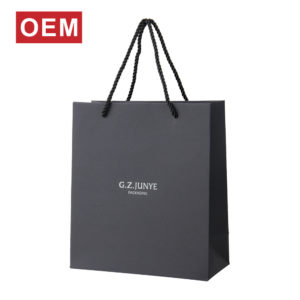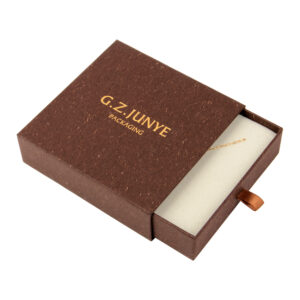
A gold gift jewelry package is a rigid paper box, not a metal or foil box. The gold surface is fine
textured specialty paper wrapped over rigid gray board, the interior is lined in white, and the logo is
added by foil stamping, screen printing, embossing or UV. Below are the five misunderstandings we see
most often in buyer enquiries, with what the material and the process actually do.
Misconception 1: “Gold” Means Gold Foil or Metal
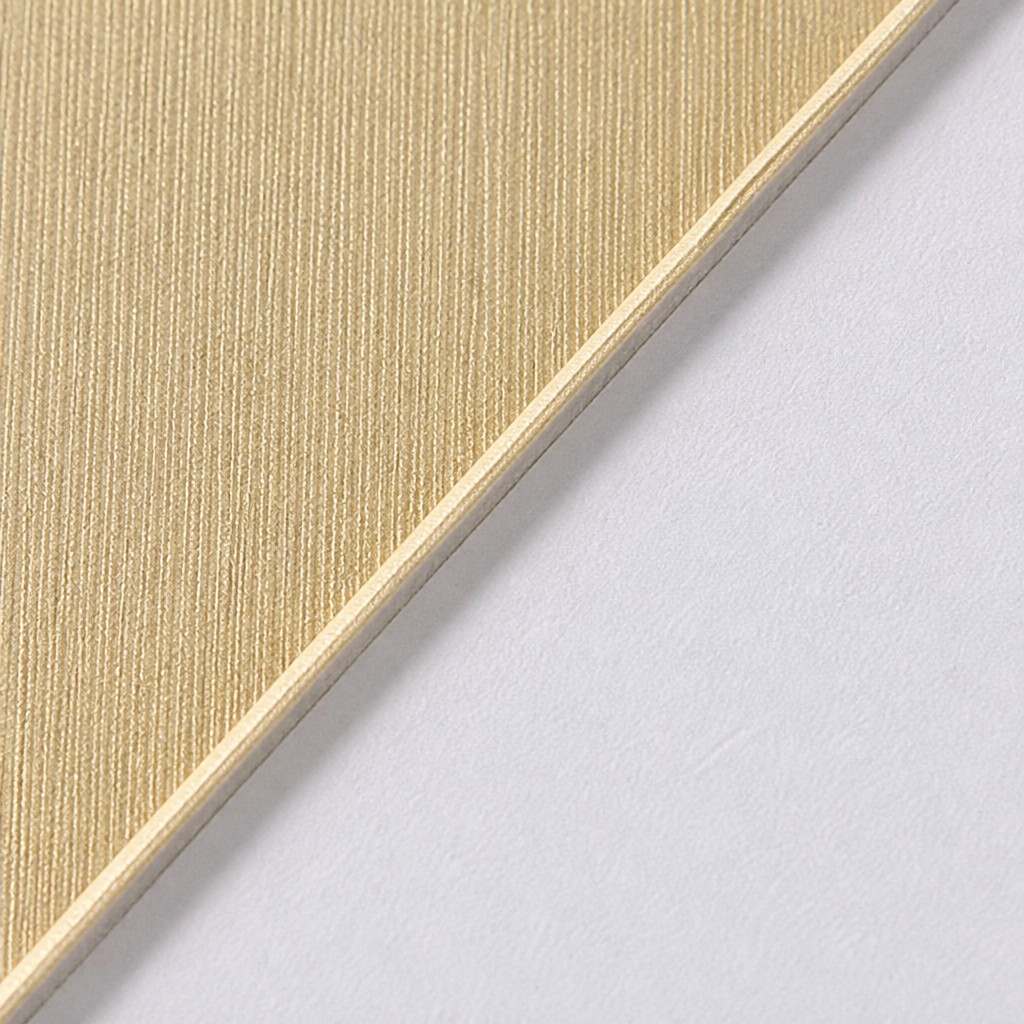
This is the most common one. A box described as gold is not plated, not metal and not covered in gold
foil. The body colour comes from the wrap: a specialty paper with a fine vertical grain and a soft satin
sheen, laminated over the board. Turn the box in your hand and the tone shifts with the light, which is
why it reads as a metal finish in photographs.
What the gold surface actually is
Gold fine textured specialty paper, wrapped and folded around rigid gray board. The texture runs in
one direction, so the grain has to be kept consistent across every panel and across the whole batch –
this is one of the checks we run on the production line, because a reversed grain is visible once two
boxes sit side by side.
When foil stamping does come in
Foil appears in the logo, not in the body. Foil stamping presses a thin metalised film into the paper
under heat, so the mark sits slightly in the surface and takes the sharpest edge of the four finishes we
offer. Screen printing suits solid colour blocks, embossing gives relief without colour, and UV adds a
glossy mark against the satin paper. A gold box with a gold foil logo is a combination of two
processes – which is why the finish has to be confirmed on a physical sample rather than on a screen.
Misconception 2: A Lid and Base Box Is a Magnetic Box
Both are rigid boxes, and the photos look similar, but the opening is completely different. A
lid and base box is two pieces: the lid lifts straight up and off, and drops
back on. There is no magnet and no hinge. Nothing has to be aligned and nothing can be torn.
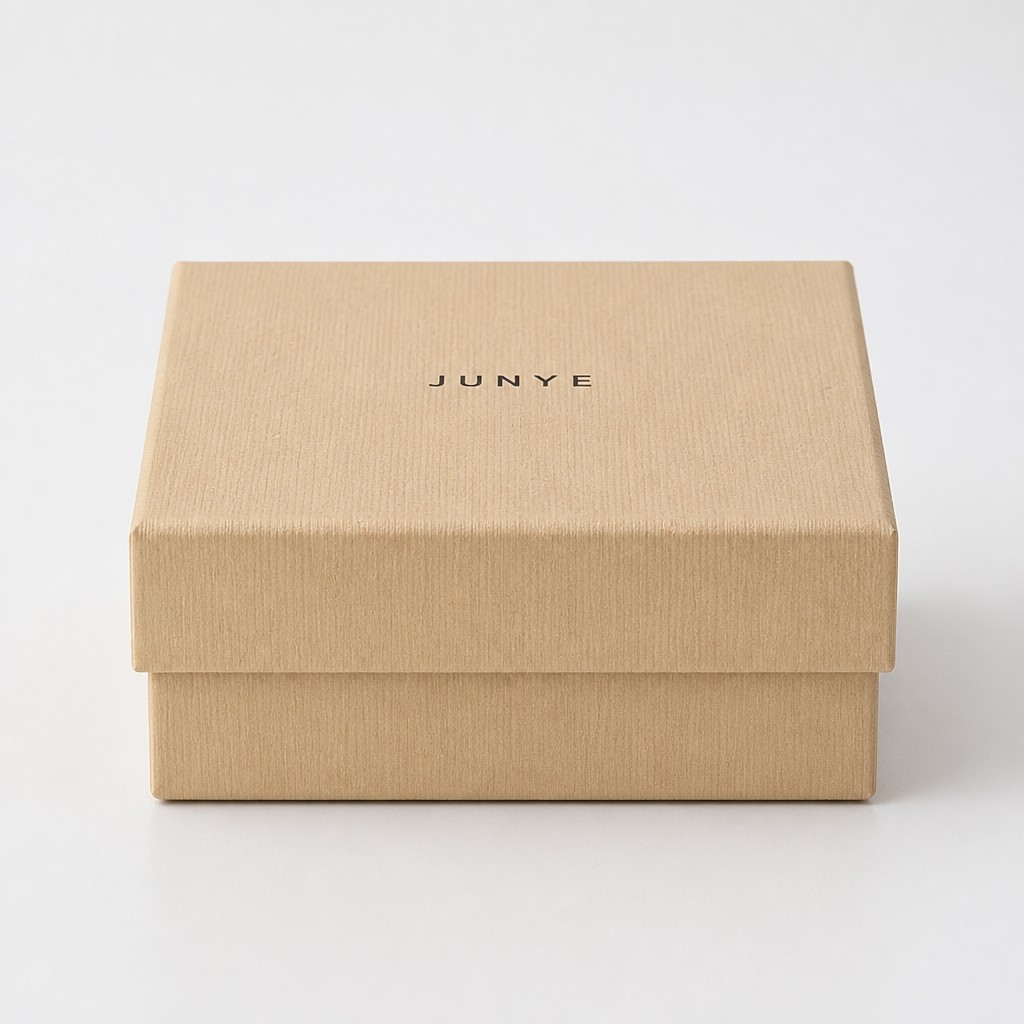
A magnetic box uses hidden magnets in a folded flap and opens like a book; a
flip top box is hinged at one edge; a drawer box slides
open from the side. If the reveal is part of the product experience, the lift-off format is the cleanest
of the three, and the base doubles as the tray that holds the piece.
Misconception 3: “Rigid” Just Means Thick Cardboard
Rigid packaging is a construction, not a thicker sheet. The box is built from dense gray board and
then wrapped in printed or textured paper, so the edges are folded rather than exposed. That is what
gives a 9 x 9 x 4 cm box its shape retention: the walls stay square, the lid seats with an even seam,
and the box does not flex when it is picked up by one corner.
Corrugated board behaves differently. It is lighter and cheaper, it shows a fluted edge, and it
creases rather than folds. For a jewelry packaging box that has to look
like a gift before it is opened, the wrapped rigid build is the reason the material feels heavier in the
hand than its size suggests.
Misconception 4: The Insert Is Part of the Box
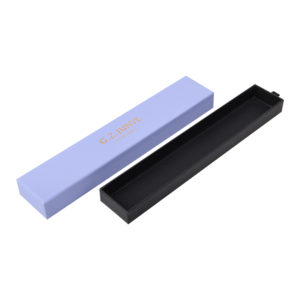
The base is lined in white as standard. An insert is a separate component, and it is only worth
adding when the box has to present one specific piece in a fixed position. Three options are used with
this format:
| Molded EVA insert | Dense foam cut to the exact outline of a ring, pendant or bracelet |
| Vacuum formed blister tray | Thin formed tray that fixes several pieces in one layout |
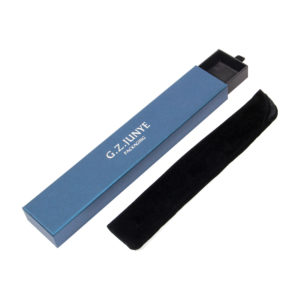
| Velvet drawstring pouch | A soft velvet drawstring pouch that sits inside and travels with the piece |
Because cavities are cut to your jewelry dimensions, the insert is the one part that cannot be
specified from a photograph. Send the measured dimensions instead: outer diameter, thickness and the
depth the piece needs to sit below the lid.
Misconception 5: One Lead Time Covers Sampling and Production
They are two separate stages with two different durations, and only the first one involves your
approval.
| Sampling | 5-7 days – your size, wrap colour and logo finish, produced as a real box |
| Sample review | You approve the sample; the proof and the date are confirmed in writing |
| Mass production | 18-25 days after sample approval |
| Packing | Individual boxes counted into export cartons |
Adding an insert or a new die for the logo sits inside the sample stage, not after it, so a change of
direction after approval is what usually moves a delivery date. That is also why we ask for artwork
before sampling: a logo redrawn during sampling is time spent twice.
Material and Finish: What to Confirm Before You Order
Five points settle almost every material question on a wrapped rigid box.
| Wrap | The paper texture and the gold tone, confirmed on a physical sample |
| Grain direction | Consistent across lid, base and the whole batch |
| Logo finish | Foil stamping, screen printing, embossing or UV – placed and sized on the proof |
| Interior | White liner or an insert cut to your jewelry dimensions |
| Documents | ISO9001:2015 certificate No. ZYC24Q00141R1S (valid to 2027-11-28), RoHS report No. AZT032202170002C-010, German LUCID registration DE2463045771631 and French CITEO registration FR292146_01UOMY are available on request. The paper is FSC-compliant, sourced from FSC-certified suppliers; the FSC mark is not printed on the finished box. |
Frequently Asked Questions
Can a paper box really look like gold?
It can look like a brushed or satin gold surface. The texture carries the light and the paper tone
does the rest, which is why a physical sample is the only reliable way to judge it.
Do I need an insert if my jewelry comes in a pouch?
No. A velvet pouch inside the white lined base is a complete presentation on its own, and it is often
the cheaper route for a mixed jewelry range.
Is this box suitable for a necklace?
At 9 x 9 x 4 cm it takes a pendant or a short necklace. For longer chains, a larger footprint or a
deeper base is the better format.
What has to be sent for a quote?
Artwork for the logo, the target box size, the jewelry dimensions if an insert is needed, and your
target quantity. MOQ is 300 pcs for this model.
How do I check the finish before committing to a full run?
Approve a physical sample in 5-7 days: your paper, your size, your logo finish. Mass production runs
18-25 days after that approval.
Ordering a Custom Gift Jewelry Package
The gold square format answers most of a jewelry line with one SKU: a stack of rings, a pair of
earrings, a bracelet, a pendant or a short necklace all fit in a 9 x 9 x 4 cm box. Because the material
and the finish are the two things that decide how the box is judged in the customer’s hand, they are
also the two things worth confirming on a sample first.
Send your artwork, size and quantities and we will quote the whole order, or request a
free sample of this box. Common questions on sizes, inserts and lead times
are answered in the FAQ, and the finished product page for this model is here:
gold gift jewelry package box.