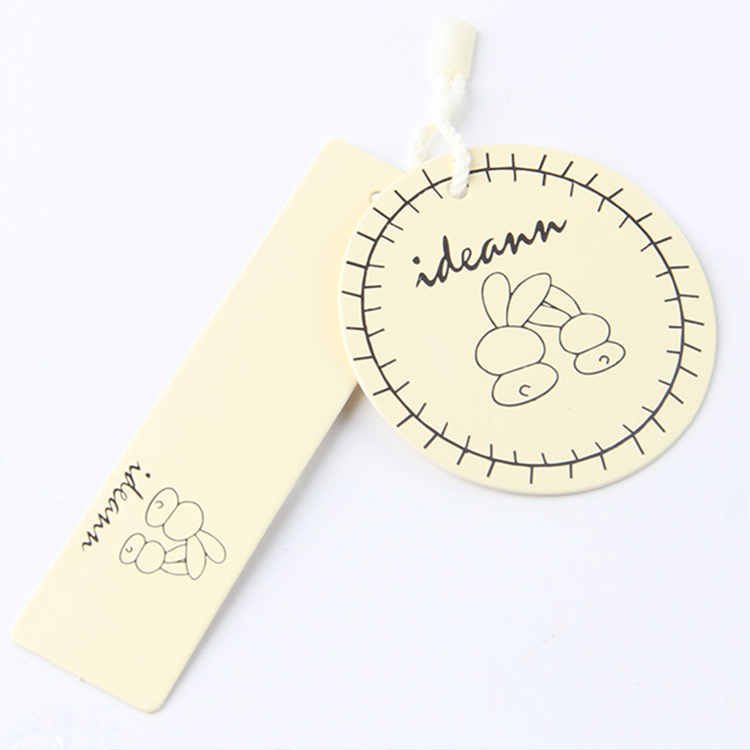
Many sock sellers focus on the cost of paper tags, but Sock Tag Factory consider deeper factors. Most sock tags are folded paper cards that wrap around the socks. Often, the inside of these tags is not lined with additional paper—a decision many assume is solely about saving money. However, there’s more to it. The production process plays a key role. If the paper is lined first and then cut, the cut edges reveal the inner material, creating an unsightly black line. To avoid this, some factories cut first and then line. But this approach has its own risks. The lining paper used is often low-quality and lacks flexibility. When sellers fold the tags to attach them to socks, the lining may crack unevenly, looking even worse than the black line from the alternative method. From a factory’s perspective, skipping inner lining isn’t just about cost. While clients focus on budget, Sock Tag Factory prioritize quality and craftsmanship. A well-made product reflects the factory’s expertise and reputation, which matters more than short-term savings. In short, the choice to avoid inner lining is a practical one—balancing appearance, durability, and production realities—not just a cost-cutting measure.
Category Archives: Knowledge

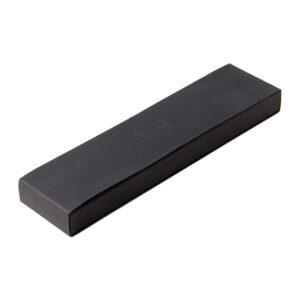
This image displays a premium, rigid High-End Paper Box, likely designed for a high-end electronic device such as a smartphone or a tablet. The box has a classic rectangular, two-piece telescoping lid design, where the cover fits snugly over the bottom tray. The exterior is finished in a sophisticated, minimalist style, dominated by a solid, matte dark gray or charcoal color that exudes a modern and professional aesthetic. The most prominent feature on the top surface is a large, high-gloss, reflective silver logo. This stark contrast between the matte background and the glossy emblem creates a striking visual focal point, suggesting a brand identity focused on elegance and clarity. The sides of the lid are clean and unbroken by text or imagery, maintaining the minimalist theme. The bottom tray, visible in the gap left by the slightly raised lid, is a simple white or light gray, providing a subtle interior contrast. The High-End Paper Box is photographed in sharp focus against a seamless white background, a technique that highlights its clean lines and premium materials. Overall, the box communicates a sense of quality and anticipation, suggesting the product inside is equally well-crafted and refined.

When cutting notches on the inner tray of jewelry ring packaging to secure the ring, many jewelry box design merchants consider how deep the notches should be. In fact, the choice of notch depth in jewelry packaging boxes needs to take into account the following factors: 1.Recommended Depth Range for Jewelry Ring Packaging: (1) General Recommendation: The cut depth should be 1/2 to 2/3 of the ring’s thickness (e.g., if the ring thickness is 2mm, the cut depth should be approximately 1~1.3mm). (2) Material Limitation: The cut depth should not exceed 50%~70% of the inner cardboard thickness (e.g., if the cardboard is 2mm thick, the cut depth should not exceed 1~1.4mm) to retain sufficient support strength. 2.Key Considerations for Jewelry Ring Packaging (1) Ring Characteristics: Minimalist Design (1~1.5mm thickness): Cut depth 0.5~1mm. Inlaid Design (2~3mm thickness): Cut depth 1~2mm (adjust according to cardboard thickness). (2) Cardboard Strength: Thin Cardboard (1.5~2mm): Cut depth should not exceed 1mm to avoid penetration. Thick Cardboard (3mm+): Can be cut to 1.5~2mm, but load-bearing capacity must be tested. (3) Functional Requirements: Display Purpose: Slightly shallow cut (e.g., 0.8mm) for easy access and placement.

Regarding the height of paper jewelry package, the actual situation needs to be determined based on the jewelry box design. It depends on the specific type of jewelry packaging box and design requirements. Below are some key points summarized: 1. Common Height Ranges for paper jewelry package (1) Ring Box: Generally shorter (3-5 cm), often designed as flat square or round shapes. (2) Necklace Box: Typically features a vertical structure, with a height of approximately 6-10 cm (including internal support). (3) Earring/Stud Box: Can reach 5-8 cm in height for layered designs, while single-layer boxes are around 3 cm. (4) Bracelet Box: Flat designs are about 4-6 cm in height, while vertical display boxes may reach 8-12 cm. 2. Typical Scenarios for paper jewelry package Exceeding 8cm (1)Combination Sets: For holiday gift boxes containing multiple pieces of jewelry, the height often reaches 10-15cm. (2)Display Packaging: Boxes with features like mirrors or LED lights can exceed 12cm in height. (3)Unconventional Jewelry: Packaging for special items such as large brooches or tiaras. (4)Transport Protection: Height increases when extra-thick cushioning layers are used for fragile jewelry. A sampling survey of paper jewelry package revealed that 80% of regular item packaging has a height of ≤8cm.

When selecting the texture of paper for jewelry packaging paper, it is necessary to consider the brand positioning, target audience, product tone, and market trends comprehensively for jewelry box design. Here is a detailed analysis of the characteristics and applicable scenarios of different textures according to consumer psychology, to help you make a more accurate choice for Jewelry Packaging Boxes: Choose according to consumer psychology. 1. Jewelry packaging paper tactile marketing dimensions: (1) Fine stripes (0.3mm wide) can increase the tactile perception area by 40%. (2) Embossed texture packaging boxes have a memory retention time 2.3 times longer than smooth surface packaging. (3) 70% of consumers believe that horizontal stripe packaging makes the product appear more exquisite. 2. Visual perception rules of jewelry packaging paper: (1) Vertical stripes can increase the perceived height of the box by 15%. (2) Diamond patterns are most likely to attract the attention of women aged 25-35 (attention rate increases by 27%). (3) Matte textures have 18% better color display under warm light compared to glossy materials. It is suggested to conduct A/B testing before making actual choices: create 3-5 prototypes of jewelry packaging paper textures, invite target customers to conduct tactile blind tests (to eliminate brand interference), and use an eye tracker to record the distribution of visual focus, and choose the best plan based on the comprehensive data.

Different types of jewelry, due to their shape, material, usage scenarios, and value positioning, often require different choices for jewelry box types. A well jewelry box design not only enhances the display effect of the jewelry but also strengthens the brand tone, protects the product safety, and optimizes the user experience. Here are some suggestions for jewelry packaging box types for common types of jewelry: 1. Necklace/Pendant jewelry box type. Hanging Lid Box: The box features hooks or slots on the top interior to hang necklaces vertically for display, preventing tangling and highlighting pendant details. Book-style Box (Bi-fold): When opened, it unfolds like a book, with necklaces displayed flat inside, suitable for pairing with brand story cards or decorative lining. Matching Tips: The lining should be soft (such as velvet) to prevent metal scratches, long necklaces require a box with sufficient length, and short chains can be paired with a dark background to highlight their luster. 2. Ring recommendations for jewelry box types. Classic flip-top square box: Compact and exquisite, with built-in grooves or sponge pads to secure rings, creating a sense of ceremony when opening and closing (commonly seen in wedding ring brands).

The selection of the velvet length for the inner lining of a ring box packaging should take into account a variety of factors. To highlight the various characteristics of the ring, there will be different jewelry box designs, much like many jewelry packaging boxes. They are not designed to accommodate all types of jewelry with a single size, but rather are tailored to the specific positioning of the jewelry. Here are some specific suggestions: 1. Basic reference values for ring box packaging. Single ring slot: The velvet length is typically 50-70 millimeters (adjust according to ring size and slot design). Regular rings (diameter 16-20mm): It is recommended that the velvet length covers the circumference of the slot interior and reserves 10%-15% extra (for example, if the circumference is 60mm, choose 66-70mm). 2. Key factors affecting ring box packaging. Ring size: The circumference of the ring’s inner circle = π × diameter (for example, if the diameter is 18mm, the circumference is approximately 56.5mm). The length of the velvet cloth should be slightly longer than the circumference (adding 5-10mm) to ensure a secure wrap. 3. Ring box packaging groove structure.

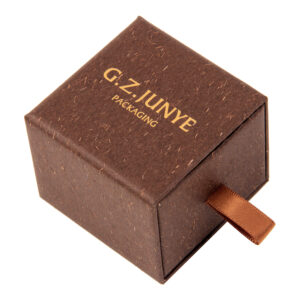
The common jewelry box accessories we see include ribbons, magnets, ropes, etc. Today, we will discuss how using ribbons to decorate paper jewelry packaging boxes can effectively enhance the quality of jewelry, but it needs to be considered comprehensively based on factors such as jewelry box design, material, and usage. The following are specific analysis and suggestions: 1. Advantages of ribbons Visual enhancement: The luster of ribbons (such as satin or silk) can neutralize the simplicity of paper boxes, adding a sense of luxury, especially suitable for alloy silver and dark colored ribbons, enhancing the delicate impression of jewelry. Tactile experience: The smooth texture of the ribbon contrasts with the rough surface of the cardboard box, and the difference in tactile sensation when opening the box can enhance the sense of ceremony and improve the jewelry box accessories experience. Brand expression: Customizing ribbons with logos or brand colors can enhance brand recognition (such as Tiffany Blue Ribbon) and convey high-end positioning. 2. Reference for successful cases Pandora: Made of black hard cardboard box and satin textured brand color ribbon, with embossed logo at the end of the ribbon.

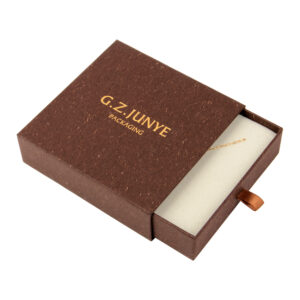
The dimensions of a Jewelry Packaging Box can be adjusted according to specific needs, and it is possible to create large jewelry packaging. However, several key factors in the jewelry box design must be considered to ensure a balance between functionality, cost-effectiveness, and user experience: Product requirements and protective aspects of large jewelry packaging: 1. Type of jewelry: If the jewelry is of a larger size (such as ornaments, sets) or has a special shape (such as long necklaces, earring racks), a larger jewelry necklace box is needed, which may require more packaging space. 2. Internal structure: As the size increases, it is necessary to optimize the internal padding (such as sponge, EVA lining, fixed slots) to prevent shaking or collision and ensure safe transportation. 3. Layered design: Large-sized packaging can be designed with a multi-layered drawer structure or compartments, which is convenient for sorting and storing multiple pieces of jewelry. Cost and Material Selection for Large Jewelry Packaging: 1. Material Cost: An increase in paper area will directly raise material costs. It is necessary to assess whether to choose higher grammage or special papers (such as embossed paper, tactile paper) to match the high-end positioning.

The color coordination of Jewelry Packaging Boxes typically needs to reflect the brand’s tone, product positioning, and consumers’ aesthetic preferences, while conveying a sense of luxury, elegance, or modernity through jewelry box design. Here are common color matching schemes and design ideas for jewelry paper packaging: features: Strong visual impact, red symbolizes passion and celebration, black balances the sense of heaviness. Suitable scenarios: Holiday limited editions, Chinese style designs (such as jadeite, Hetian jade). features: Feminine and romantic style, light pink combined with rose gold exudes gentleness. Suitable for: Girly jewelry, Valentine’s Day gift boxes, and luxury fashion brands. features: Attracts a young demographic, suitable for trendy brands or fast fashion jewelry. Techniques: Reduce saturation to avoid a cheap look, use locally (such as box lining or ribbons). 1. Brand Consistency: The packaging color must be coordinated with the brand’s VI (such as LOGO, store design). Environmental Trend: When using recyclable materials, natural colors (off-white, light brown) are more effective in conveying the concept of environmental friendliness. Combining color psychology and brand positioning in jewelry box design not only enhances the value of the product but also strengthens the emotional connection with consumers.