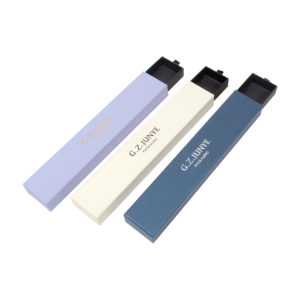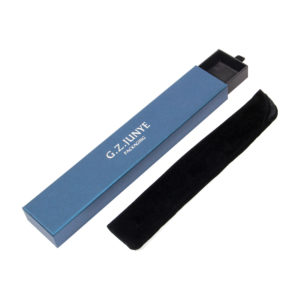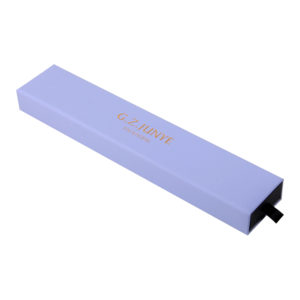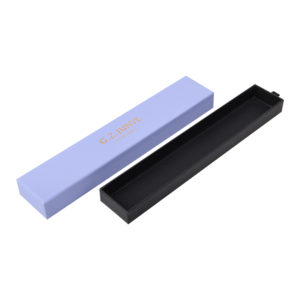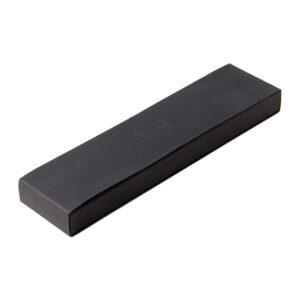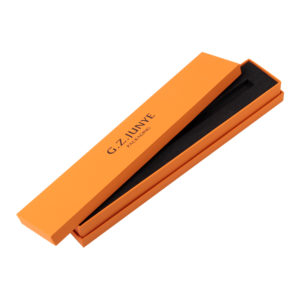
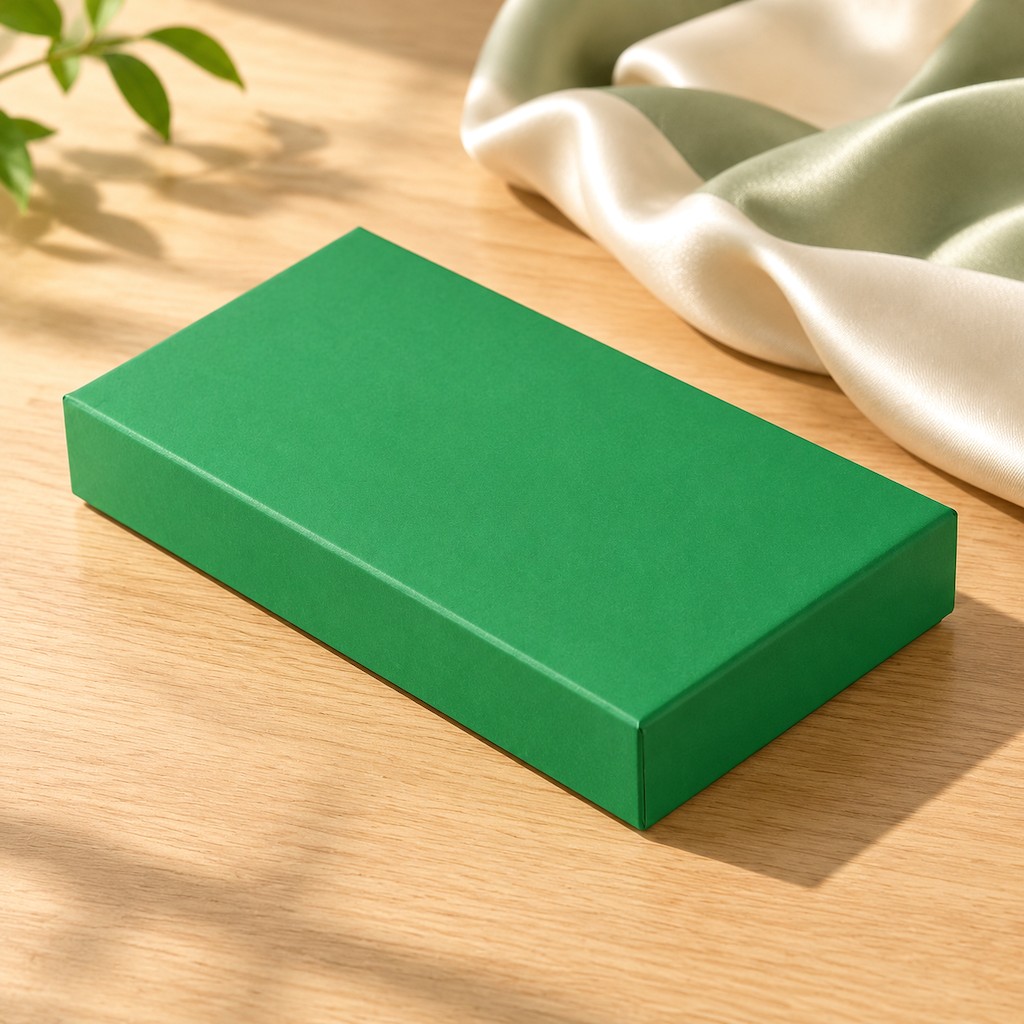
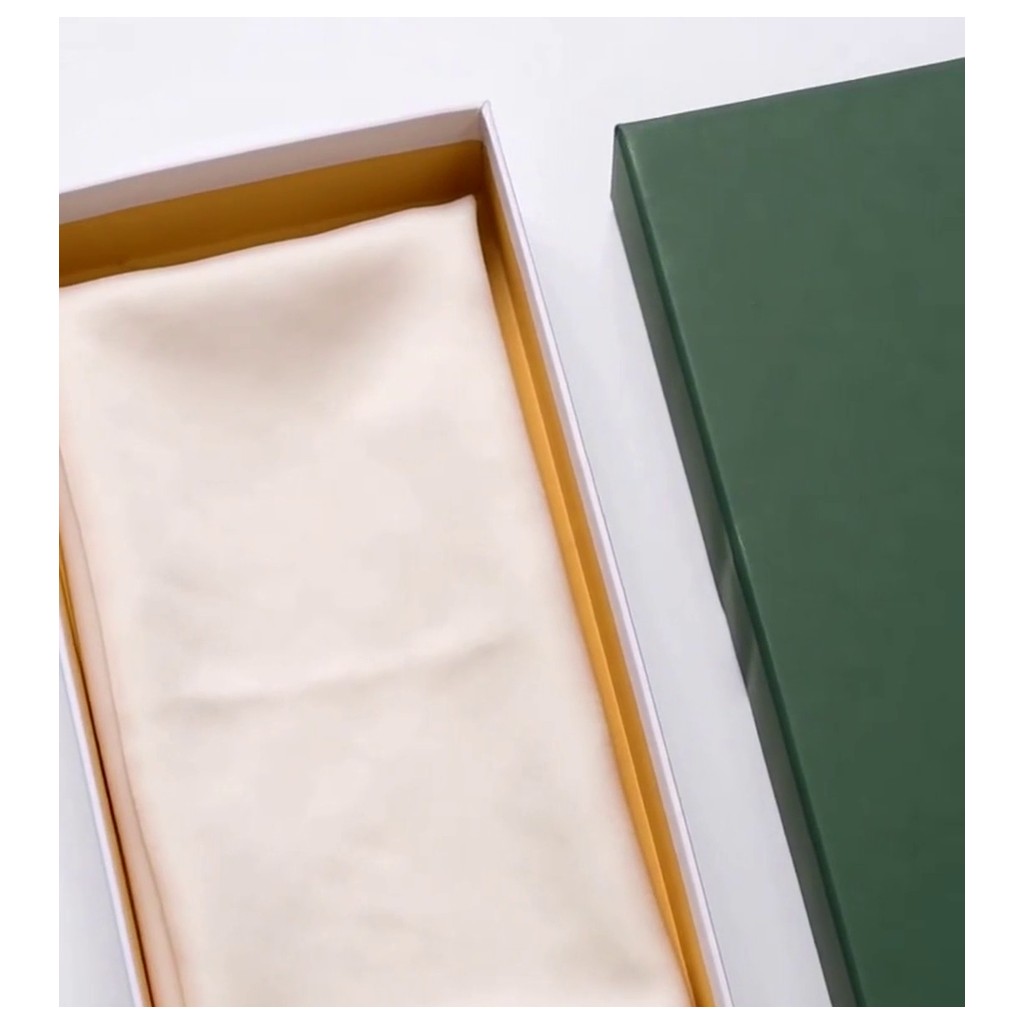
A flat scarf box is a bad place to save board. The item inside is thin, so the box is thin, and a thin box with a short lid reads as a folded card sleeve rather than a retail pack. The fix is not a thicker wall; it is a lid whose skirt runs all the way to the table. This one is 11 x 5 x 2.5 cm, green outside, white and yellow inside.
What “Lid to the Table” Means
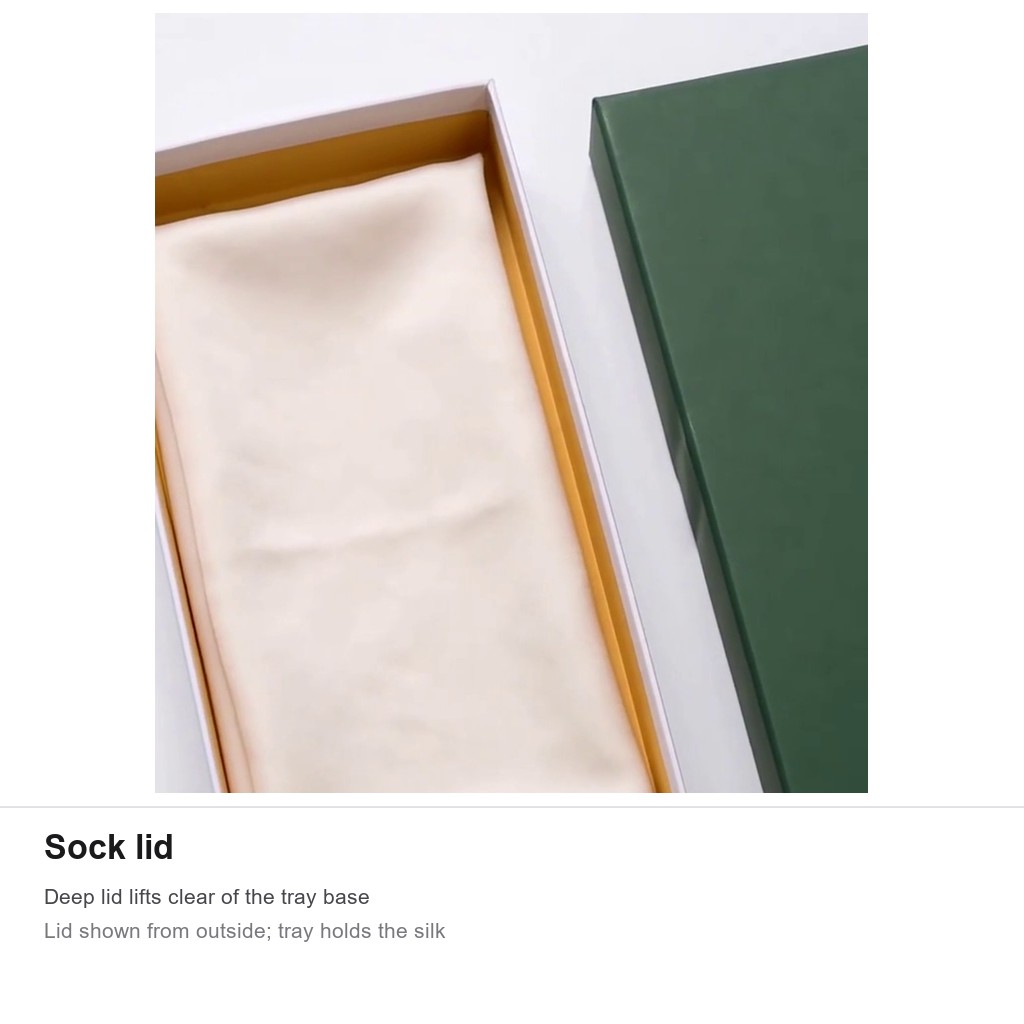
Two pieces: a tray and a cover. The cover is a shell with a top panel and four skirt panels and no bottom board. Its skirt is cut to the same height as the tray, so when it drops on, the skirt reaches the table and the tray is fully enclosed.
| Lid type | Where the skirt ends | What the side shows |
|---|---|---|
| Full depth | at the base height | one colour from top to table, no line |
| Half lid | partway down the base | a step, and a band of base below it |
| Rimmed | at a band inside the base | a stripe where the band is exposed |
Why a Thin Box Needs a Deep Skirt
On a tall box, the wall is long enough that the eye reads it as a body even if the lid stops early. On a 2.5 cm box there is almost no wall to read. Every horizontal feature takes a visible share of a very small height, so a step that would be a detail on a 6 cm box becomes a dominant line on this one.
Running the skirt to the table removes the feature altogether. The side becomes one plane, the box reads as a solid slab, and the 2.5 cm height stops looking like a limitation.
The Corner Is the Hard Part
A thin board is easy to fold and hard to fold sharply. Crease it and the corner rounds outward; the wrap then bridges a curve and the edge softens along its whole length. On a matte surface that softness shows as a lighter line, which is the one thing you do not want on a box whose whole argument is a clean plane.
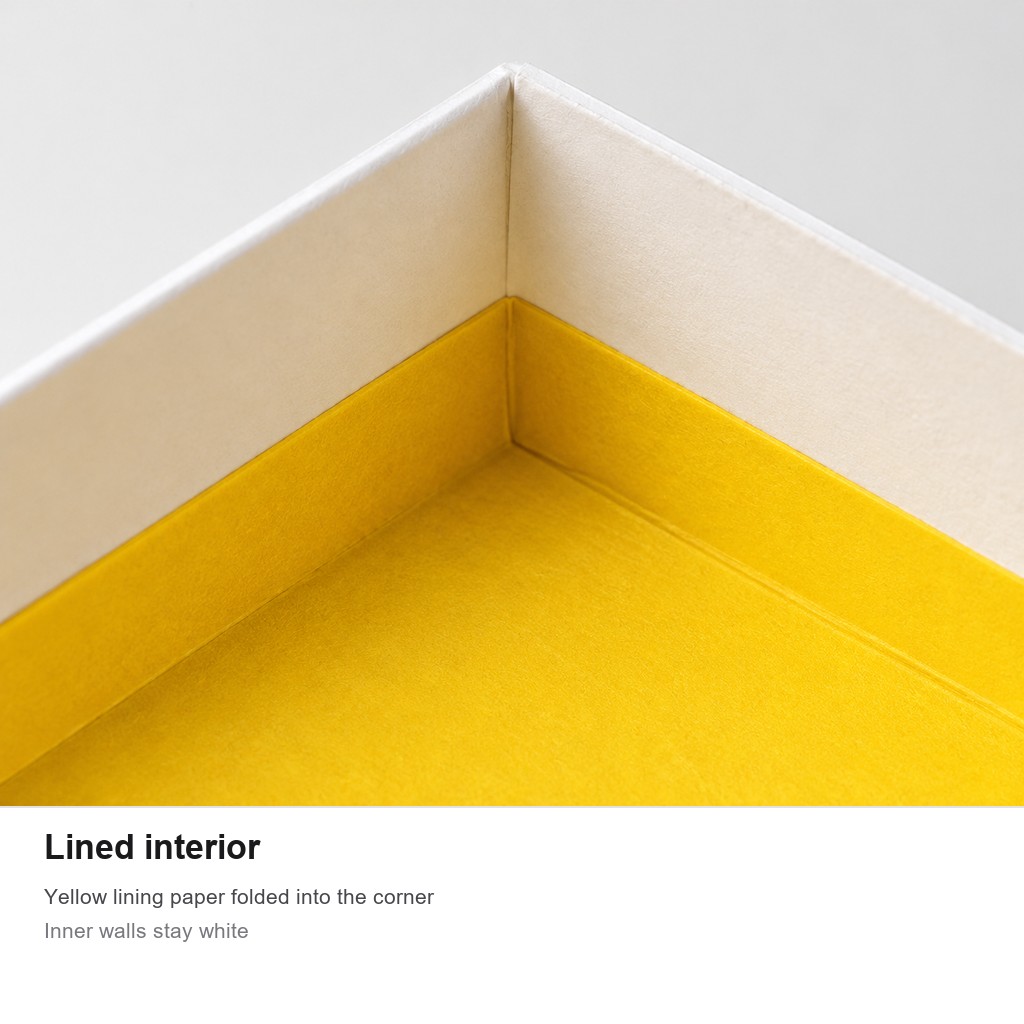
So the board is V-grooved: a channel cut most of the way through, one paper liner left as a hinge, the two faces folded until they meet. The corner closes inward and stays at 90 degrees. It costs an extra cut per corner and it is not something to change after the die is made.
Interior: White Wall, Yellow Floor
The inside is white paper on all four walls, with a yellow sheet on the floor only. That split is deliberate: the walls stay neutral so a coloured scarf does not fight them, and the floor carries the colour where it is least visible until the lid comes off.
There is no lining, no insert and no divider. A folded scarf fills the cavity on its own, and a thin box with foam in it usually ends up with less room for the product than for the foam.
Where a Flat Box Beats a Deep One
Storage and freight. A flat box stacks, and a stack of flat boxes is mostly product rather than air. For a brand shipping folded scarves, the difference in carton volume is real money over a season.
It also suits the unboxing. A deep box asks to be opened slowly; a flat one is lifted open in one movement, and the scarf is on top rather than at the bottom of a well. The 11 x 5 x 2.5 cm version is the size this build was drawn around.
Sourcing Paper Without Overclaiming
The wrap and the board can be specified as recycled content, and paper can come from FSC certified mills on request. That is as far as the claim goes: the certificate belongs to the mill, and this factory does not hold one. Any stronger wording would be a claim with no document behind it.
What can be checked: ISO 9001:2015 certificate ZYC24Q00141R1S, EU RoHS reports, German LUCID registration DE2463045771631 and French CITEO registration FR292146_01UOMY.
Three Things to Send With the Drawing
Send the folded size of the scarf or item, the height you want when closed, and the colour split between lid outside, lid inside and base. The first fixes the footprint, the second fixes whether the skirt can still reach the table, the third decides whether the interior reads white or coloured.
The box itself is on the thin scarf packaging box page, and the rest of the range sits under lid and base boxes. For the construction in the neighbouring size, see the 14 x 8 x 6 cm version.