
Two Colours, Two Parts: What the Contrast Does
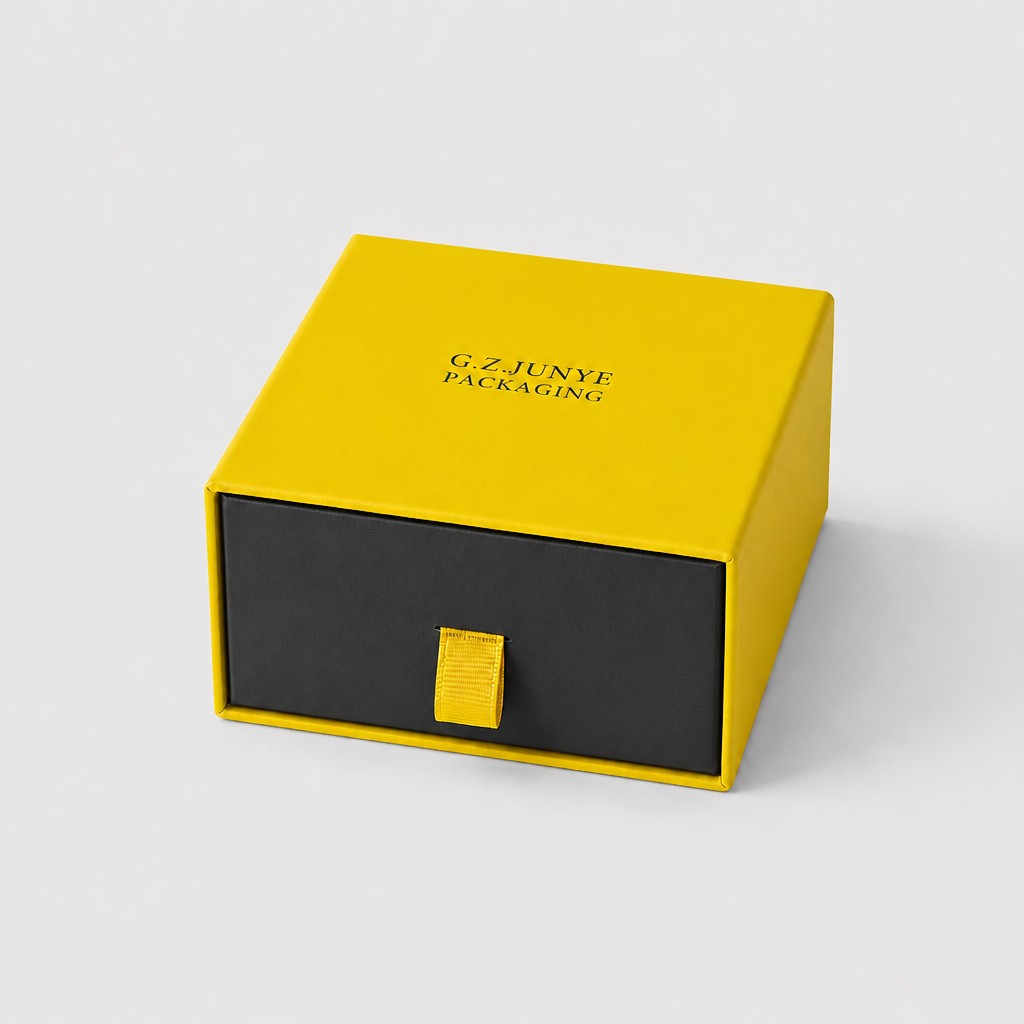
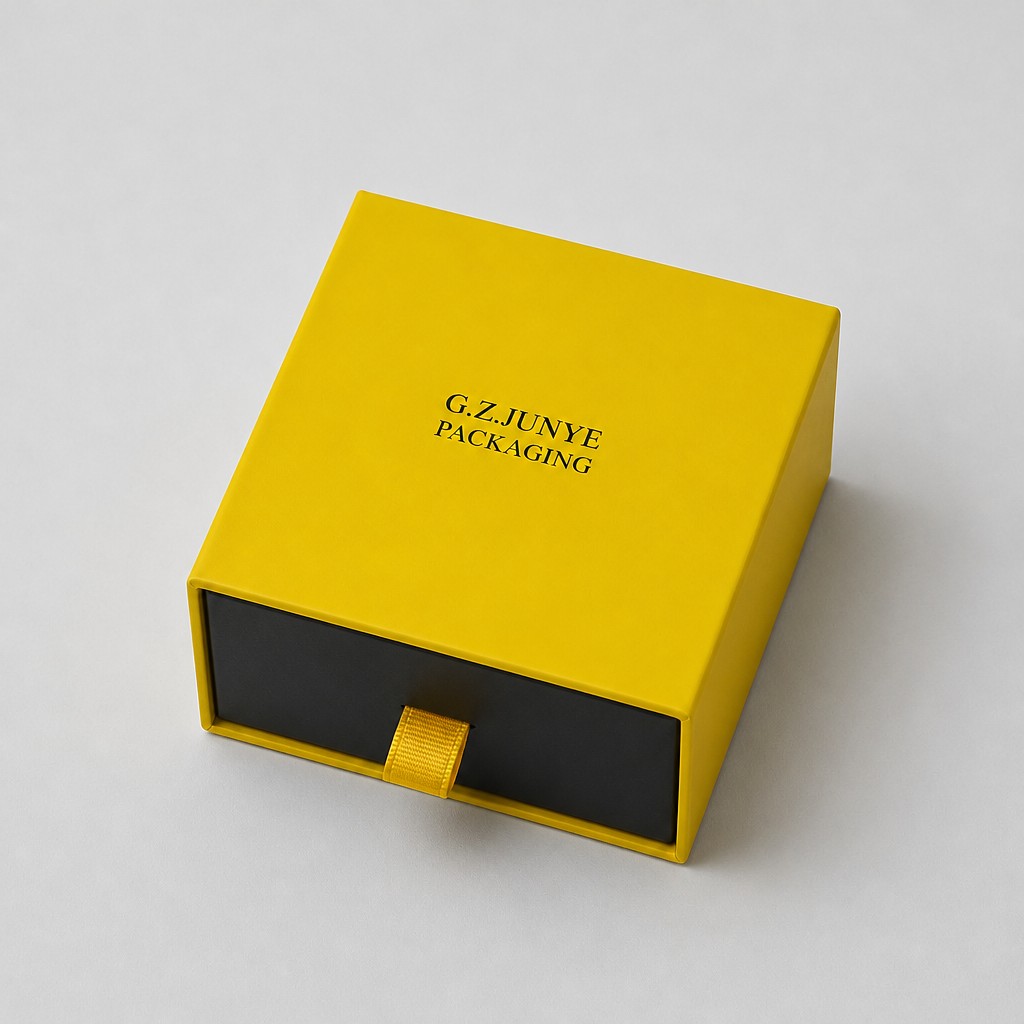
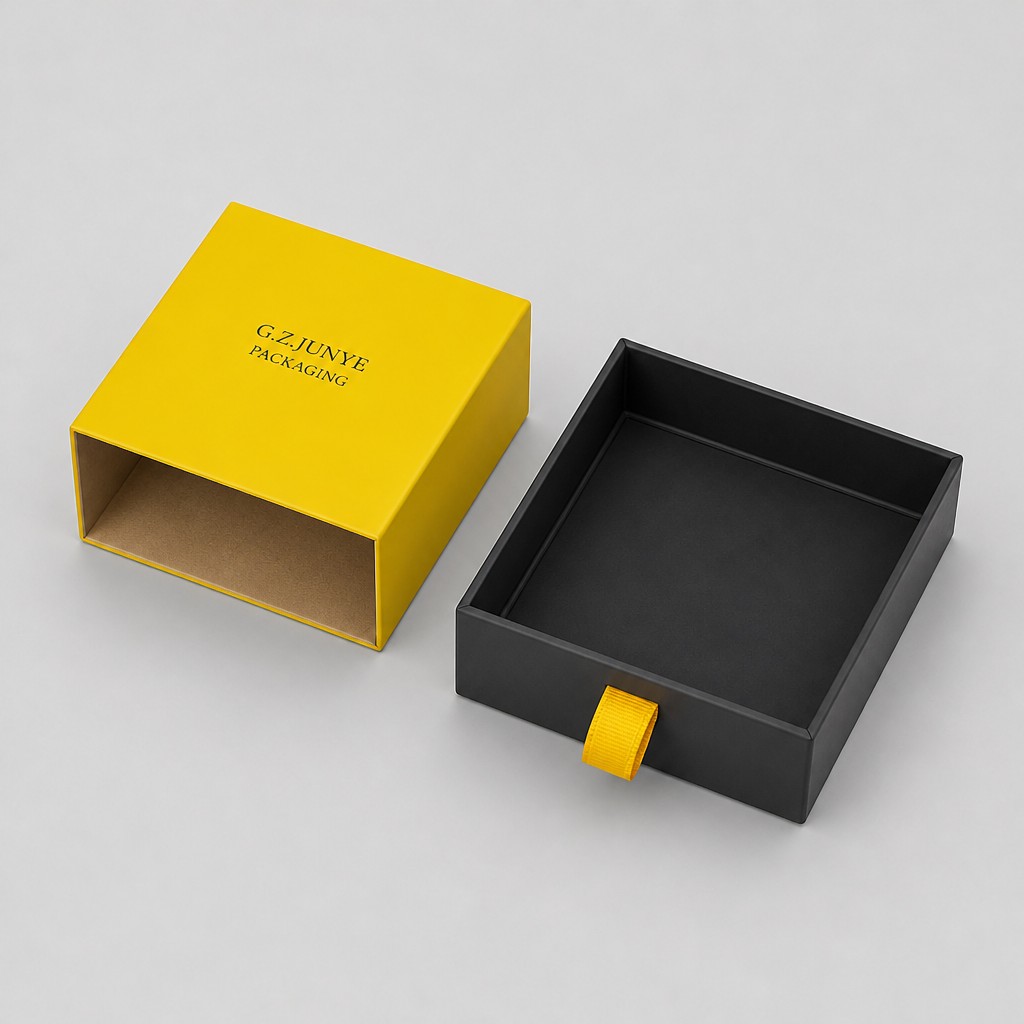
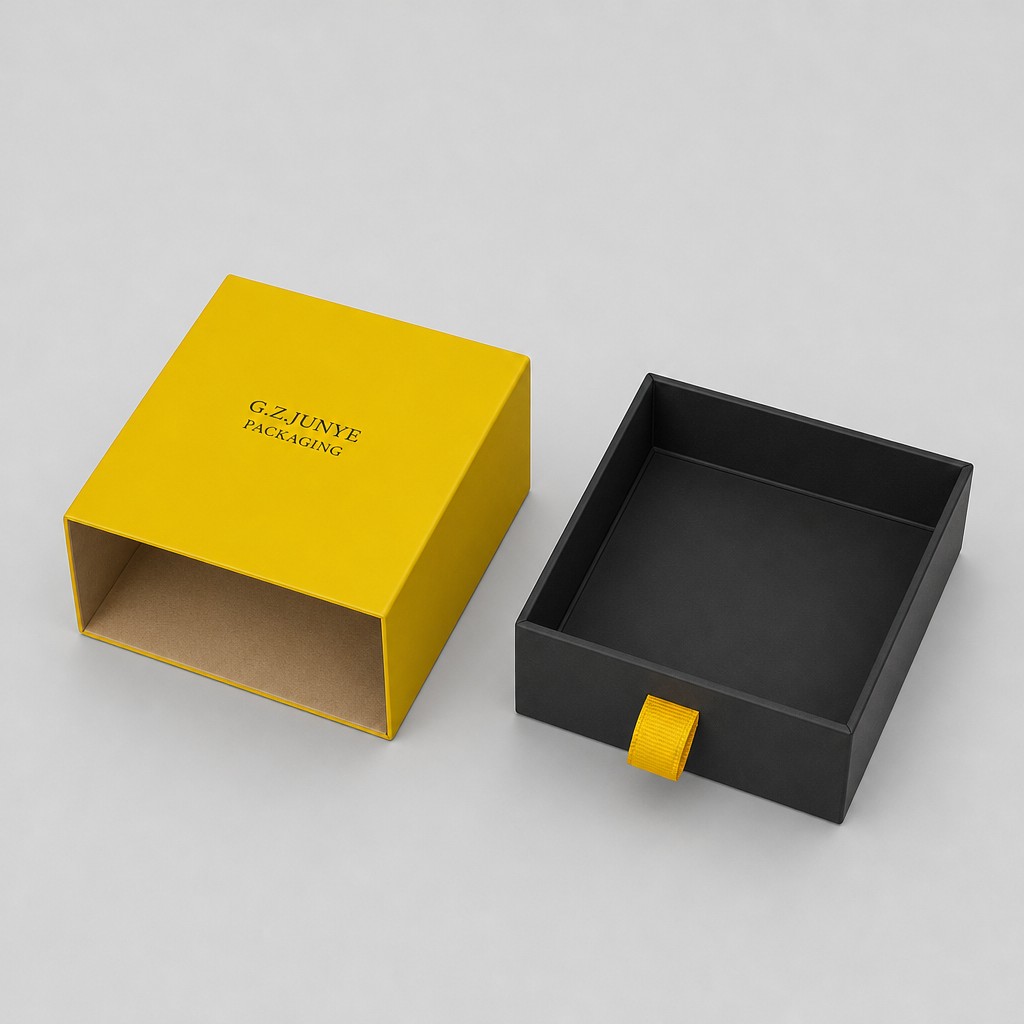
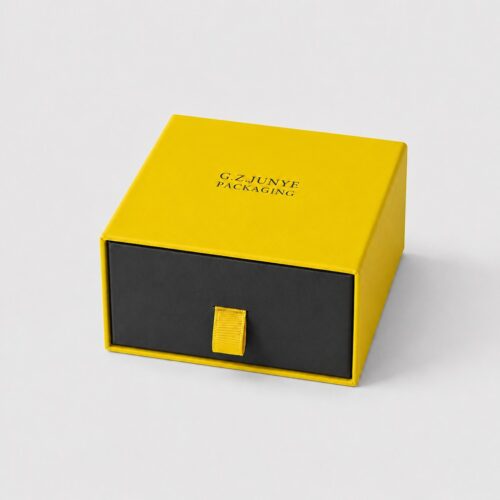
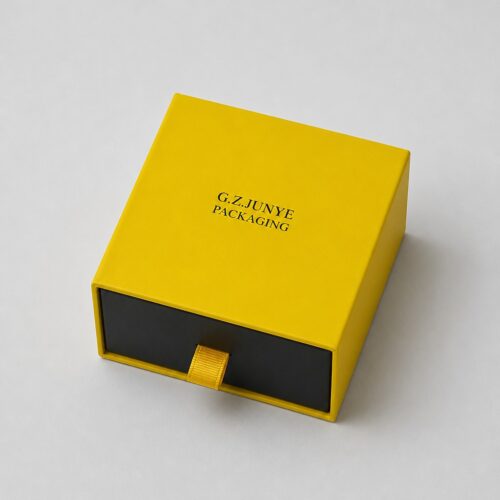
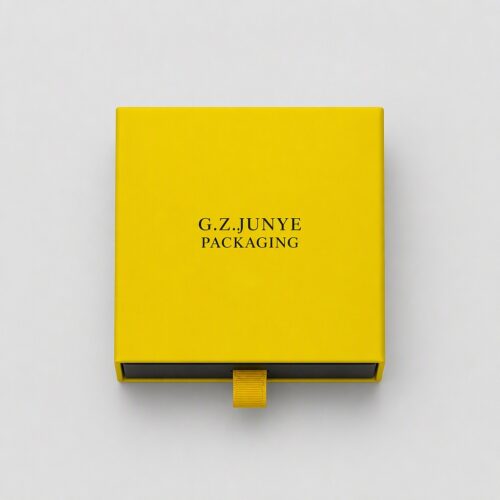
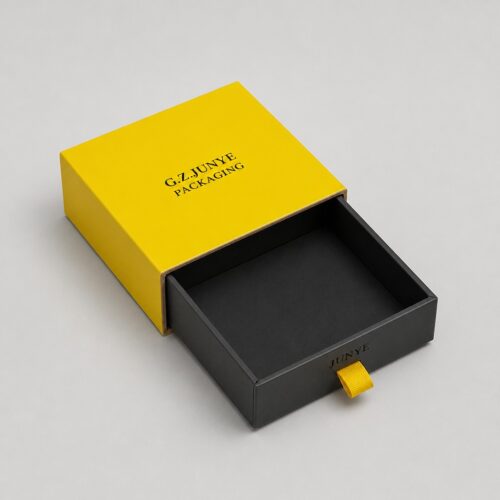
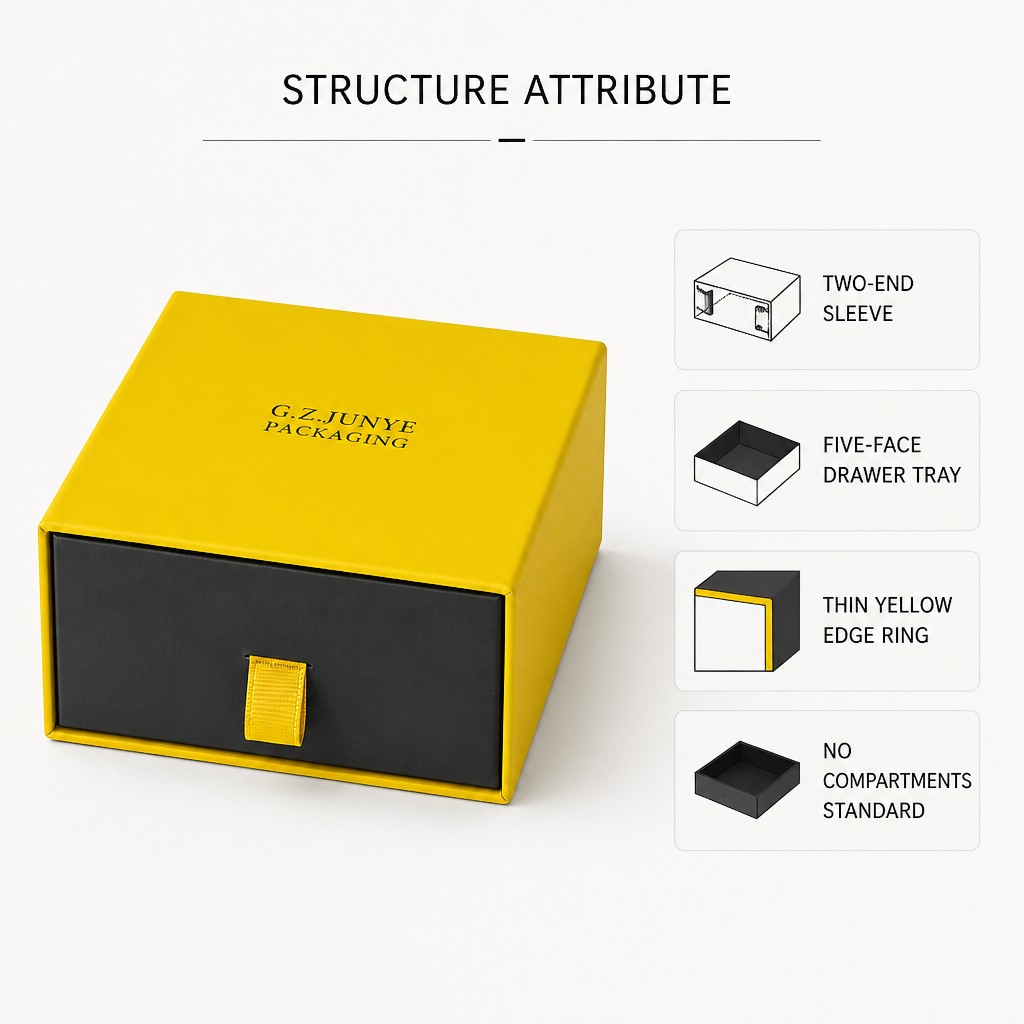
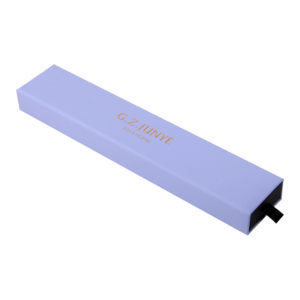
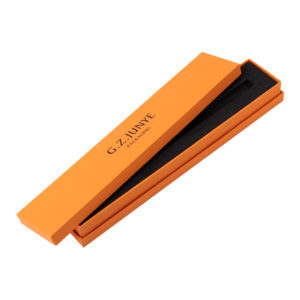
This two tone jewelry drawer case is built as two paper parts, and the colour split runs along the join between them. The sleeve is bright yellow on the outside; the tray that slides out of it is near-black, outside and in. On a jewellery counter the box reads at a glance as a black panel framed in yellow, which is the whole point of the pairing.
| Item | This case |
|---|---|
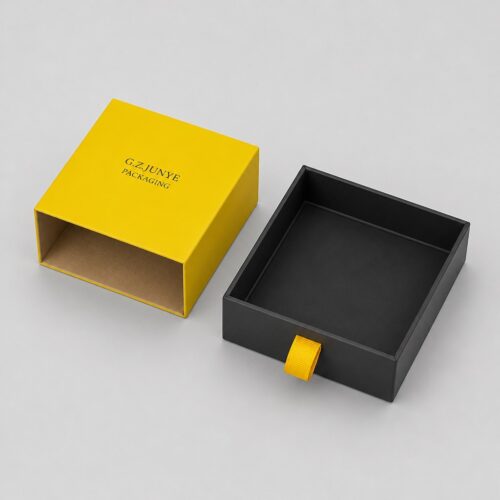
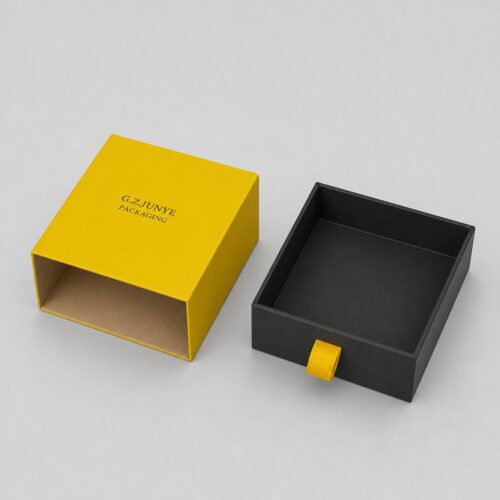
| Outer part | Two-end sleeve, bright yellow outside, kraft inner wall |
| Inner part | Five-face drawer tray, near-black outside, matte black inside |
| Liner | Flat inlaid floor pad, 2-3 mm margin, no grooves, no dividers |
| Pull | Short yellow grosgrain ribbon tab, stitched at the drawer face centre |
| Closed look | Black panel ringed by a thin yellow edge ring |
| Size | 9 x 8 x 4 cm; gross weight 0.5 kg per piece |
| Carton unit | 11 x 10 x 6 cm per piece packed |
A Sleeve Open at Both Ends and a Tray That Slides Out
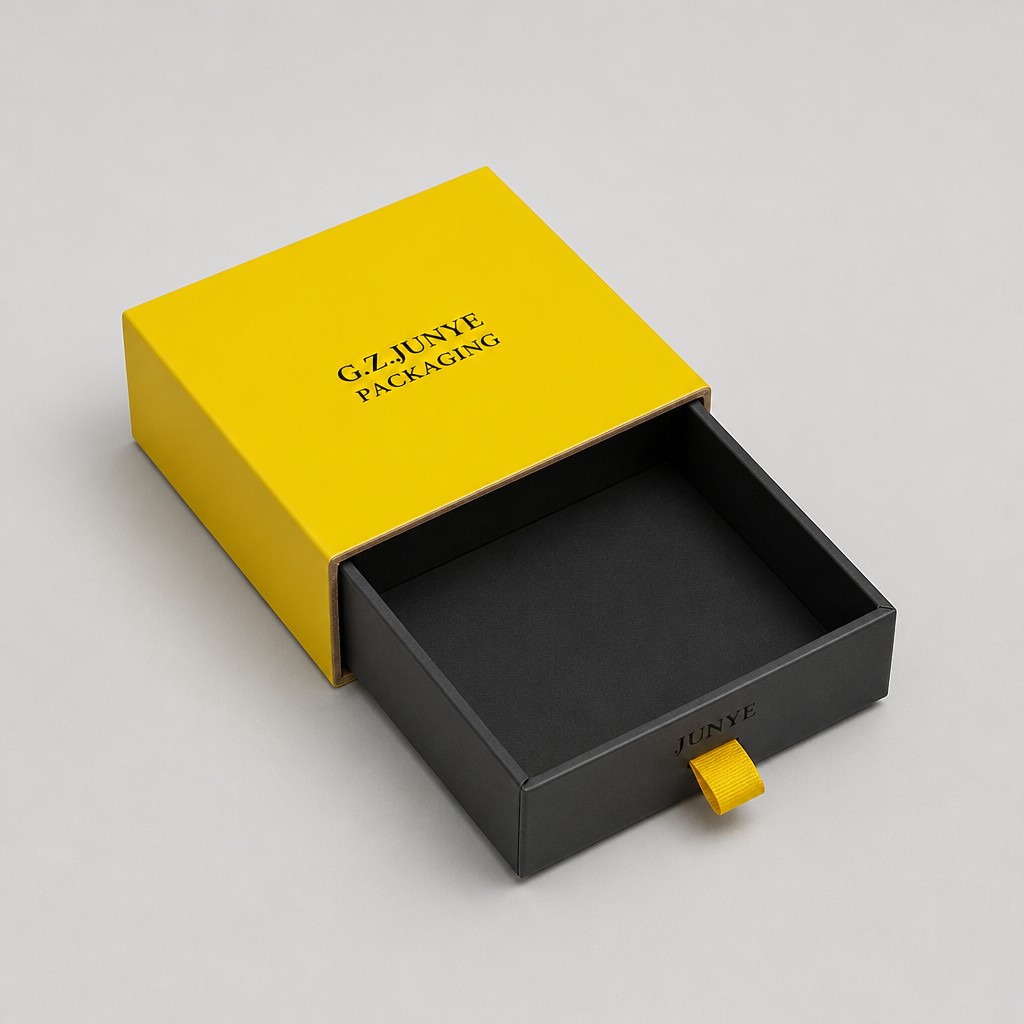
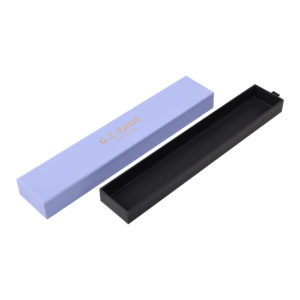
The outer part is a sleeve open at both ends, so there is no base and no flap to open. The inner part is a five-face tray that slides straight out of the front. Two parts, one motion: hold the tab and pull. Compared with a plain drawer box, the difference is only in how the two parts are finished.
The Thin Yellow Edge Ring Around the Drawer Face
With the tray pushed home, a thin yellow ring runs around the drawer face. That ring is the sleeve edge band, and it is the reason the closed box still shows yellow from the front. Close the tray unevenly and the ring goes wide on one side, which is the easiest way to make an otherwise good box look cheap.
A Ribbon Tab Stitched to the Centre of the Drawer Face
The pull is a short grosgrain ribbon tab, yellow to match the sleeve, stitched flat to the centre of the drawer face. It is a soft pull: no metal, no ring, nothing to rattle or to fall off in transit. Being grosgrain, the tab keeps a ribbed line rather than a flat satin sheen, and that reads as a woven textile on a paper box.
| Part | Face | Colour |
|---|---|---|
| Sleeve | Outer face | Bright yellow, matte specialty paper |
| Sleeve | Inner wall | Kraft, bare board |
| Tray | Outer face and walls | Near-black matte |
| Tray | Floor | Matte black, inlaid pad in a slightly lighter black |
Matte Black, Flat, and Deliberately Without Grooves
The tray floor is flat and matte black, with no grooves, no slots and no dividers. A flat floor is the flexible option: a bracelet, a chain or a small set all sit on the same surface, and the insert does not have to be rebuilt when the range changes.
The Inlaid Floor Pad and Its 2-3 mm Margin
Sitting inside the tray is a separate floor pad in a slightly lighter matte black, set in with a 2-3 mm margin on all four sides. That margin is what makes the lining look placed rather than draped, and it gives the eye a second black to read. The pad is cut to the tray, so it stays flat when the box is opened and closed.
9 x 8 x 4 cm: Why the Depth Suits a Necklace
At 9 x 8 x 4 cm the box is shallow and wide, which is the shape a necklace wants: a chain coiled or laid over the pad sits up where it can be seen, instead of sinking into a deep box. The same footprint takes a bracelet box arrangement or a pair of small pieces, and the 4 cm depth keeps the case close to the tray-sized proportions buyers expect for a chain.
Kraft Inner Wall Under a Bright Yellow Outer Face
Pulling the tray out exposes the inside of the sleeve, and that face is bare kraft board. It is deliberate: a natural inner wall against the yellow outer face makes the contrast read as two materials rather than two print colours. Boards are wrapped rather than moulded, so the case is built from paper and board throughout.
Printing a Two Tone Case: Foil, Screen, Emboss or UV
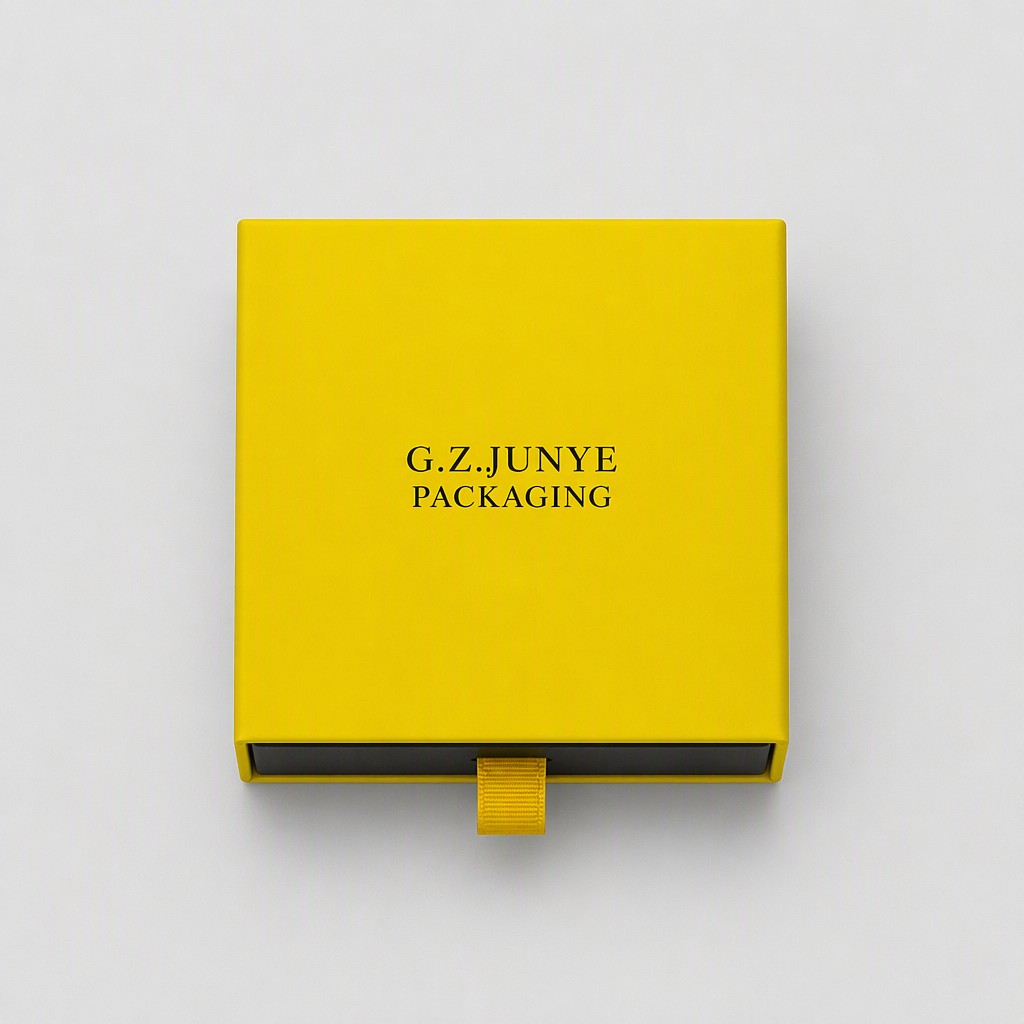
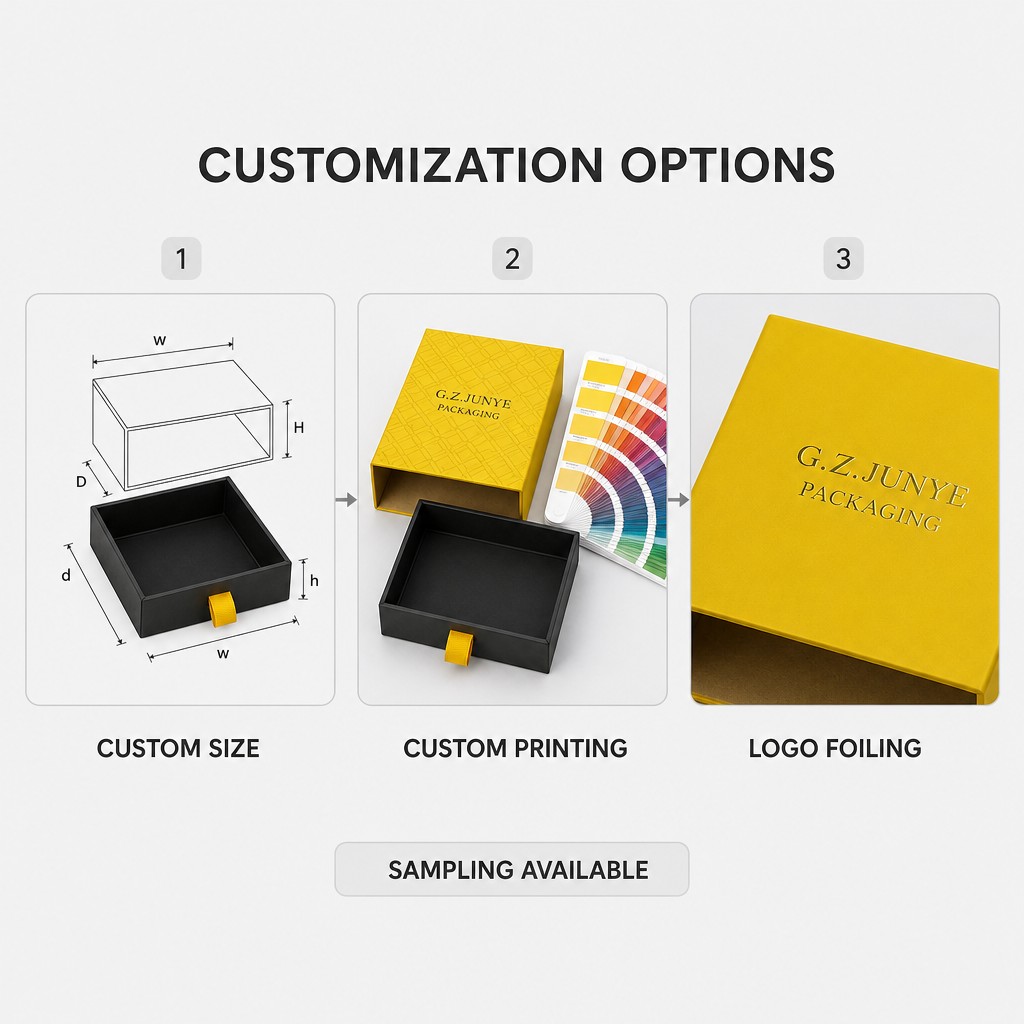
Printing can be placed on either part and on any face. Foil is the usual choice for a logo on the yellow sleeve; screen print carries a flat colour well; emboss and deboss give a tonal mark with no added colour; UV spot adds a gloss over the matte. Our own stock carries our company mark on the sleeve top face and the short mark on the other faces.
| Method | Typical use on this case |
|---|---|
| Foil stamping | Logo or a single word, gold, silver or colour foil |
| Screen print | Flat colour, best on the yellow outer face |
| Emboss or deboss | Tonal mark with no added colour |
| UV spot | Gloss over matte, used sparingly |
Liner Options from Flat Matte Black to Ring Slots
The standard liner is the flat matte black pad, and the cut can be changed. If the range is rings, add a slot row; for studs, paired wells; for a chain, one wider recess. A slotted insert tray earns its keep when every piece must hold its position, while the flat pad wins when the range changes from order to order.
| Liner option | What it suits |
|---|---|
| Flat matte black | Standard; bracelets, pendants, small sets |
| Ring slots | A row of rings held apart |
| Earring wells | Paired studs or drops |
| Necklace recess | One chain and pendant laid flat |
Colour Pairing Made to Order
Yellow over near-black is our sample pairing, not a fixed combination. Both parts are made to order, so the sleeve and tray colours can be swapped for your own two, and the same structure can run in a single colour if the contrast is not wanted. Paper finish can be matte, textured linen or soft-touch. If your range already runs a ribbon jewelry box, this case can be quoted beside it on the same order.
Sample, Bulk and the Checks Between Them
A sample request through the page is the usual first step. On the sample we confirm the colour match on both parts, the tab position and the liner fit; before the run we sign off artwork and the colour pairing; and the workshop checks the edge ring, the tab stitch and the drawer glide on every batch.
| Stage | What we check |
|---|---|
| Sample | Colour match on both parts, tab position, liner fit |
| Before run | Print artwork and colour pairing signed off |
| Bulk | Edge ring evenness, tab stitch, drawer glide on each batch |
Carton, Gross Weight and Carton Cube for This Size
Each case is bagged and packed into an export carton. At 9 x 8 x 4 cm the piece gross weight is 0.5 kg and the packed unit measures 11 x 10 x 6 cm, so a carton cube can be worked out before booking freight.
| Item | Value |
|---|---|
| Case size | 9 x 8 x 4 cm |
| Gross weight | 0.5 kg per piece |
| Carton unit size | 11 x 10 x 6 cm |
| Inner packing | Polybag per piece, then export carton |
| Export packing | Carton on pallet, wrapped for sea or air |
Papers, Compliance and Where the Board Comes From
The plant holds ISO 9001 (certificate ZYC24Q00141R1S, valid to 28 November 2027) and the case is covered by our RoHS report and the German and French packaging registrations. Papers and boards are bought to order, and the same details are used across our production.
What to Specify Before We Cut the Boards
Four things decide the price and the tooling: the two colours, the print and where it sits, the liner cut and the quantity. Send the size, the artwork and the colour reference and we will quote against them. The FAQ below covers the questions that come up most often before a first order.

Reviews
There are no reviews yet.