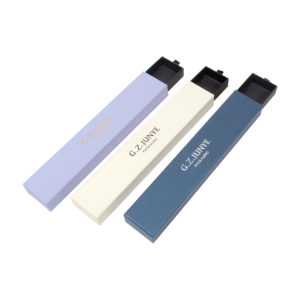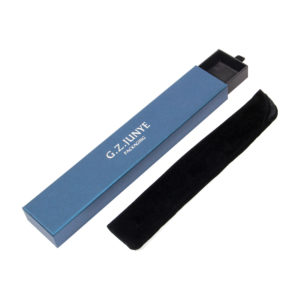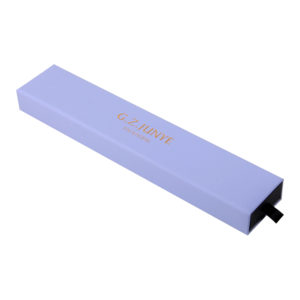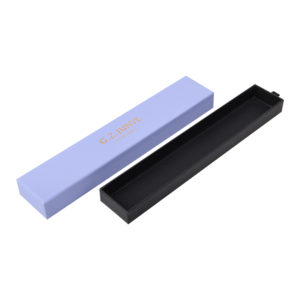
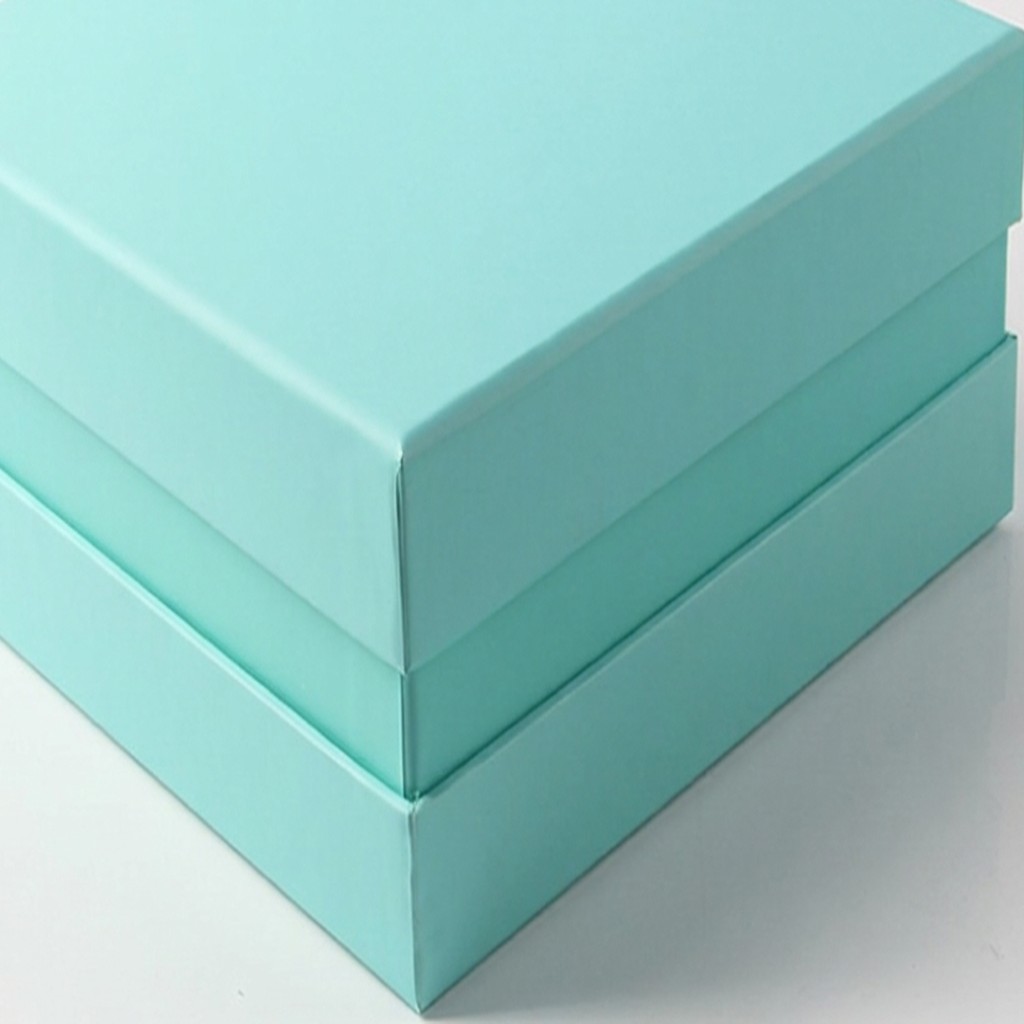
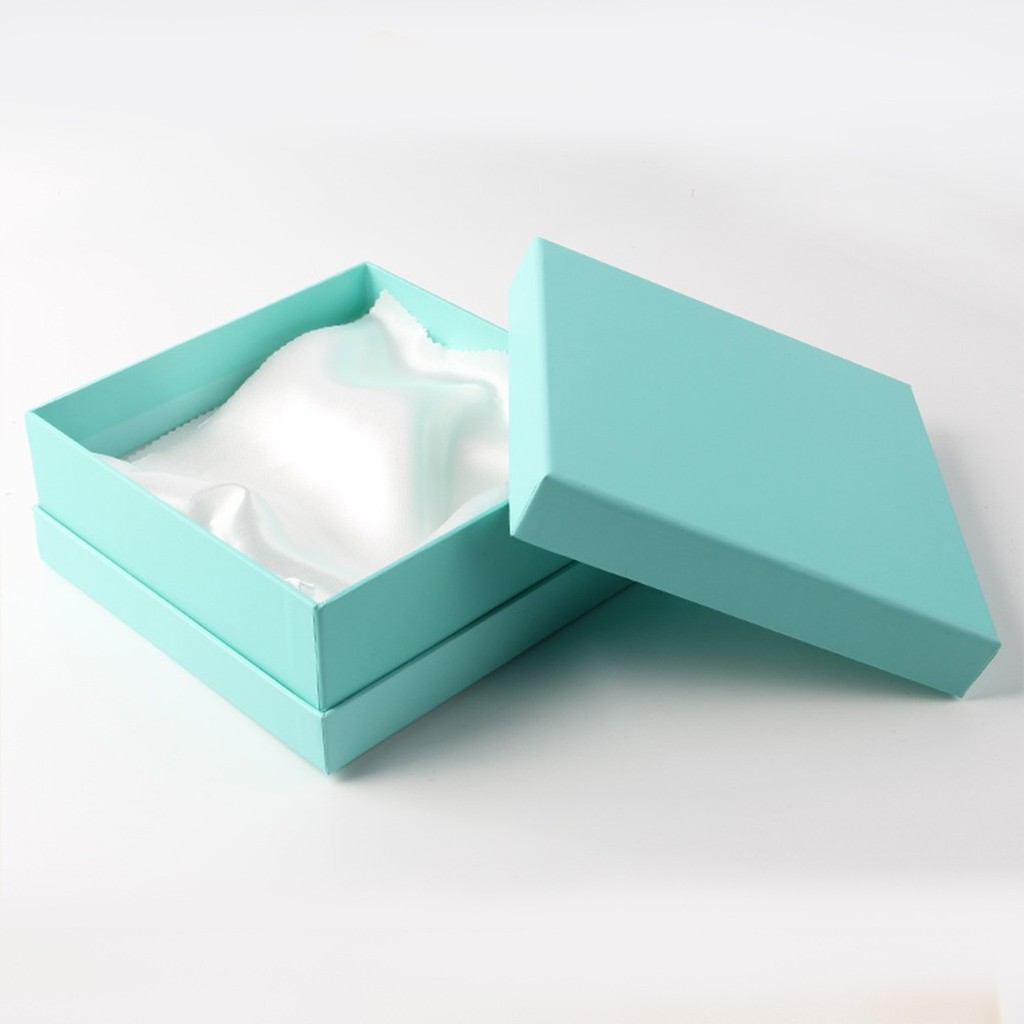
A satin lined rimmed box is a lid and base box with one addition that changes how it reads: a band glued round the outside of the base, standing about a quarter of the box height, with the lid skirt landing on its top edge. This one is 16 x 16 x 7 cm, wrapped in mint paper, with white satin laid in by hand. Scaling the same build from a jewellery size up to a 16 cm set box is where most of the practical questions come from.
What a Satin Lined Rimmed Box Is
Three parts, not two: a flat lid, a tray, and the band between them. The band is a strip of board wrapped in the same paper, glued round the upper outside of the tray. The lid is a shallow box in its own right, with a flat top and four walls that stop just above the band.
Inside, one piece of white satin covers the tray floor and walls, laid in by hand and tucked under the band. There is no magnet, no hinge and no clasp, so the box opens by lifting and closes by dropping.
| Section | Height | What it does |
|---|---|---|
| Lid skirt | the upper section, down to the band | covers the top and the upper wall; lifts clear in one movement |
| Rim band | about a quarter of the total height | the shelf the lid lands on, and the stiffener for the top edge |
| Tray below the band | the lower section | holds the product and the lining; takes the wear when the box is set down |
The Band Carries the Lid, So the Wall Stays Whole
On a plain lid and base box the skirt stops somewhere in the middle of the wall. That one line cuts the side panel into two, and on a 16 cm box it cuts a print area that was worth keeping in one piece. Move the joint up onto a band and the middle of the wall reappears.
The band also does two structural jobs. It covers the joint where the tray walls meet the base board, which is the first place a wrapped box shows a crack. And it adds a second layer of board at the top edge of the tray, where a 16 cm span flexes most.
Why the Satin Is Laid In, Not Glued Down
Glued-down lining is faster and looks tighter in a photograph. It also shows every wrinkle it was glued with, and it cannot move when the product does. Laid-in satin is one piece dropped over the floor and walls, allowed to fall into soft folds, with the edges tucked under the band.
The folds are the point, not a defect: they take up the slack when the box is picked up and give a rigid piece somewhere to settle. What matters is where the fabric stops. Run it over the band upper edge and the lid pinches it in the joint, and within a hundred openings the fold line frays. Tucked below the edge, the joint stays paper against paper.
Scaling the Step Line With the Box
The band is set as a proportion of the height, not of the side, so a wider box does not automatically get a deeper band. On this 16 x 16 x 7 cm box the band runs to about a quarter of the height. What grows with the footprint is the length of the step line, not its depth, and the proportion itself is agreed with you before the dieline is drawn.
Height is the number to fix first. Once the height is agreed, the band depth follows from it, and the tray depth is whatever is left. Change the height later and the step moves, which is why we confirm height before the dieline is drawn rather than after.
What a Set Needs That a Single Item Does Not
A single piece sits in the middle of the tray and the satin only has to look right around it. A set has gaps: a jar beside a bottle, a mug beside four coasters, two plates stacked. Those gaps are where loose satin looks untidy and where pieces slide into each other in transit.
Two answers work on this construction. Leave the satin loose and cut a paperboard platform that drops in under it, with one opening per item, so the fabric stretches over the platform and the pieces sit in their own wells. Or line the tray with satin and cut a foam block over it, which is the better choice when the pieces are heavy. Both keep the look of a lined box and take the movement out.
Satin, Velvet or a Cut Platform
Satin is the brightest of the three and the one that photographs best under daylight; it is also the one that shows a crease if the box is stored flat under weight. Velvet reads deeper and hides handling marks, at a higher cost per box. A cut paperboard platform lined in paper is the lowest cost of the three and the most precise, and it is what we recommend when the brief is protection first.
Colour is the other lever. The mint in these photographs measures as a soft green with almost equal green and blue, which is why it reads cool rather than yellow; the same paper is available in navy, ivory, blush and black, and the satin can be matched or contrasted.
When a Rimmed Box Is the Wrong Build
Three cases. If the product has to be seen without opening the pack, this is the wrong shape altogether. If the box has to survive as the outer shipping carton, it is a retail pack and needs a carton around it. And if the budget only reaches a folding carton, a rimmed rigid box will not get there: the band alone is a separate wrapping operation.
Everywhere else the build is quick, because there is no fitting to install: lid, band, tray, lining, and the box closes on its own geometry.
What to Send With the Drawing
Four things: the outside size, the height you want the step line to sit at, the product outline or a 3D file, and the artwork for the lid top. With those, a dieline and a 3D mockup come back free within 1 to 3 days, a physical sample in 5 to 7 days, and bulk runs in 18 to 25 days after approval. Stock sizes start at 300 pcs; a bespoke size or artwork starts at 500 pcs per size.
The box shown here is the 16 x 16 x 7 cm mint green gift box, and the band mechanics are set out in how the rim band seats the lid. If you would rather handle the satin first, ask for a free sample.