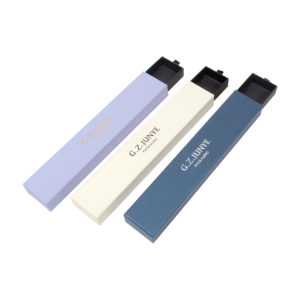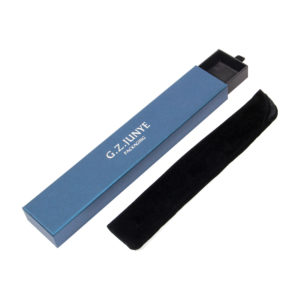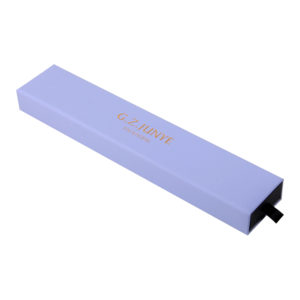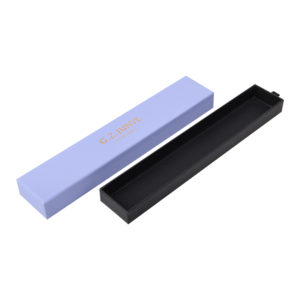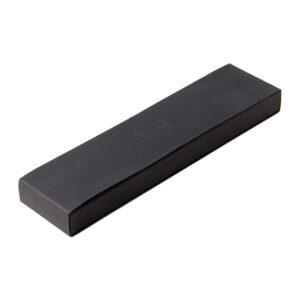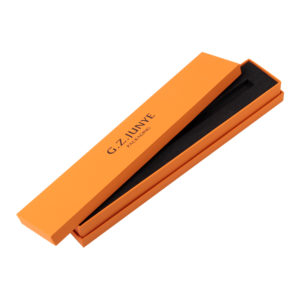
A v groove paper box is a rigid box whose every corner is folded rather than taped. A V-shaped channel is cut part way through the grey board along each fold line, one paper liner is left intact, and the board closes to a true 90 degrees. It is the detail that separates a crisp black box from one that looks soft along every vertical edge.
What a V-Groove Corner Actually Is
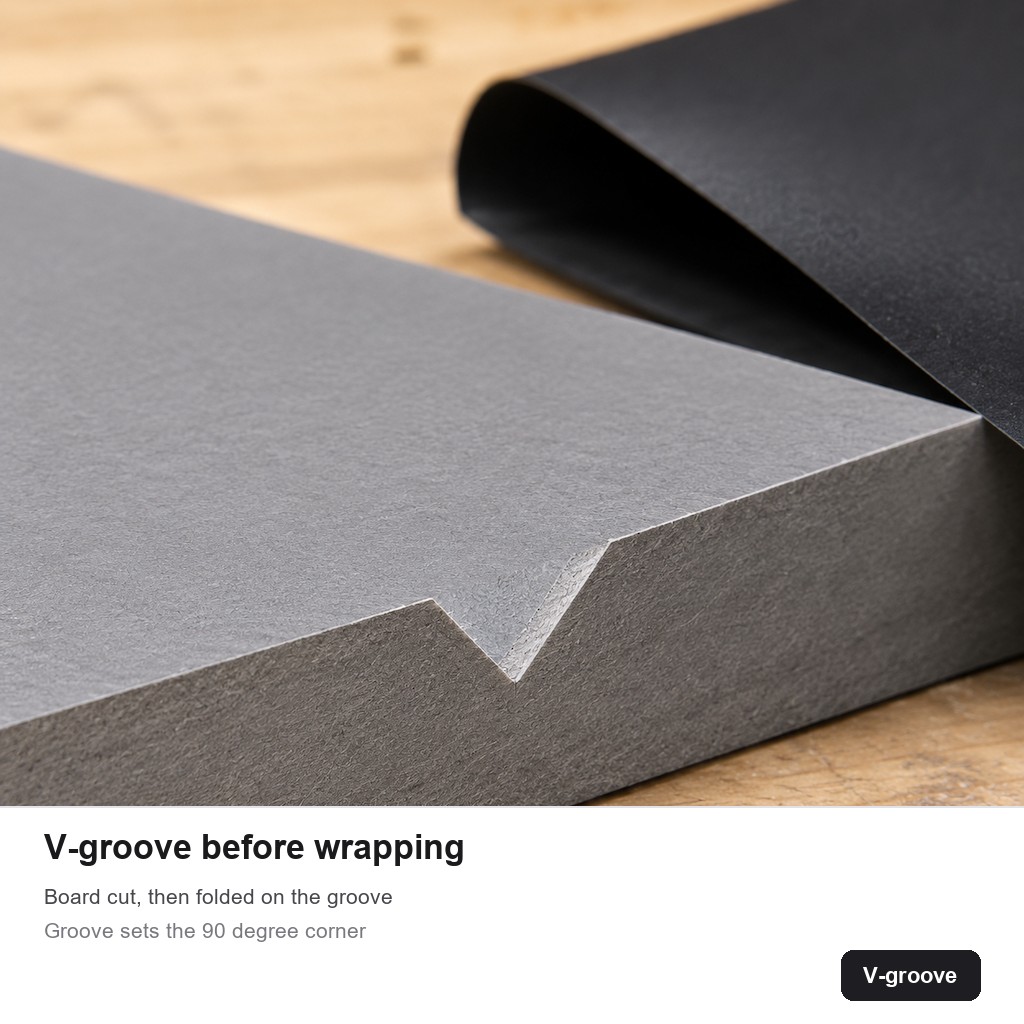
Take a piece of grey board. Along the line where the corner will be, cut a channel through most of the thickness, leaving a thin layer of paper on the outside. What is left is a hinge. Fold the two faces toward each other and the channel closes: the two cut faces meet, and the outside of the corner is the paper liner, unbroken.
The result is a corner with no added material. Nothing is glued over the joint, nothing is bridged, and the wall thickness is the same on both sides of the corner.
| Corner | How it is made | What you see |
|---|---|---|
| V-groove | board channelled and folded on one paper liner | sharp 90 degrees, wall thickness continuous |
| Corner taped | board stops short, gap bridged with tape | a small radius, and a tape line under the wrap |
| Soft fold | board creased, not channelled | a rounded corner with a visible bulge |
Why the Groove, Not a Fold
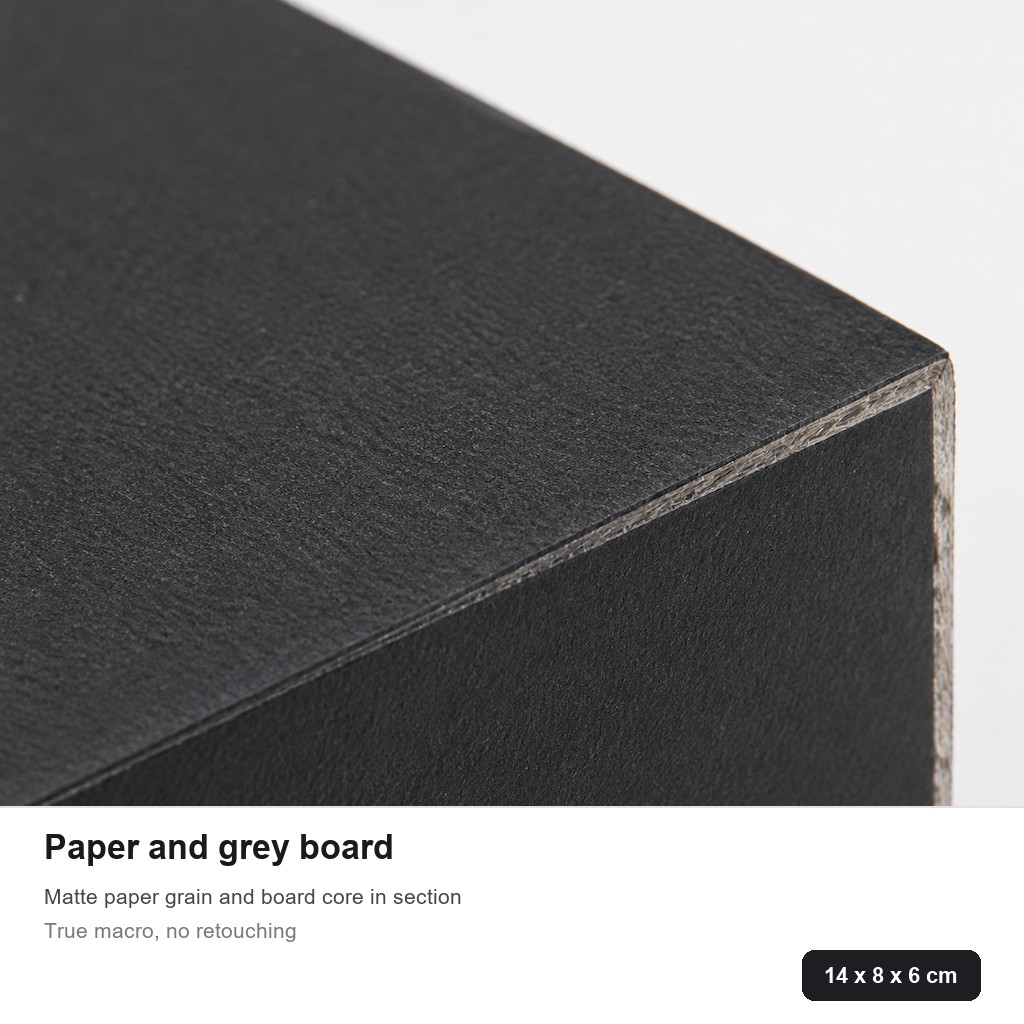
A crease compresses the board and the corner bulges outward; a channel removes material, so the corner closes inward and stays flat. That is the physical difference, and it is why the wrapped face stays tight: there is no bulge for the paper to bridge, so the wrap sits down on a flat surface instead of stretching over a curve.
On a white box a soft corner is a shadow. On a matte black box it is worse: the bulge catches light differently from the flat wall, and the whole edge reads as a lighter stripe. V-grooving is the only way to get the edge to disappear.
One Piece of Board, Four Corners
A tray is not four walls glued together. It is usually one board, channelled at three corners and closed at the fourth, folded up into a tray. The same is true of the lid. That is why the wall thickness is consistent all the way round and why the corners line up when the lid is on.
It is also why the corner cannot be fixed later. The groove is cut before the wrap goes on, and once the box is wrapped, the corner is what it is.
Where the Wrap Turns In
The wrap is not just an outside skin. It goes over the top edge and turns down the inside, where it is pressed flat against the board. On the mouth of the box that leaves a very narrow band of turned-in paper, and on the inside of the wall a faint line where the turn ends.
That line is a process mark, not a defect. Every wrapped rigid box has it; the only question is whether it sits where you can see it. On a dark box it is nearly invisible, which is one reason black is the easier colour to specify.
What V-Grooving Costs You
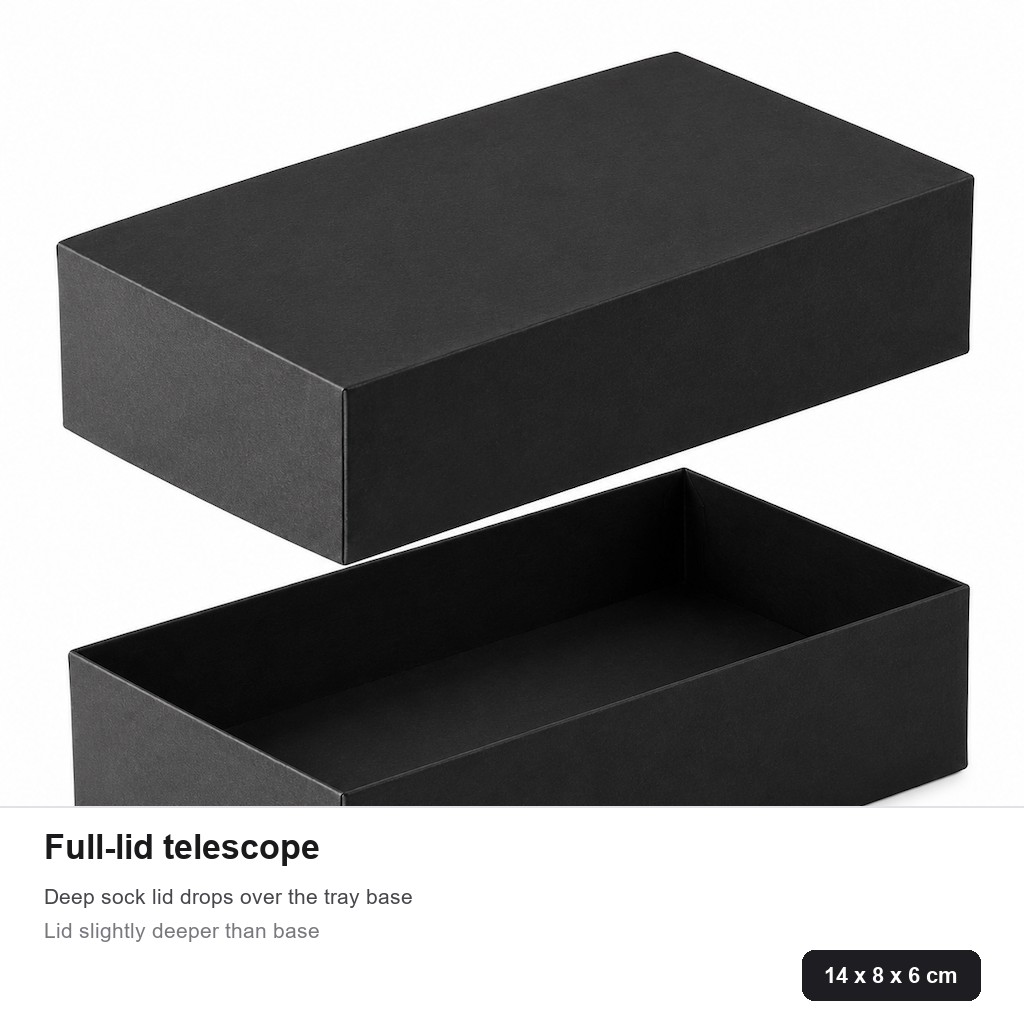
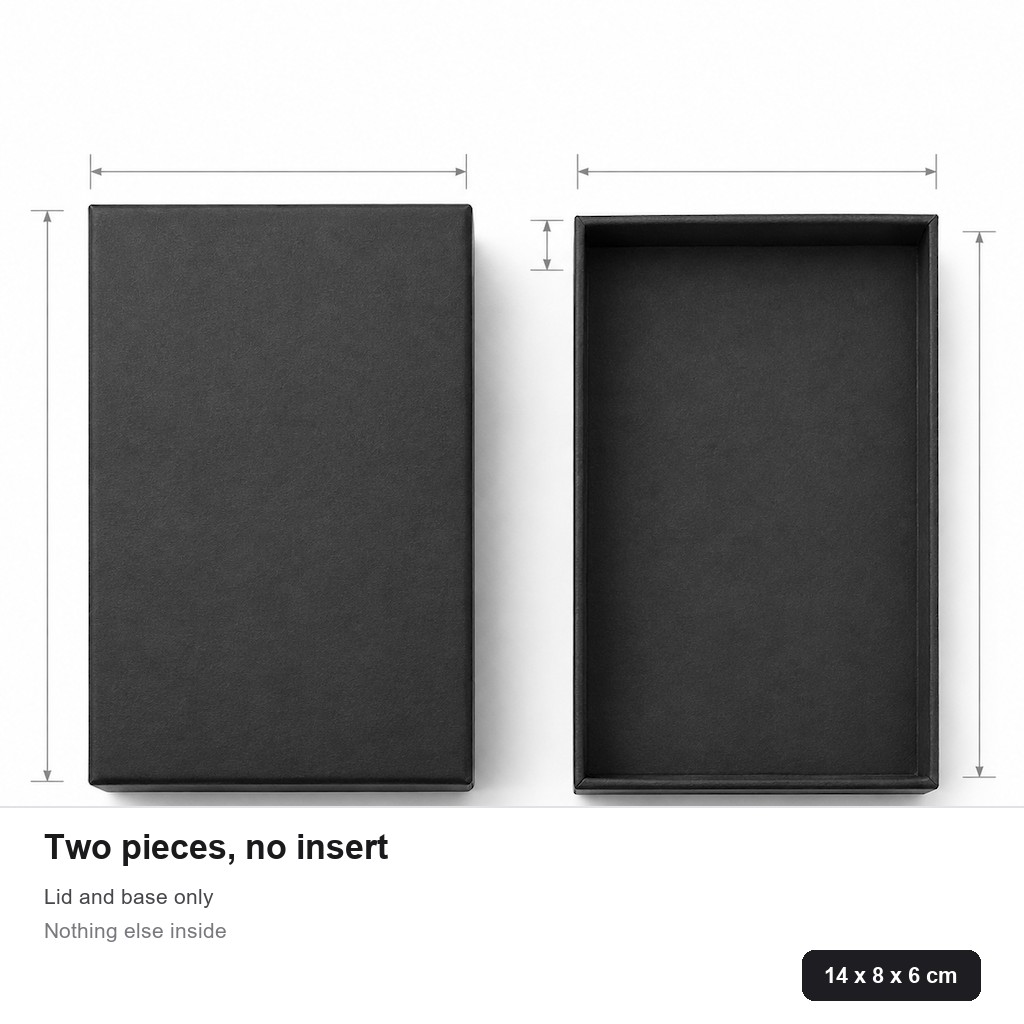
Two things. Time, because each corner is a separate cut and a separate fold, and a 14 x 8 x 6 cm box has eight corners across its two pieces. And tolerance, because the groove depth has to be consistent: too shallow and the fold cracks the liner, too deep and the corner tears when it closes.
Neither is a reason to avoid it. It is a reason not to change the corner treatment late, when the die is already cut.
When Not to V-Groove
Three cases. If the box is very small, the board is thin enough that a soft fold looks sharp at arm’s length. If the design calls for a visibly rounded, soft-touch object, a taped corner gives that on purpose. And if the box is a shipping carton rather than a retail pack, the corner treatment is wasted on a wall that will be opened with a blade.
For a retail box that will be photographed, the groove is what makes the photograph work: one continuous black plane, and an edge you cannot find.
Four Details That Set the Corner
Send the product outline with its longest dimension, the wall height you need, the wrap colour and finish, and whether the lid runs to the base or stops above it. The first two fix the size, the third fixes the surface, the fourth decides which construction you are actually ordering.
Artwork and a die line come back free in 1 to 3 days, and a physical sample in 5 to 7 days. MOQ is 300 pcs for the standard size and 500 pcs for a changed size. It is also listed on our Alibaba store as a V-groove rigid paper box. The box itself is on the full depth lid paper packaging box page, and the rest of the range sits under lid and base boxes.