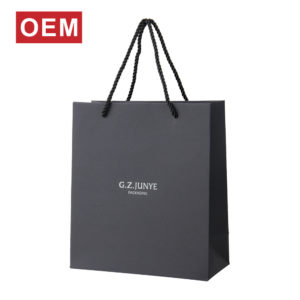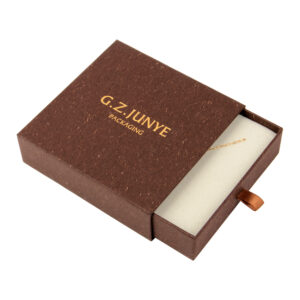
A jewelry box with a ribbon bow looks like a simple upgrade. In practice the bow is the part most likely to arrive wrong, because there are three completely different ways to put a bow on a box, and they fail in different ways. If your purchase order does not say which one you are buying, you will find out at the warehouse.
Three Ways A Bow Arrives
The first is a loose ribbon: a length of satin packed flat, tied by whoever packs the order. The second is hand-tied at packing: your staff tie each bow on the line. The third is a factory-glued finished bow, tied and bonded at the box maker before the box is shipped.
Only the third one is a component rather than a task. The first two transfer work to you, and with it the variance: tension, loop size, tail length and the direction the bow faces all become operator decisions, made hundreds of times a day.
What A Factory-Tied Bow Actually Fixes
A glued bow is one part number. Every unit gets the same loop size, the same tail angle and the same position on the lid, because it comes off the same tooling. That matters more than it sounds, because the bow is usually the first thing a customer touches and the last thing they look at before opening the lid.
It also removes a station from your packing line. Nobody has to be trained to tie a bow, nobody has to redo one that came out crooked, and the box can go straight from shipper to counter or into a gift bag without a decoration step.
The Bond Is The Weak Point, Not The Ribbon
Satin rarely fails. The adhesive interface between the bow and the paper is where failures happen, and there are four things worth asking about before you commit to a run.
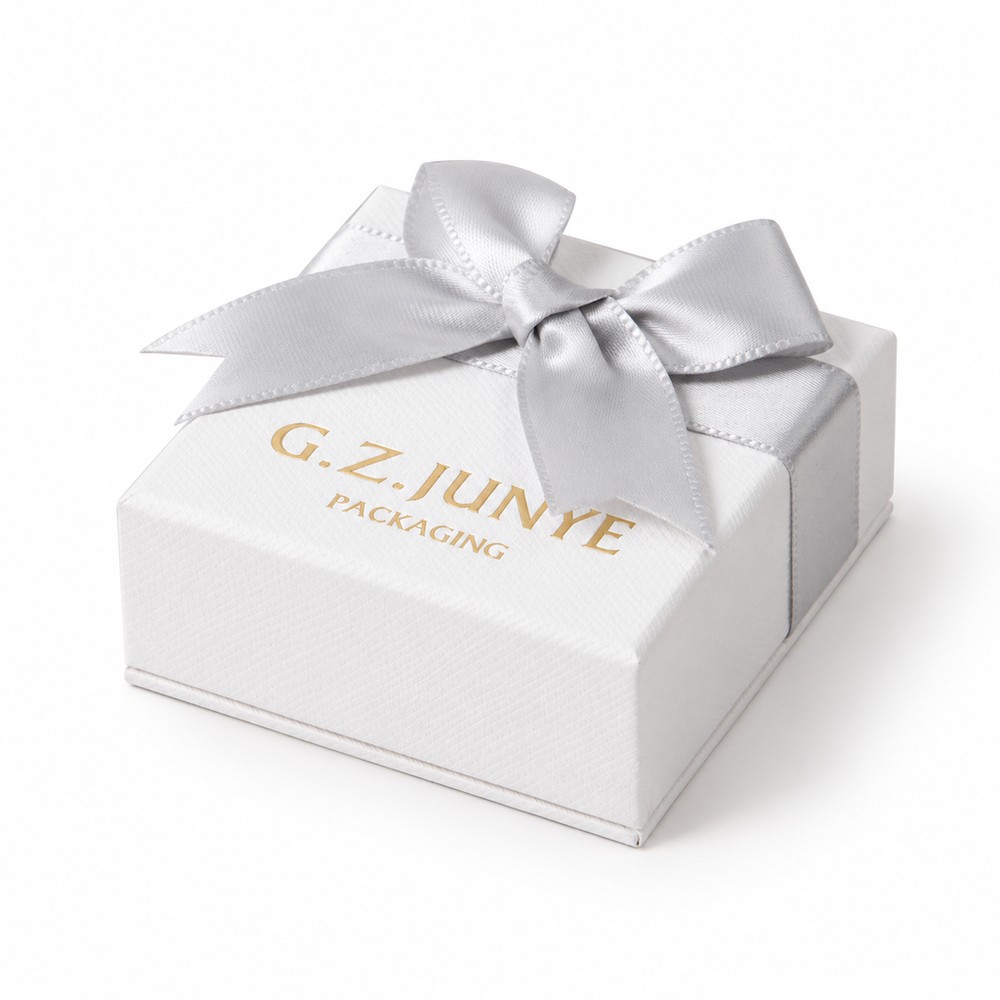
- Bond area. A bow anchored on a single small glue dot will lift at one loop when the carton is handled. The knot base should sit on a pad of adhesive, not a point.
- Adhesive type. Hot melt grabs instantly and suits high-volume lines; a pressure-sensitive or water-based adhesive may suit a paper wrap better but needs time to cure before packing.
- Surface. Matte textured paper holds adhesive differently from a coated or film-laminated sheet. On a very smooth surface, the bow needs either a scuffed anchor point or a different adhesive, and this has to be decided with the paper, not after it.
- Cure before cartoning. A bow packed while the adhesive is still soft will shift in the box, and it will shift in the same direction on every unit in that carton.
The Failure Nobody Tests: Transit Flattening
A bow looks perfect on a sample table and looks tired after a week in a carton. The bow is the tallest thing on the lid, so it takes the load when boxes are stacked, and satin does not fully recover from a sustained crush.
Two things control it. First, the cavity inside the shipper: a box that can move in its carton will roll onto its lid, and a box that is held square will not. Second, the divider or layer pad above the lid, which spreads the load instead of letting the next box press directly on the loops.
If you are shipping individual boxes by post or courier rather than by carton, ask for a bow that sits lower and flatter, or for a removable bow applied at the destination. A tall, full bow is the right choice for a counter display and the wrong choice for a padded mailer.
When A Bow Is The Wrong Answer
A bow adds height, and height is what automated cartoning, shrink wrapping and tight retail shelving all punish. If your box goes into a machine that closes a lid or wraps a film, the bow will either be crushed or block the machine. If your boxes are stacked deep in a display, the bottom row carries the load of everything above it.
In those cases the honest answer is a flat lid with a foil logo and no bow, plus a separate ribbon supplied as an accessory. It looks less generous on a shelf, but it survives the channel.
Bow And Logo Share One Face
The bow and the stamping die compete for the same square of paper. A bow placed centrally leaves little room for a wide logo, and a logo placed centrally pushes the bow off-centre or up onto the curve of the lid edge.
Decide the layout before the die is cut. Moving a hot foil die after approval is a new die, and re-positioning a glued bow after sampling is a new jig. Both are avoidable if the artwork and the bow position are approved in the same review.
What To Put In Your RFQ
Six lines are enough to remove almost all of the ambiguity:
- bow type: pre-tied and glued at the factory, or loose ribbon supplied separately
- ribbon: satin, grosgrain or velvet, and the width
- position: centred, or offset to one corner, with a measurement from the lid edge
- tail finish: straight cut or slanted cut
- packing: bow up, with a layer pad above the lid
- a physical sample approved with the bow fitted, not before
That last line is the one buyers skip. A sample approved without the bow tells you nothing about the height, the bond or the way the bow sits against the lid edge.
Sizing The Box Around The Bow
Work backwards from the item, then add the bow. The footprint has to hold the piece with a small margin so it does not slide, and the height has to clear the tallest point of the piece without the lid pressing on it. The bow then sits on top, outside that calculation.
This matters most on shallow boxes. A box that is only a few centimetres tall has almost no margin, so the difference between a ring lying flat and a ring standing on edge decides whether the lid closes cleanly.
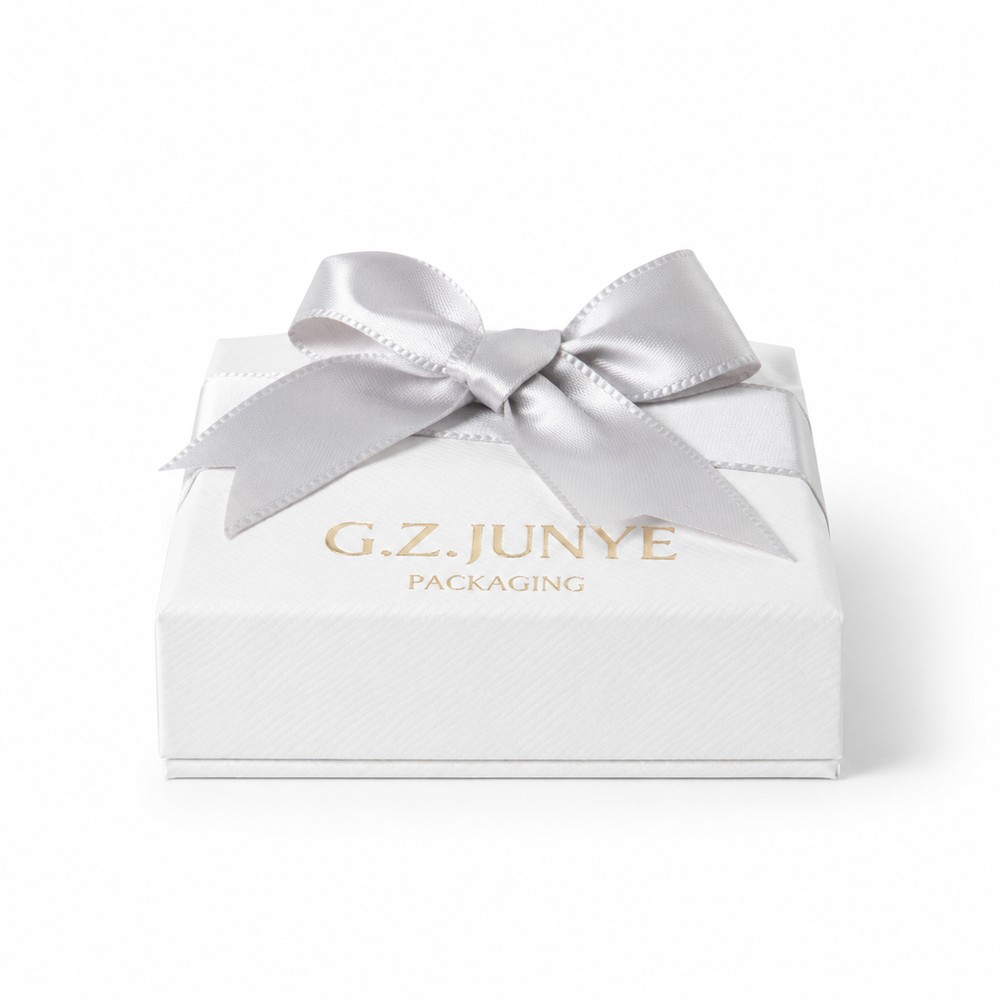
The Box Underneath The Bow
A bow does most of its work on a lid that is already clean, and the cleanest lid sits on a base with a straight bottom line. The square jewelry box 8 x 8 x 3 cm we make for this purpose uses a flat board base rather than a folded tray, with a rim strip glued onto it as the body and a deep lid that covers the rim entirely. Closed, the only thing visible at the bottom is a thin, even band of the board.
For a taller format in the same family, the rimmed lid and base jewelry box in teal shows how the same lid logic behaves on a deeper base.
If the box is going into a retail programme rather than a single gift, the question usually shifts from the bow to the insert, and a custom jewelry set gift box with compartments is the more useful starting point.
Next Step
Send the piece, its dimensions and the channel it ships through. We will come back with a footprint, a bow position and a packing method that survive that channel, and a physical sample with the bow already glued on so you can judge the real thing rather than a rendering.