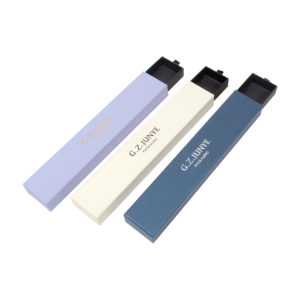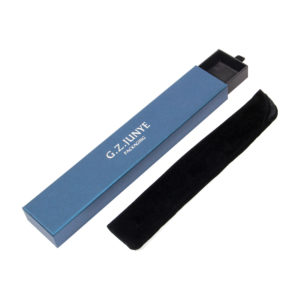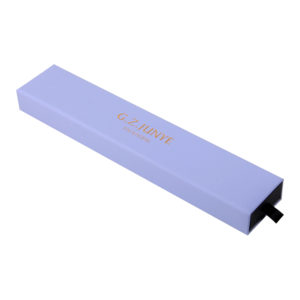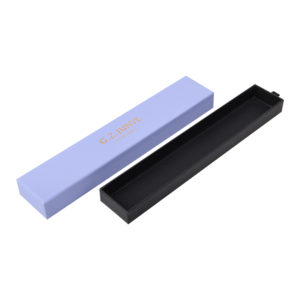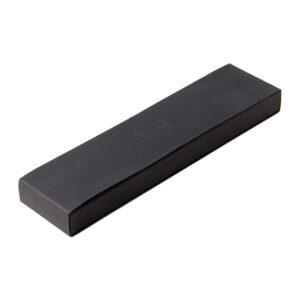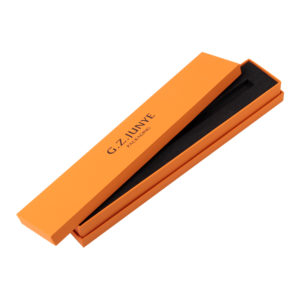
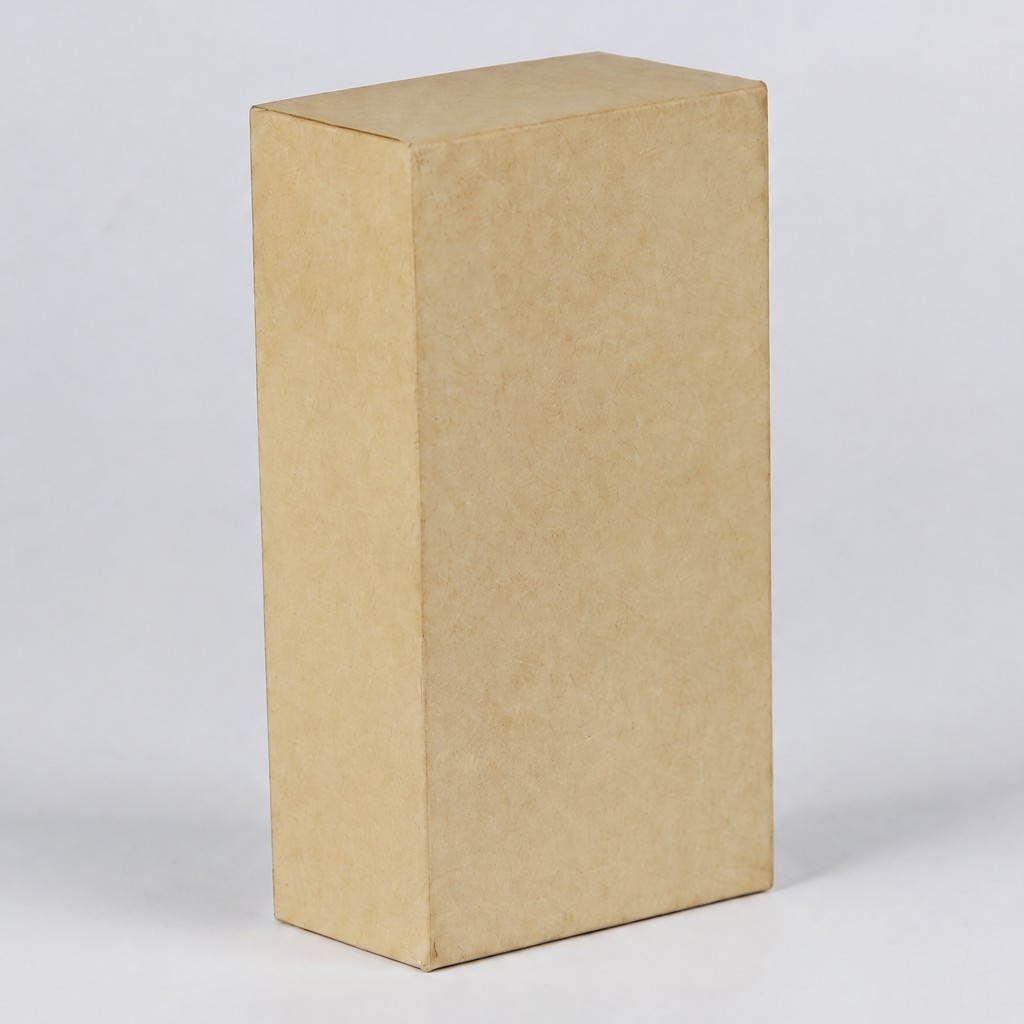
A full lid does not have to show a lid line. In a lid-and-base box whose cover skirt runs the full height of the tray, the closed box presents one unbroken side panel, and the tray is completely hidden. The line buyers look for is not a sign of quality — its position is just a measurement of how deep the cover was cut.
The Belief: A Lid Has To Show A Line
Buyers who have handled gift boxes for years tend to judge a closed box by its side profile. A visible line near the top reads as “there is a lid, this opens properly”. No line reads as “this is glued shut” or “this is a folding carton pretending to be a rigid box”.
Both readings are wrong, and they are wrong in a way that costs money: a box gets rejected at sample stage for looking too solid, then re-specified with a shallower cover that exposes the tray — which is exactly what the original brief was trying to avoid.
What A Closed Box Actually Shows
Three lid depths, three silhouettes. The side of the box tells you which one you are holding before you open it.
| Cover depth | What the side looks like when closed | Where the tray is |
|---|---|---|
| Shallow cap | Narrow band at the top, wide body below | Visible for most of the height |
| Half skirt | Two panels with a clear step between them | Lower third exposed as a plinth |
| Full skirt | One continuous panel, one bottom edge | Fully enclosed, none of it visible |
Read the list backwards and it becomes a specification sheet. If you want a plinth, ask for a half skirt. If you want one mass on the shelf, ask for the full skirt — and expect to see no line at all.
Why The Skirt Reaches The Base
Cutting the cover to the full height of the tray is a deliberate cost, and it buys three things.
Corner protection
The base corner is the first thing to scuff in a carton, because it carries the weight and takes the impact. When the cover reaches the bottom edge, that corner is covered by two layers instead of one exposed board face.
One silhouette
A closed full-lid box photographs as a single object. There is no tonal break halfway up, no ledge to catch light, and nothing for the eye to read as “a lid sitting on a box”. For retail shelves and for product photography, that is usually the point.
The cost: tolerance
A deep cover has to clear the tray on four sides at once, along its whole height. A shallow cap only has to clear the top few centimetres. That is why a full lid is less forgiving: if the wrapping tension drifts between batches, the cover either drags or sits loose, and both are visible at the bottom edge where the fit is checked.
It is a manufacturing question, not a design one. It is solved by cutting and wrapping in the same plant, on the same die, with the same paper lot.
The Second Misreading: Then It Must Be Glued
A box with no visible line is not a sealed box. The cover lifts straight up and off — one gesture, no hinge, no flap, no tear strip. What holds it on is fit, not adhesive.
There is a practical way to tell: press the side of a closed box and watch the bottom edge. On a full-lid box the cover moves as one piece against the tray; on a glued or wrapped box the whole body moves together, because there is nothing separate to move.
Ten Seconds On A Sample
Turn the sample so a corner faces you and look at one flat face. Count the horizontal tone changes from the top edge to the bottom edge.
- One — full lid. The tray is enclosed; the cover runs to the base.
- Two — half skirt, or a shallow cap with a wide body. The step is the cover’s lower edge.
- Three or more — the tray is showing between two components; something else is exposed.
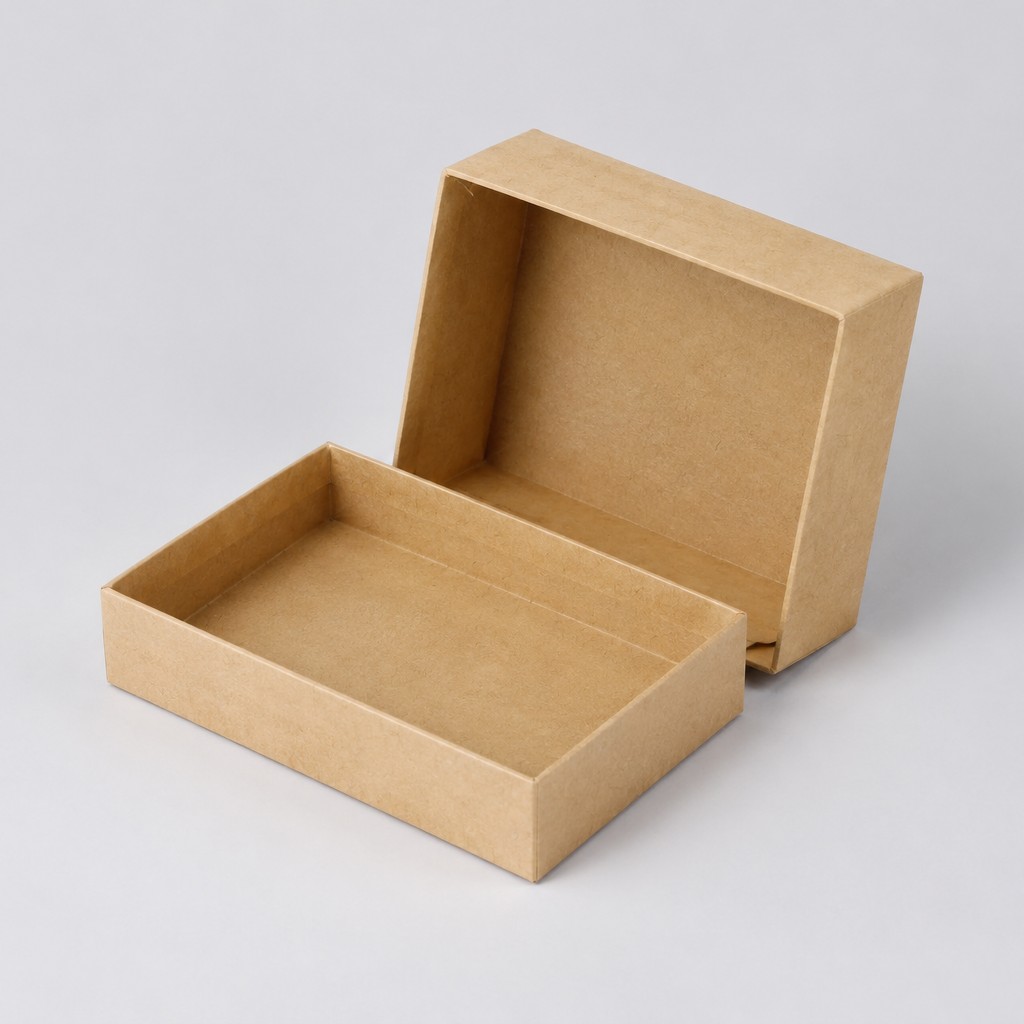
Then open it. The cover should come off as a single shell with a top panel and four walls and no bottom. If it has a bottom panel, it is not a cover — it is a second tray, and the box has a different structure than the one you specified.
When A Full Lid Is The Wrong Choice
Not every product wants a single mass. A full lid hides the base, which is a loss if the base colour carries the brand, or if the design depends on a visible plinth under the product.
It is also the wrong call when the product is heavy for its size. A deep cover that has to be lifted clear of a tall tray needs two hands and a clear overhead space; a shallow lid with a finger notch is easier to open one-handed in a retail aisle.
For a phone, a pair of earphones or a small microphone, the full lid is usually the right answer: light product, small footprint, and a shelf presence that depends on looking like one object. See the full-lid kraft box for phones.
Specifying It: Size, Board, Insert
Give the internal dimensions you need and let the outside be worked back from them. The stock reference is 16 x 8 x 6 cm, standing on its narrow face; any other size is built to order from your product outline, and a new size means a new die.
Board grade follows the weight and the handling. Natural kraft is the default for this construction: unbleached, matte, with the fibre visible, and it takes dark inks well. Light inks need a white primer or they shift warm against the sheet.
Inserts are optional. Without one, the box ships with a plain interior; with one, EVA, flocked paper or moulded pulp is cut to the device drawing and approved on the sample. Custom printed phone box and earphone packaging box show the same construction with device-specific cavities.
Questions Buyers Ask
Does a full lid mean the box cannot be opened easily?
No. The cover lifts straight up and off. The overhang on each side is small, so the fingers find the edge without a pronounced cap.
Will the cover loosen after repeated openings?
Fit is set by the die and the wrapping tension, so it is checked on the sample and held batch to batch. A box that drags on the first open is out of tolerance before it ships.
Can the box be printed on all five faces?
Yes. The cover carries four walls and a top; offset, spot colour, foil, emboss, deboss, UV spot and screen are all available on kraft.
Can it hold a tablet instead of a phone?
Yes. The construction is a format, not a fixed device fit — the size and the insert cavity are set from your drawing.
Is a full-lid box more expensive than a shallow lid?
It uses more board and a deeper cover, so it is quoted per project against the size and the print. Send the drawing and we will quote the construction you actually need. Kraft paper box packaging covers the material options.