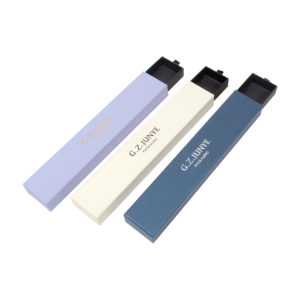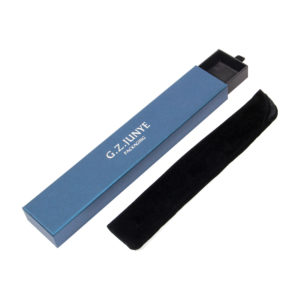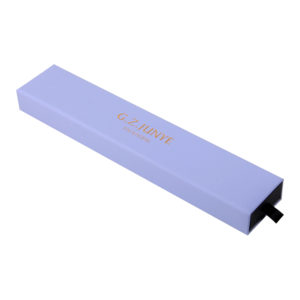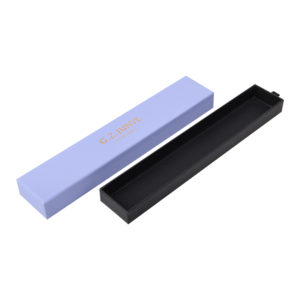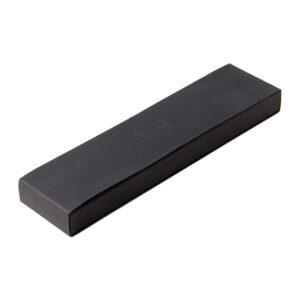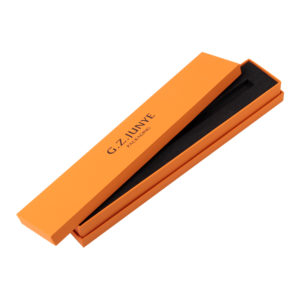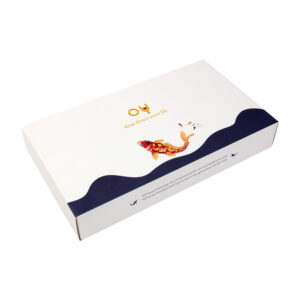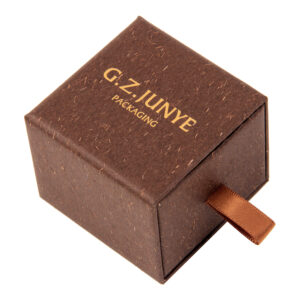
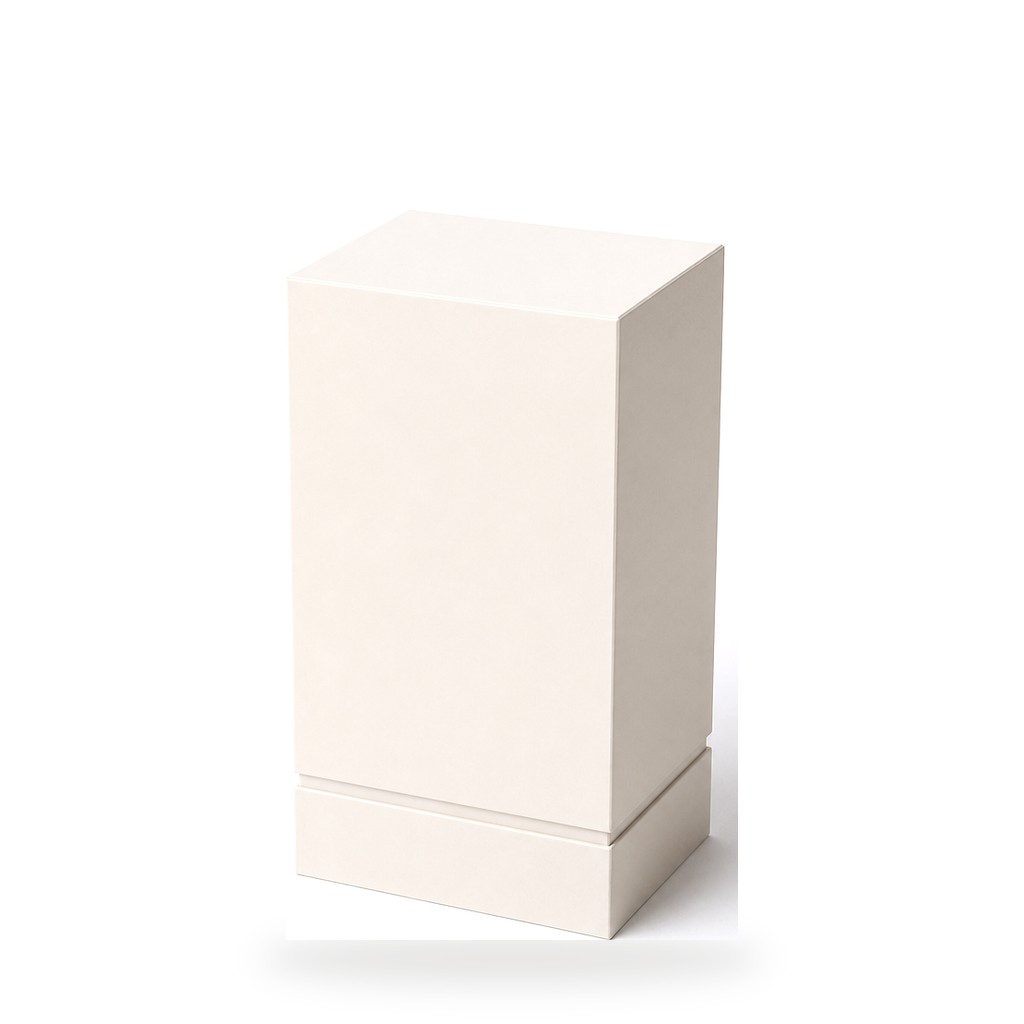
A rimmed base tall box is a two-piece rigid box where the base keeps rising after the mouth, and the cover drops over that rising wall instead of hanging a skirt down the outside. It sounds like a detail. It changes where the joint sits, what you see at the joint, and who has to hold a 20 cm wall straight. This one is 11 x 11 x 25 cm, matte ivory, with a 17% base and an 83% cover.
Two Ways to Make a Joint
Almost every rigid lid-and-base box closes one of two ways. Either the cover carries a skirt that hangs down over the outside of the base, or the base carries a neck that stands up and the cover drops over it. Both give you a lid that lifts off. They do not give you the same object.
| Joint type | Where the extra wall sits | What you see when it is shut |
|---|---|---|
| Skirt on the cover | on the cover, hanging down over the base | the cover wraps the base; the seam sits partway down the side |
| Neck on the base | on the base, standing up inside the cover | the cover stops on a ledge; a step and a shadow sit under it |
What a Neck Does That a Skirt Cannot
With a skirt, the cover is the piece that reaches down, so the cover has to be sized to the base plus a clearance on four sides, and the base can be a plain tray. With a neck, the base is the piece that reaches up, and the cover is a plain sleeve closed at the top. The base becomes a shallow open box in its own right, 4.3 cm deep here, and it can be handled, filled and moved before the cover exists.
That matters more than it sounds on a tall box. The base is the part that carries weight, and on a neck build the weight goes through a box rather than through a lid.
Twenty Centimetres of Unsupported Wall
Here is the real cost of the 17 / 83 split. The cover is 20.7 cm tall and it is a sleeve: open at the bottom, closed at the top, with nothing inside it except air and the neck at its very bottom. Its four walls are unsupported for almost their whole height.
Paperboard will bow. A wall that long, wrapped in paper, pulls slightly as the wrap dries, and the pull is strongest in the middle where there is nothing behind it. On a 5 cm box nobody sees it. On a 20.7 cm box the middle of each wall is the part a buyer looks at first. The two things that hold the silhouette are the board gauge, which is why we build these on 1.5 to 2 mm grey board, and the tension of the wrap, which is a hand skill rather than a setting.
Why the Cover Overhangs by One Board
The cover is made about one board thickness larger than the base in both directions. That is not a tolerance, it is a decision. A cover built flush to the base has to be perfectly flush, and on a 25 cm column a perfectly flush joint shows every wobble in the wrap as a wobble in the outline.
Make the cover one board larger and the joint becomes a ledge. The eye reads a shadow where a shadow belongs, and the small differences disappear into it. It also gives the cover something to sit on rather than something to rub against, which is what keeps the wrap alive through repeated opening.
Where the Step Lands: 17 and 83
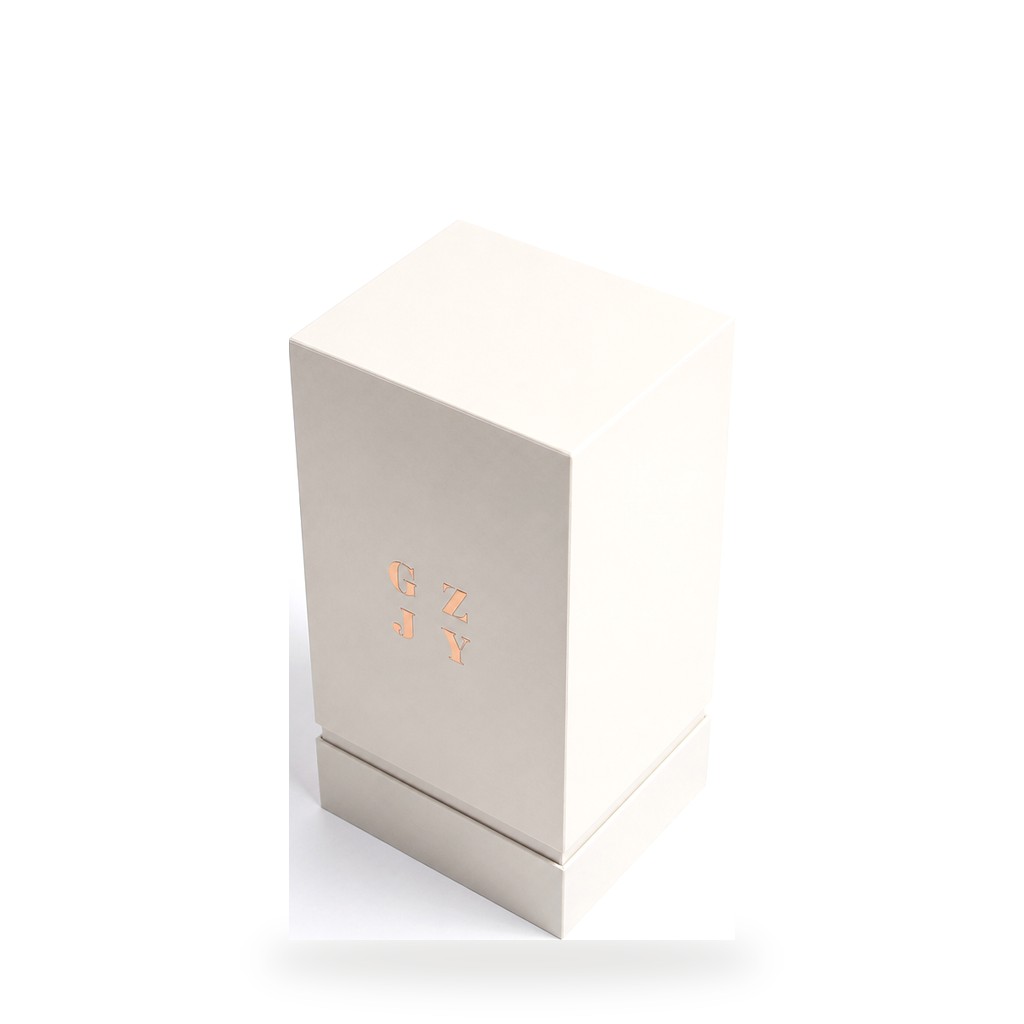
The step sits at 17% of the total height, which on a 25 cm box is about 4.3 cm off the table. That number is not arbitrary either. Too low and the base stops reading as a base, so the box looks like a sleeve that slipped. Too high and the cover stops reading as the body of the box, so the object looks like a tray with a hat.
At 17 the base is a visible plinth. At 83 the cover is the face, which is also why the foil goes on the cover and not on the base: the cover is the panel a buyer sees at eye level on a shelf, and the base is the part that sits in shadow.
Foil on a Tall Face
A 25 cm front panel is a large empty field, and it takes a single foil block well. Two foil positions are usual here: the centre of the top panel, and the centre of the front panel. Both are set vertically centred, because a mark set high on a tall face reads as a label and a mark set centred reads as a signature.
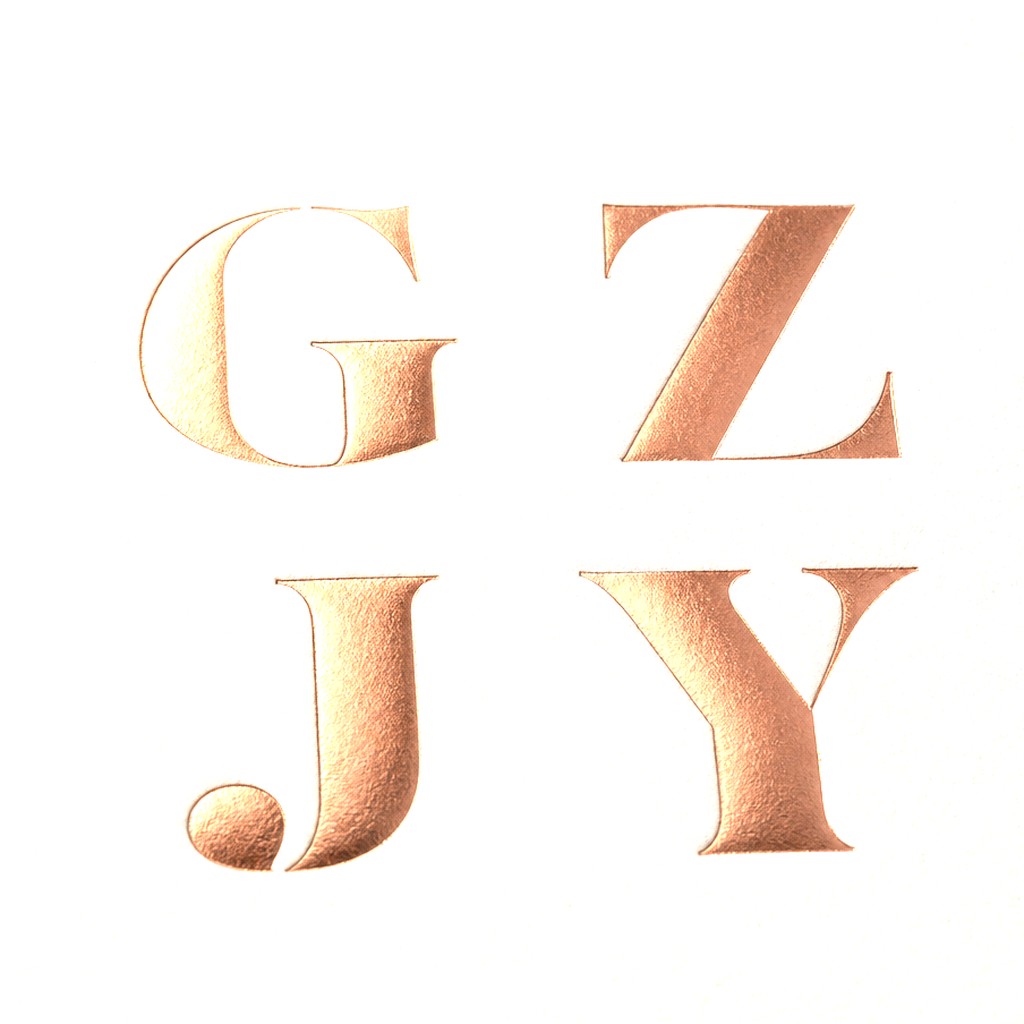
The sample photographed carries a four-letter serif mark set two by two in a rose-gold foil. That is a customer’s own artwork, stamped to show the process. It is not our brand. Foil on this box can be gold, rose gold, silver, copper or matt white, and the artwork is yours.
When a Neck Is the Wrong Choice
Three cases. If the box is short, a neck wastes height that the cover could be using. If the product is wide and shallow, a skirt gives more usable depth for the same closed height. And if the box has to be opened and closed many times in a shop, a neck takes more handling than a skirt, because the cover has to be lifted clear of the standing wall rather than slid off the top of it.
For a tall, heavy or breakable product, the neck wins: the lift is vertical, the product never tilts, and the weight stays in the base.
Four Things to Send Before the Dieline
Send the product outline, the height you want the box to stand, whether the product sits on the floor or on an insert, and the foil artwork. The first three fix the split; the fourth fixes nothing structural but decides whether the proofs come back once or three times.
Artwork proofs come back before a sample is cut, and the sample is photographed on a white sweep so it can be compared against the render you approved. Minimum order is 300 pieces and sampling takes 3 to 5 days. If you want to hold the joint before deciding, ask for a free sample.
The same construction at a smaller size is covered in a satin lined gift box, where the band is worked differently. The box itself is on the tall rigid gift box page, and the rest of the range sits under lid and base boxes.