Most scissors arrive at a packaging quote as a photo and a guess. The box gets made, the shears go in, and one of three things is wrong: the blade is longer than the box, the handle lifts the lid, or the tool slides because nothing holds it. All three are decided by numbers you can take in two minutes with a ruler.
This is the method we use before quoting a scissors gift box, and it applies to barber shears, nail kits, utility knives and long flat tools generally.
Three Measurements, Not One
A pair of scissors is not a rectangle. It has three dimensions that matter independently, and the smallest one is usually the one people forget.
| Measurement | How to take it | What it decides |
|---|---|---|
| Overall length | Tip of blade to end of handle, closed and locked | The long side of the box |
| Handle thickness | Widest point across the finger bows, measured square to the flat | The interior height, and whether a flat lid closes cleanly |
| Blade stack thickness | Across the two blades at the pivot screw | Whether the tool lies flat or rocks |
Take all three with the shears closed and the lock engaged. An open pair measures longer than the box you will actually ship.
Why The Handle Decides The Height
The blade of a shear is thin — often under 4 mm across the pair. The handle is not. Finger bows are moulded or forged thick, and they sit proud of the blade plane.
Put a shear in a box sized to its blade and the handle becomes the high point. The lid rests on the handle, the front edge lifts a millimetre, and the box looks badly made when it is only badly measured.
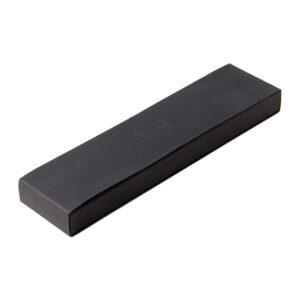
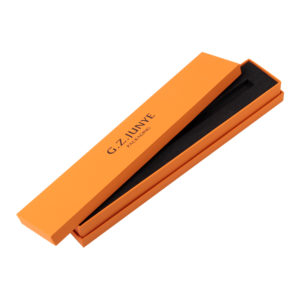
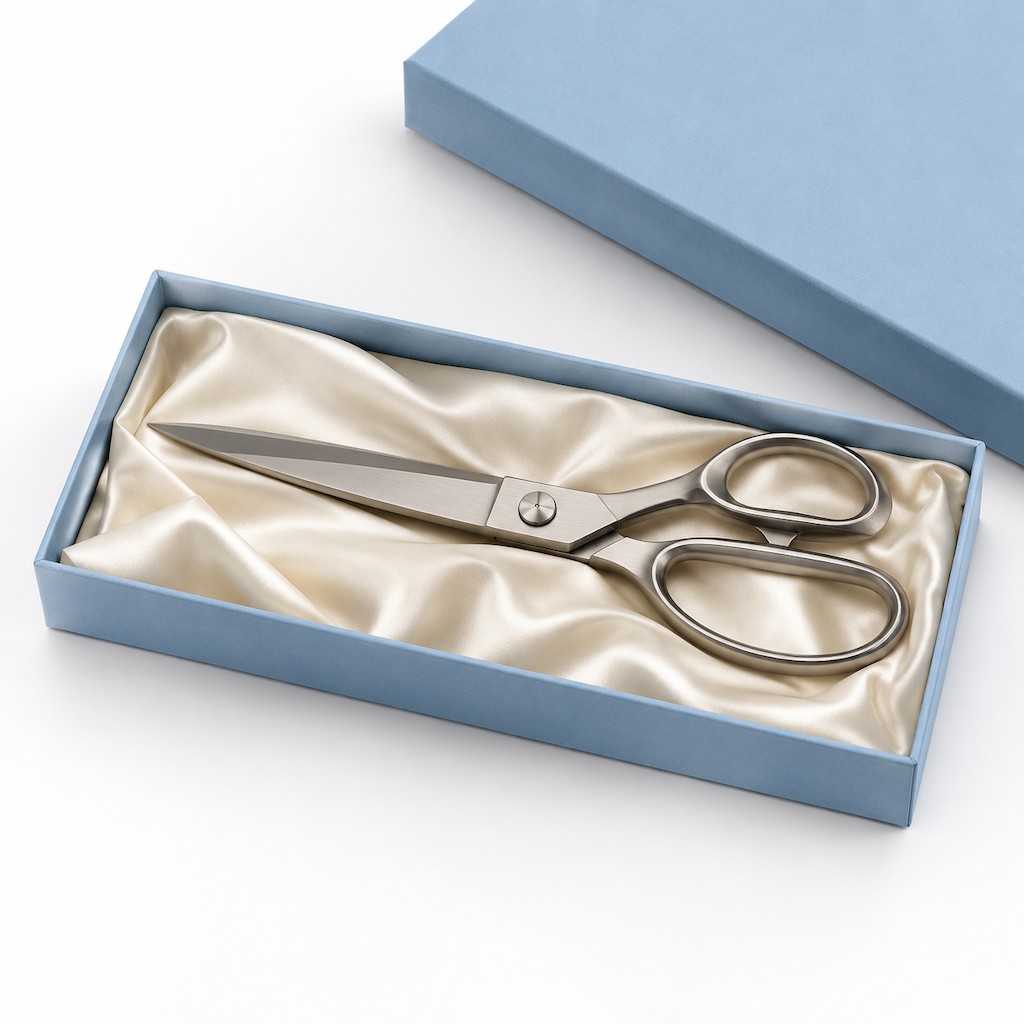
So the interior height follows the handle, not the blade. Our own 16 x 8 x 3.5 cm box carries roughly 3.2 cm of clear interior at a 1.5 mm board, which clears a standard barber shear lying flat with room for a fabric lining.
What The Lid Type Changes
Lid choice affects how much clearance you actually get, because different lids eat different amounts of the side wall.
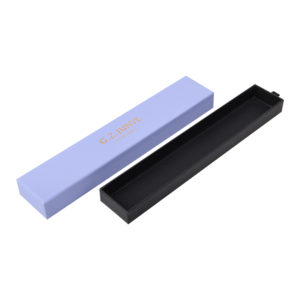
- Half lid. The skirt covers the top of the tray and a strip of tray stays visible below it. You gain a visible step and lose nothing inside, because the skirt is outside the tray.
- Full-depth lid. The skirt runs to the bottom. Cleaner silhouette, same interior, but the box reads as one solid block.
- Rimmed lid. A second band of paper stands inside the mouth. The band adds a few millimetres of lip that a handle can catch on.
For a tool that is thick at one end, the half lid is usually the safer pick: the step gives your fingers something to grip when lifting, and there is no interior lip for the handle to foul.
Clearance: The Number Nobody Quotes
Clearance is the gap between the highest point of the tool and the underside of the lid. It is not the same as interior height.
You want 2 to 3 mm of clearance for a lined box. Less than that and the lid presses the lining onto the tool, which marks both. More than about 6 mm and the tool starts to move when the box is turned.
If your clearance figure comes out negative, the fix is not a bigger box — it is a shallower insert, or a box that opens differently. Resizing a box to solve a handle problem adds air everywhere else.
Why Satin Does Not Hold Anything
A fabric lining is a presentation surface. It settles around the tool and throws light back onto it, and it makes an inexpensive object look deliberate. What it does not do is stop movement.
Satin drapes. Tilt the box and the shear slides. That is fine for a box that is opened on a counter and closed again, and wrong for a box that travels in a courier’s van.
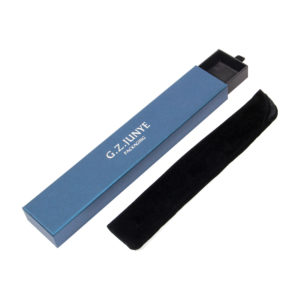
If the tool must not move, the answer is a moulded insert — EVA, sponge, EPE or a folded paper cradle — cut to the tool’s outline. Many buyers end up with both: a satin-lined tray for the retail version and a cradled version for shipping. Same box, two inserts.
A Worked Example: 16 x 8 x 3.5 cm
Take a standard barber shear: 16.5 cm overall, 12 mm across the finger bows, 4 mm at the blade stack.
- Length. 16.5 cm does not fit a 16 cm box lying straight. Either the box grows to 17 cm, or the shear goes in at a slight angle — which wastes width and looks careless. Resize the long side.
- Width. 8 cm against a 12 mm handle leaves generous side room. That is fine; a narrow tool in a wide box reads as a presentation box, not a loose one, provided the lining is draped.
- Height. 3.5 cm external gives about 3.2 cm inside. A 12 mm handle plus a 2 mm lining plus 2–3 mm clearance lands near 17 mm — comfortably inside.
- Weight. A shear is heavy for its size. Above about 1 kg, thicken the board and add a hard insert; satin alone will not protect the corners.
That is the arithmetic behind one box. Your numbers will differ, and the method does not.
Flat Is Not The Same As Thin
A 2:1 footprint is what makes a long tool lie down properly. Two things follow from it that are not obvious:
- Stacking. A flat box stacks without crushing the one below, because the load goes through the walls, not the lid panel. This matters for retail back rooms.
- Opening. A wide flat lid is easy to lift with two hands and awkward with one. If the box will be opened one-handed at a counter, a narrower format reads better.
Neither point shows up in a dimension list. Both decide whether the box feels right in the buyer’s hands.
When A Paper Box Is The Wrong Answer
Paper boxes are good at a lot of things and bad at a few:
- Long-term storage of carbon steel. Paper is not a barrier. A blade stored for months needs oil and a sealed sleeve.
- Multi-piece sets that must not touch. Shears plus comb plus clippers need compartments, which means an insert, which means a deeper box.
- Anything over about 1 kg. Board thickness stops being the limiting factor and structure starts to be.
- Liquids. No exceptions.
Saying this up front saves a sample round. A box that is wrong for the job is a bad box even when it is well made.
Quality Documents
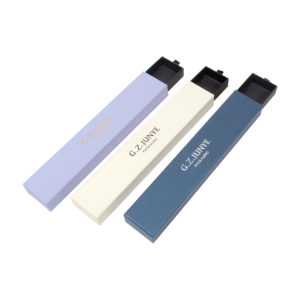
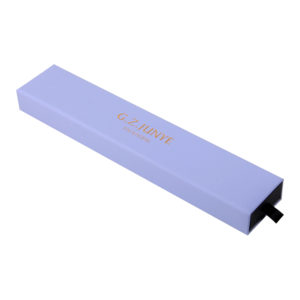
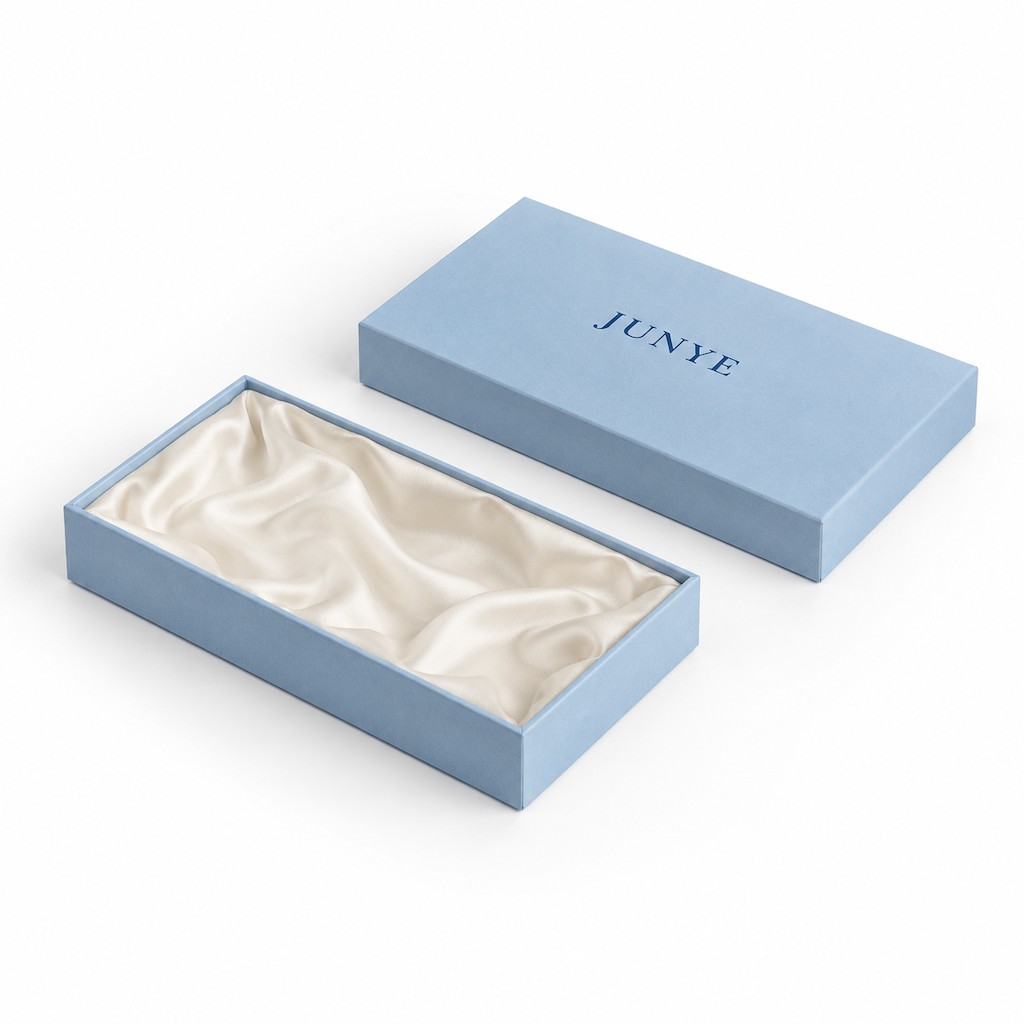
Guangzhou Junye Packaging Industry Co., Ltd. has run its own rigid box factory in Guangzhou since 2004. ISO 9001:2015 certificate ZYC24Q00141R1S is on file. Grey board is V-grooved and folded to a sharp 90 degree corner, then wrapped; the wrap on our sample is a matte specialty paper in pale powder blue with a fine grain.
Related Reading
- Scissors packaging box: the 16 x 8 x 3.5 cm box used as the worked example above.
- Half lid packaging box: the same lid type at a square footprint.
- Two piece lid box: what separates a two-piece box from a drawer.