A Small Box With A Real Structure
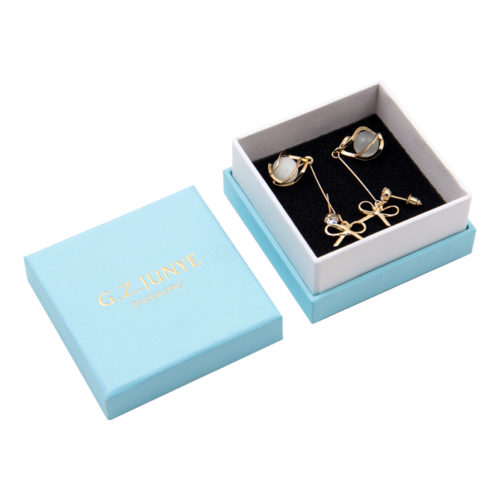
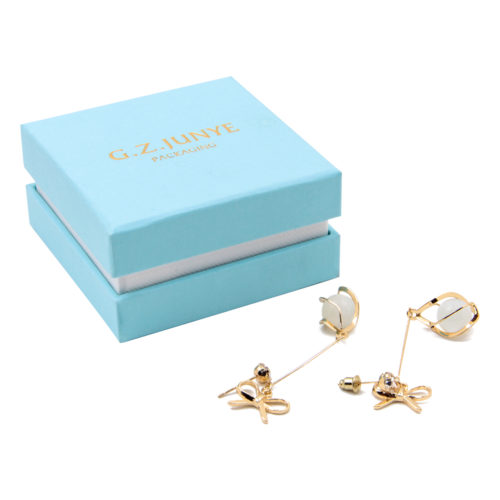
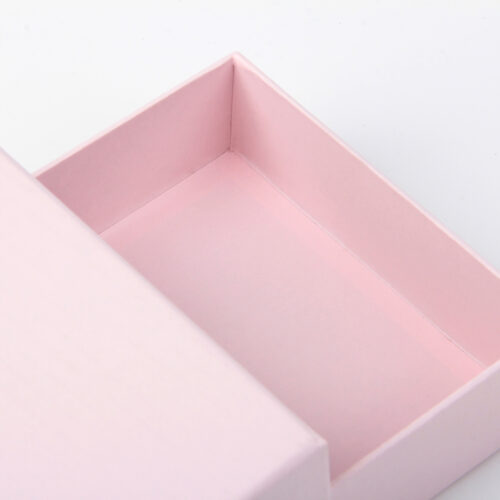
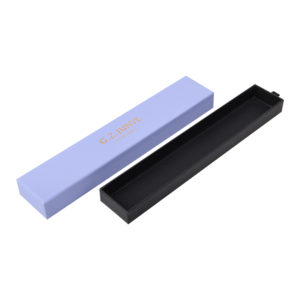
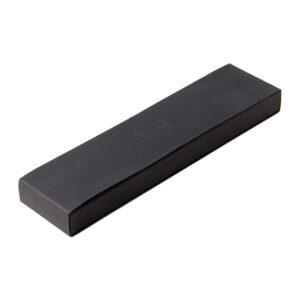
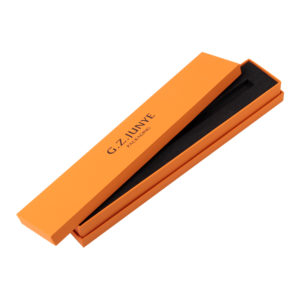
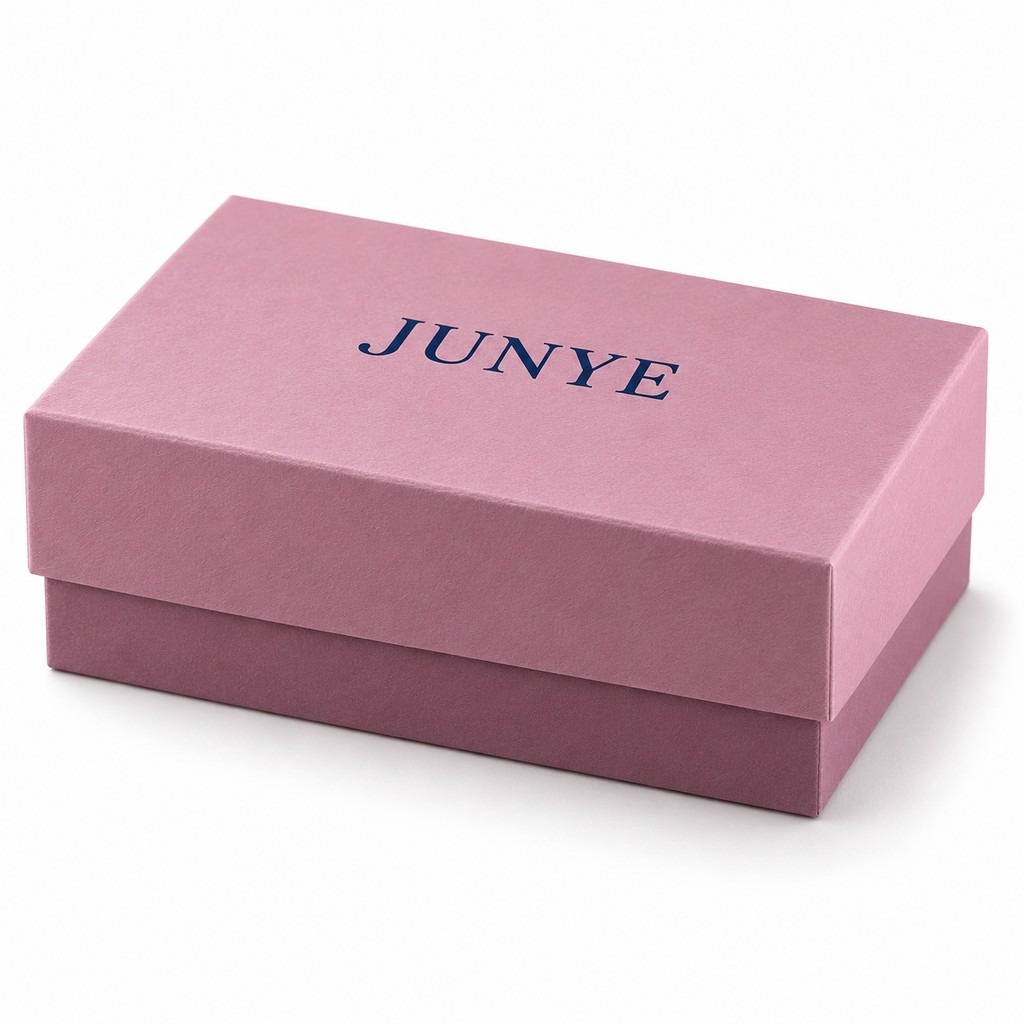
Small packaging usually means one of two things: a thin folding carton that dents in the hand, or a rigid box whose lid swallows the tray whole. This is neither. It is a two-piece rigid box, 9 x 5 x 3.5 cm, with a lid that covers the top 2 cm and leaves the bottom 1.5 cm of the tray on show.
That exposed strip is not an accident of the template. It is the band that lets a buyer see, from across a counter, that the lid comes off rather than flipping open.
| Item | Value |
|---|---|
| Outside footprint | 9 x 5 cm |
| Height | 3.5 cm |
| Footprint ratio | 1.8:1 |
| Lid skirt | 2.0 cm |
| Tray left showing | 1.5 cm |
| Pieces | 2, no rim, no insert |
What The Three Bands Tell You
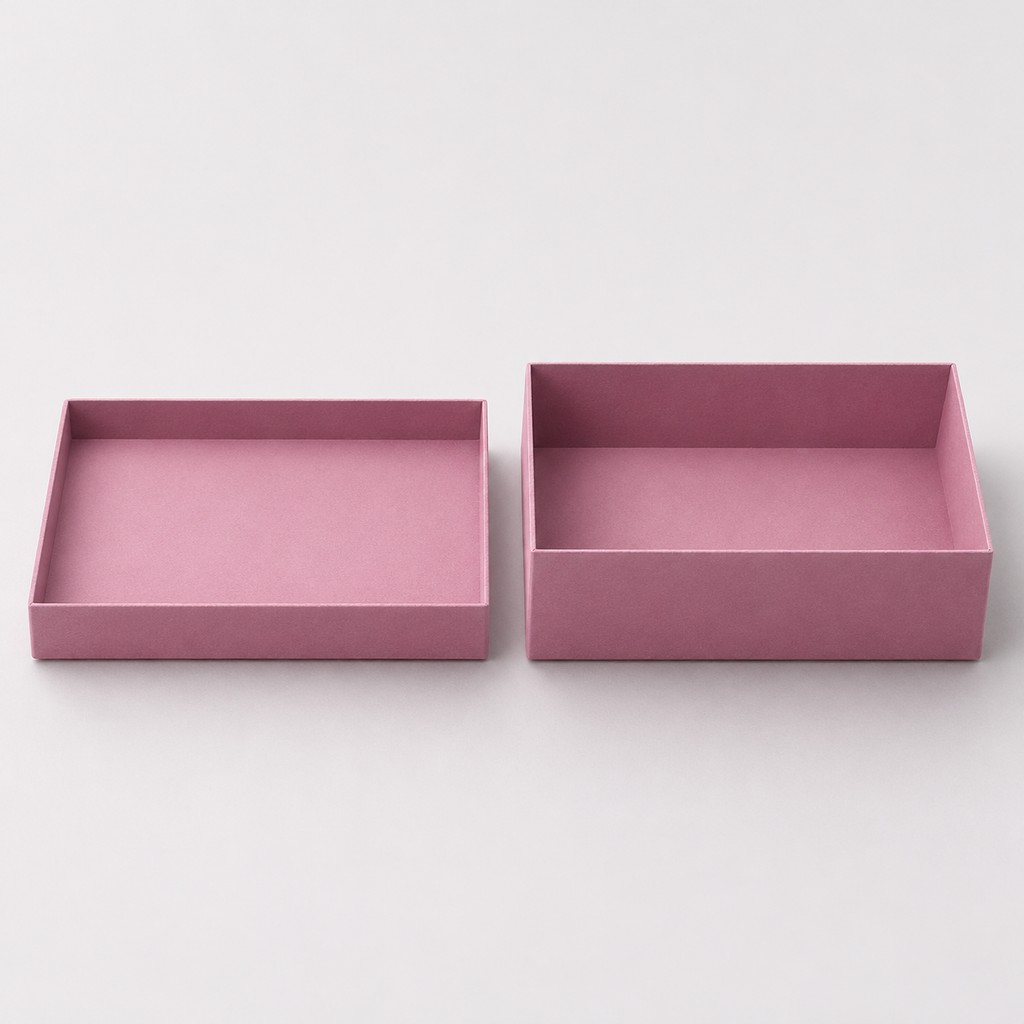
Closed, the side of this box reads as three horizontal strips: the lid top, the lid skirt, the exposed tray. Between the last two there is one step and one thin shadow under the overhang.
Two things follow from that. A single step means the lid is a cover, not a second tray. One paper thickness at the mouth means there is no rim band tucked inside, which is the difference between this box and a rimmed lid and base.
If you see two steps, or a ring of paper standing above the tray mouth, the box has been built to a different specification.
The Lid Is A Cover, Not A Frame
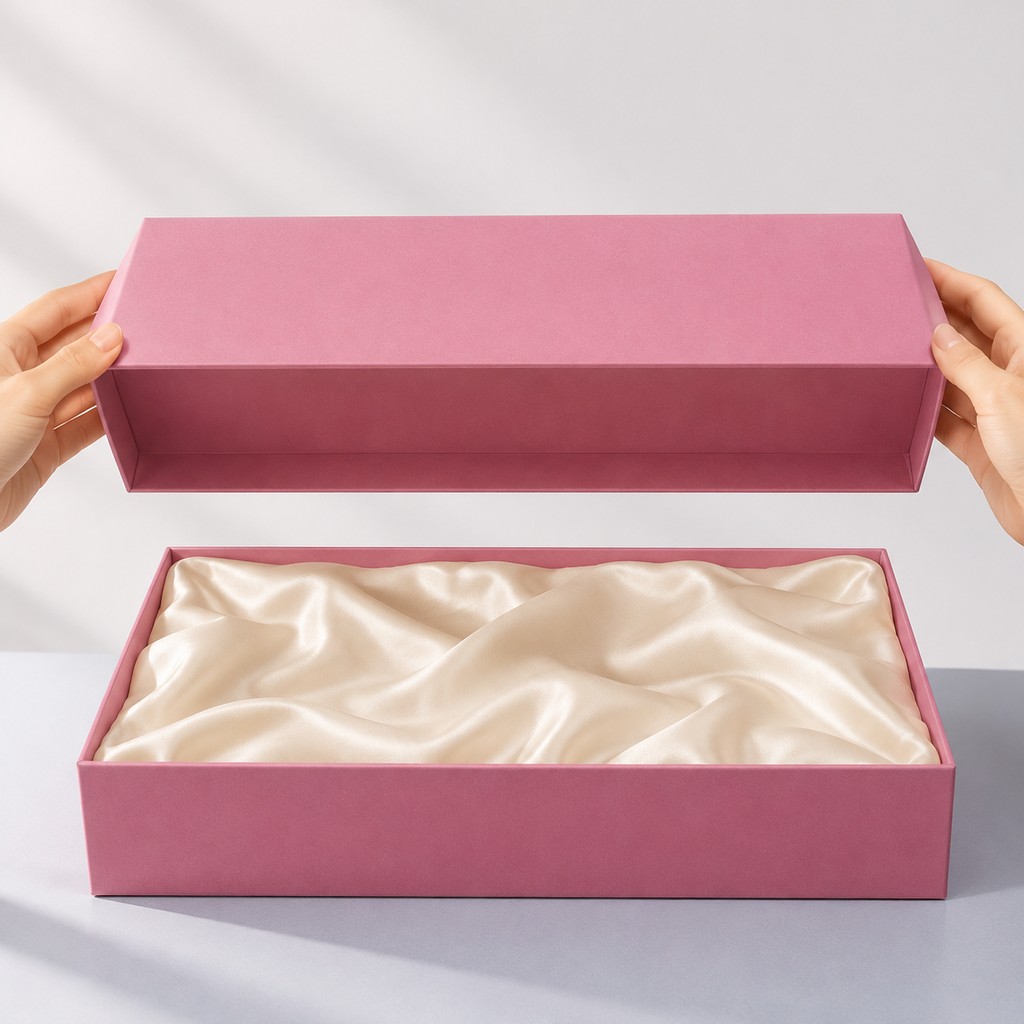
The lid has a top panel and four skirt walls. No bottom panel. That sounds like a trivial detail until you pick up a box whose lid frame is hollow: it flexes, it shows a seam edge from the side, and it reads as cheap at exactly the moment a customer is looking closely.
A solid top panel costs a little more board. It is the difference between a box that feels like packaging and one that feels like a lid.
Satin, On Purpose
The tray is lined with one piece of ivory satin, laid by hand. Not slotted, not segmented, not flocked. The fabric gathers where the shape pushes it down, so whatever you place inside sits in a soft cradle and gets a little light bounced back onto it.
This is the part that decides whether the box looks considered or assembled. A moulded insert holds an object more tightly, and it also announces that the object is one of thousands made to the same shape.
What Actually Fits
The honest answer starts with the inside, not the outside. The walls take up part of 9 x 5 cm, so the usable tray floor is a little smaller than the footprint in both directions.
It suits:
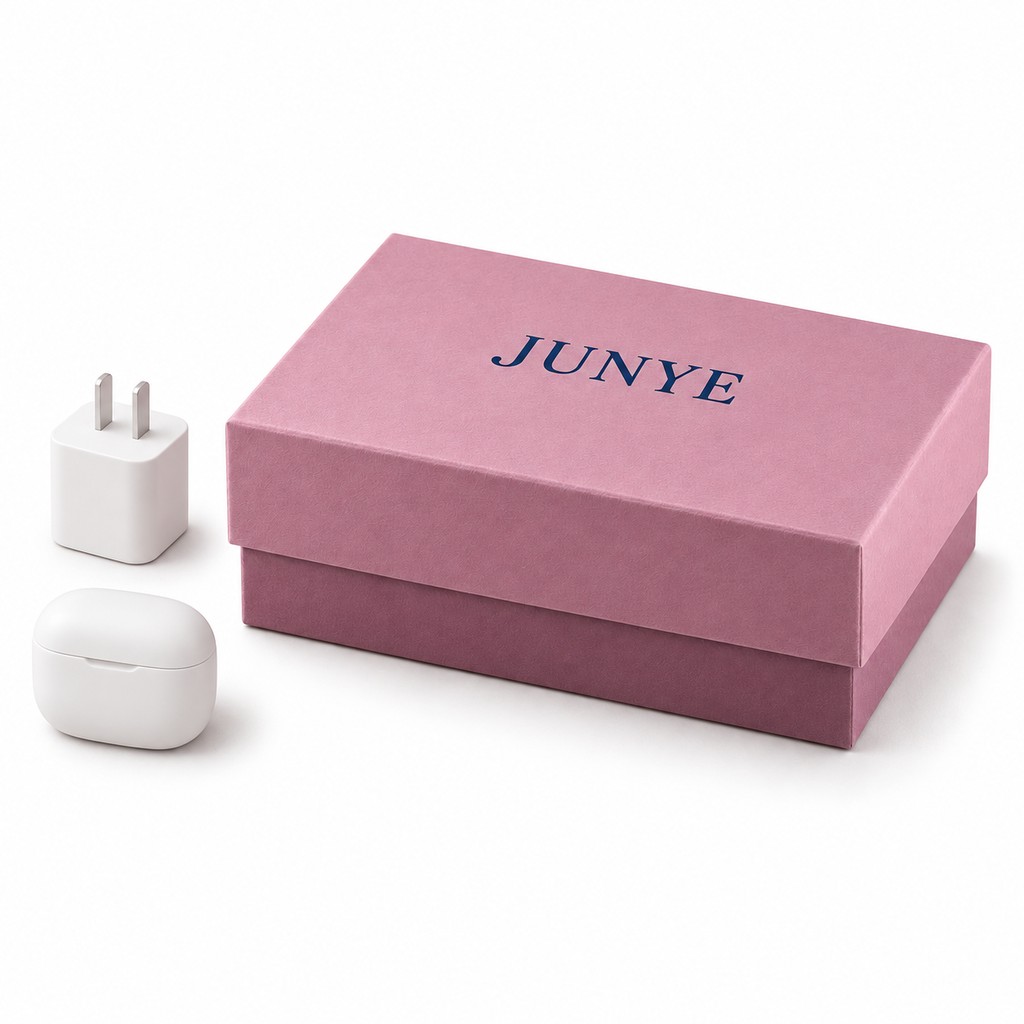
- earbuds in a charging case, laid flat
- a wall charger with its cable folded beside it
- a keychain, a ring of keys, a small fob
- commemorative and award cards up to the size of the tray floor
- small accessories where you want the satin to show
It does not suit a standard credit-card-sized card. Those are 8.56 x 5.40 cm, and this box is 5 cm across before you take the walls into account. A card that size will not lie flat here in either direction. If the card is the product, size the box from the card.
When You Need An Insert Instead
Satin presents. It does not locate. If the object has a fixed orientation that matters in the box, or if two parts must not touch in transit, satin alone is the wrong answer.
Moulded EVA, sponge, EPE or a paper tray with compartments can be fitted on request. It changes the feel: more protective, less gift-like. For a charger and cable it is usually worth it. For a single keychain, it rarely is.
Sizes And Options
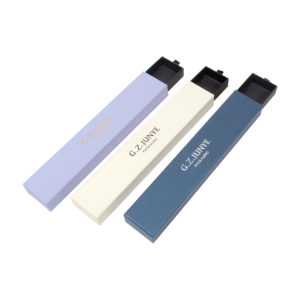
Length, width and height are all made to order, and the structure stays the same when they change. Depth of the lid skirt can also be set, which is how you move a design between the half-lid look and a deep cover.
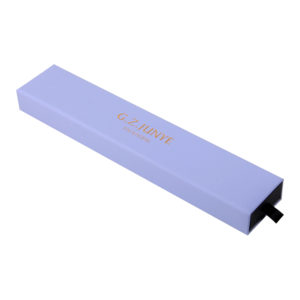
Printing: foil, embossing, spot UV, screen print, CMYK or a matched spot colour. The lid can carry your mark, printed into the paper rather than applied on top.
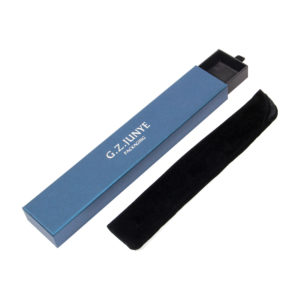
Inside: ivory satin is standard. Flocking, EVA, sponge or a paper tray are alternatives.
MOQ is 300 pcs at the standard size, 500 pcs when the size changes, and 1,000 pcs when a new die or a spot colour is added.
Quality
Guangzhou Junye Packaging Industry Co., Ltd. has built rigid boxes in its own Guangzhou factory since 2004. ISO 9001:2015 certificate ZYC24Q00141R1S is on file.
What To Send Us For A Quote
- the object, or its measurements taken with a ruler against a flat surface
- whether it travels in the box or is packed at the counter
- your mark, as vector artwork, and whether it prints in one colour or foil
- the finish you have in mind, or a photograph of something close
A photo of the object next to a coin or a ruler is more useful than a description. It tells us the thickness as well as the footprint.
Related Reading
- Half lid packaging box: the same half lid structure in another size.
- Large paper packaging box: the long version of this box, 19 x 9 cm.
- Charger box: a box built around a wall charger and its cable.
- Small gift box: what fits in 9 x 5, and what does not.