The Diagonal Nobody Measures
Take a pair of shears 20 cm long and put it in a 13 x 13 cm box. It fits. The lid closes. Nothing is wrong with the box, and nothing about the result looks good either: the tool lies corner to corner, two triangles of empty board sit either side of it, and the moment the box is tilted the tool pivots on its own diagonal.
The box passed the only test anyone applied – does it fit – and failed the test that matters – does it stay where it was put.
This is the argument for a long flat gift box, and it has nothing to do with being generous with material. A 2:1 footprint is not a bigger box. It is a box shaped like the thing going into it.
What The Footprint Actually Controls
Three things change when the footprint changes, and only one of them is about space:
| What changes | Square box | 2:1 box |
|---|---|---|
| Direction the item can move | two, along either axis | one, along the length |
| Where the dead space sits | either side of the item, visible on opening | at the ends, behind the item |
| How a liner can resist | poorly – a fold cannot span a diagonal | directly – a fold or strap crosses the short side |
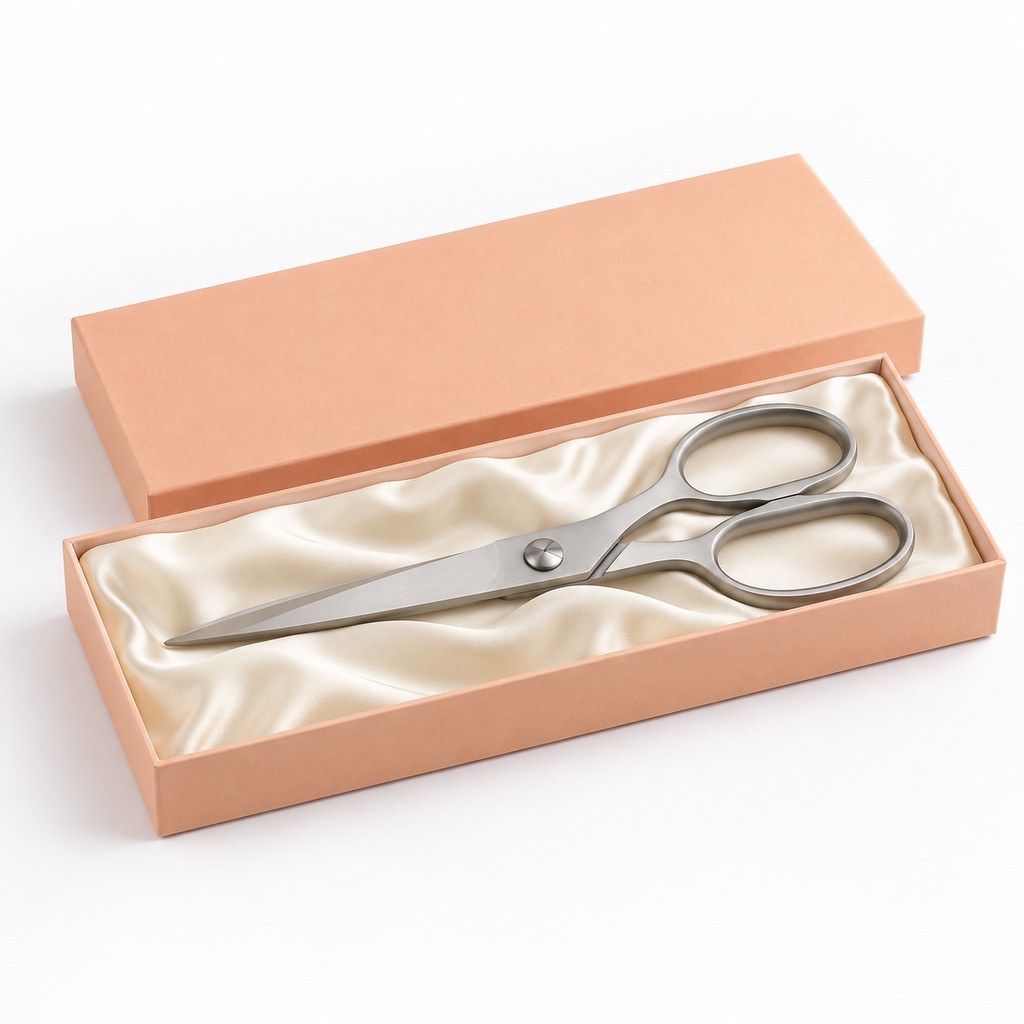
The third row is the one that usually decides the job. A draped liner, satin or felt, resists movement by friction and by the shape it takes around the item. Friction acts along the surfaces in contact. In a square box holding a long tool, most of the tool’s length is in contact with nothing at all, so there is very little surface to work with. In a long box, the tool lies along a wall, and the liner has both a wall and a short side to press against.
Doing The Sum Before You Choose
There is a short calculation that settles the footprint question faster than a catalogue will.
- Measure the item’s longest straight dimension. For shears, that is tip to the end of the handle, closed.
- Measure the second dimension across the widest part, usually across the two finger bows.
- Add the clearance you are willing to lose. For a lined box, 5 to 8 mm on each of the two dimensions is enough for the fabric to fold around the item without gripping it.
Those three numbers give the minimum interior. The exterior follows from board thickness plus wrap, which is why the interior number is the one to quote to a supplier and the exterior one to check against a shelf.
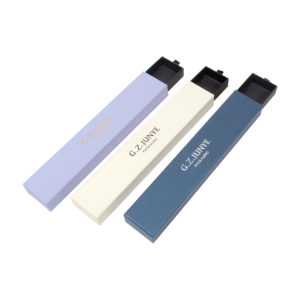
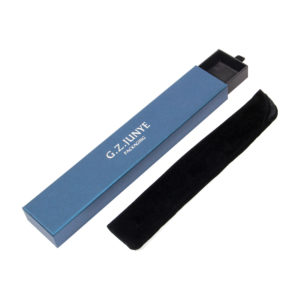
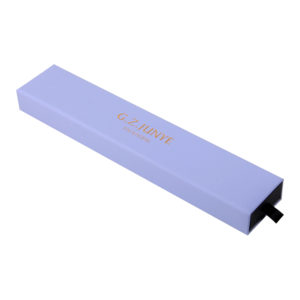
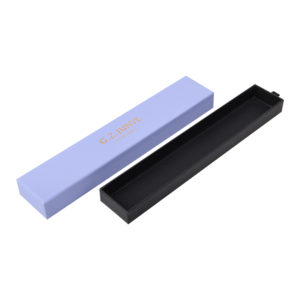
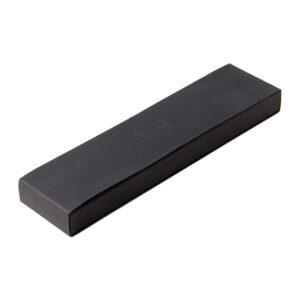
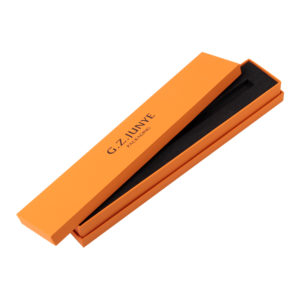
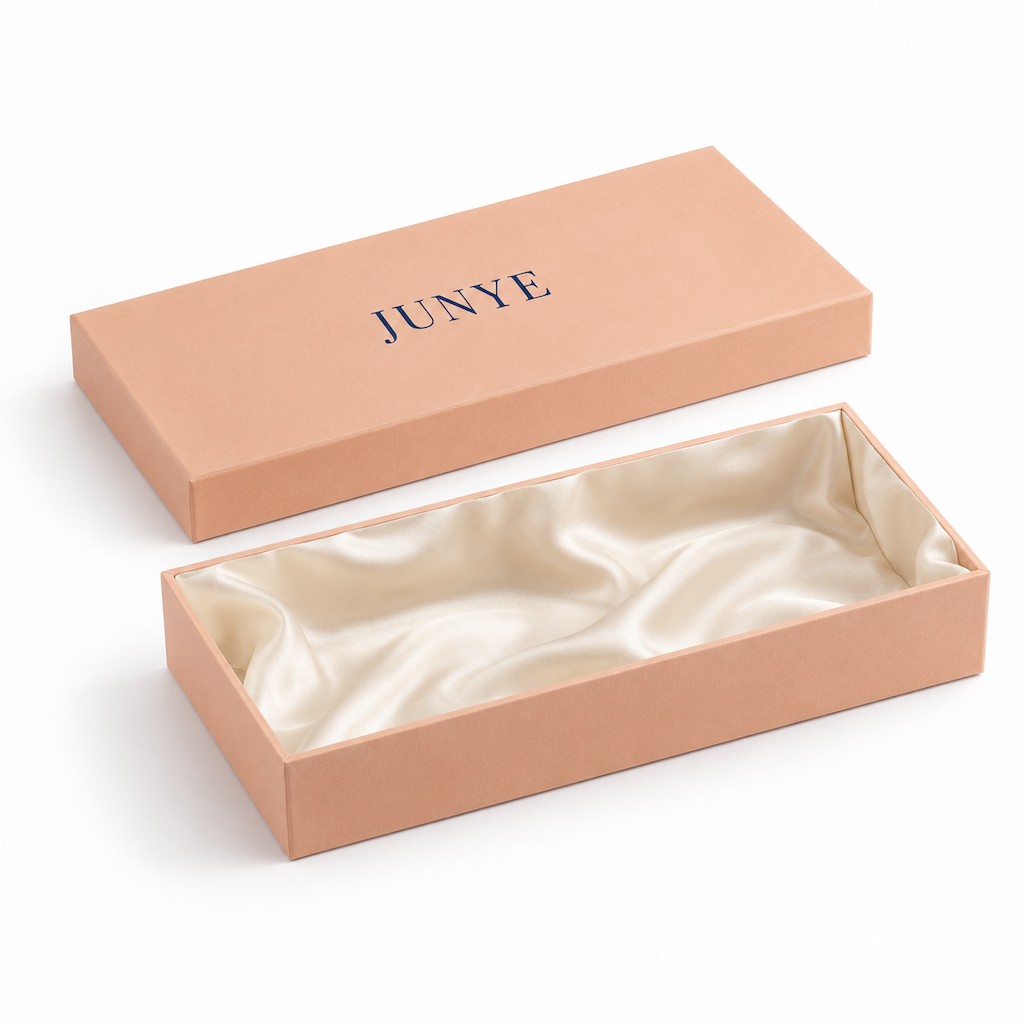
A worked example, using a box we make: interior about 18.7 x 8.7 cm at the base, exterior 19 x 9 x 3.5 cm. The 19:9 ratio is not a design preference – it is what a 20 cm tool and a 7 cm handle width produce once clearance is added.
Why Not Just Make The Square Box Longer
Perfectly reasonable question, and sometimes the answer is yes: plenty of long items ship in a box that is simply stretched on one side.
Two things go wrong when a square proportion is stretched without rethinking the lid:
- The skirt stops behaving like a skirt. On a short side, a 2 cm skirt is a big fraction of the edge and grips well. On a 19 cm side, the same 2 cm skirt is a small fraction, and the lid relies much more on the corners for alignment.
- The lid starts to lift unevenly. A long lid lifted from one short end tilts; on a square box that tilt is small, on a 2:1 box it is visible and it is what buyers photograph.
Neither is fatal. Both are solved by treating the lid’s skirt depth and the tray’s step as things to cut for the new proportion, not to carry over from the last size. This is the part of custom work that separates a resize from a redesign.
The Height Question Comes Second
Footprint decides whether the item lies straight. Height decides whether the lid closes without touching it.
For a flat box, the honest way to set height is to measure the item at its thickest point as it will sit, then add the liner and a small air gap. On a box with a draped satin interior, the fabric under the item compresses but does not disappear; 2 to 3 mm is realistic, and more if the item is heavy.
The failure mode to avoid is designing height around the flat part. A pair of shears is 4 mm at the blade and 18 mm across the bows. A box that closes over the blade and presses the bows is not a box that is too small – it is a box measured in the wrong place.
Where Long Boxes Stop Making Sense
A long footprint is not always right, and it is worth saying where it stops.
- Very short, wide items. A wallet, a watch roll, a compact: a 2:1 box around them is mostly air. The proportions look like a pen case holding a coin.
- Sets that must be laid out in a grid. Once you need compartments, the footprint should follow the grid, not the longest piece.
- Shipping in bulk where outer carton size dominates. A 2.11:1 box packs well in a line but leaves carton space at the ends unless the cartons are sized for it. Ask before assuming the long box is the cheaper one to freight.
The general rule: match the footprint to the item’s dominant axis, then stop stretching. A box twice as long as the item does not protect better than a box that fits.
What A Lined Long Box Does To The Item
One effect is worth naming because it is the reason people choose this shape for presentation rather than protection.
A long box with a draped lining presents an item along its own length. The eye follows the tool from end to end, the lining reflects light back up under it, and the item sits in a channel rather than on a shelf. It reads as a setting.
That is a presentation decision, not a protective one. If the box is going into a courier’s van, the lining needs help: a strap, a recess, or a moulded insert. Satin presents; it does not restrain. Suppliers who tell you otherwise are describing a photograph, not a shipment.
Measuring For A Quote
If you are briefing a supplier, these four lines are enough to get a real number instead of a range:
- longest dimension of the item, closed
- widest dimension across the item
- thickness at the thickest point, in the position it will sit
- whether the box travels, and how
The rest – colour, print, lining, quantity – changes the price but not the footprint. Getting the footprint right first is what stops a sample coming back with the item sitting diagonally.
Related Reading
- Large paper packaging box, 19 x 9 x 3.5 cm: a worked 2.11:1 example with a half-depth lid.
- Scissors packaging box: the same idea at 16 x 8 x 3.5 cm, sized for one pair.
- Half lid packaging box: how a half-depth lid differs from a full-depth one.