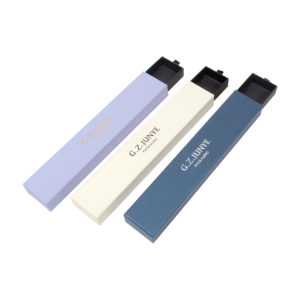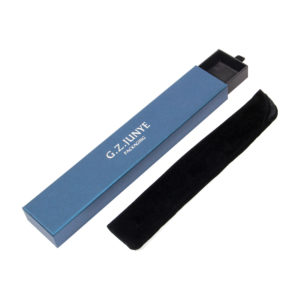
A Long Box, Not A Big Box
Nineteen by nine is a footprint, not a claim about size. Two boxes can swallow the same volume and behave nothing alike on a bench: give a long tool a square box and it lies corner to corner with two useless triangles beside it; give it a 2.11:1 box and it has a straight channel, a wall on three sides, and one direction it can travel.
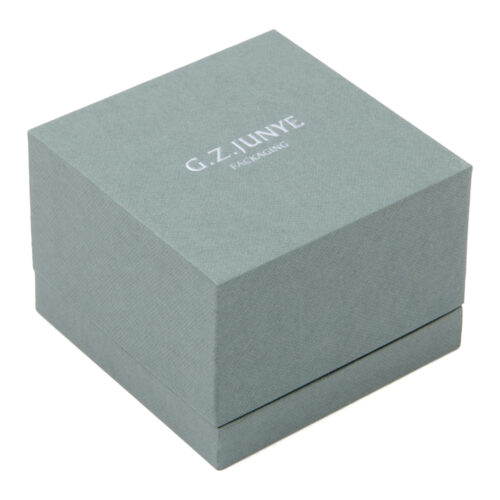
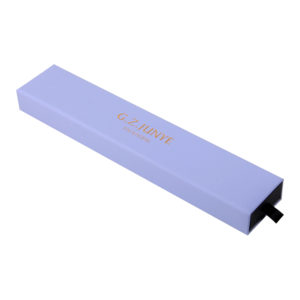
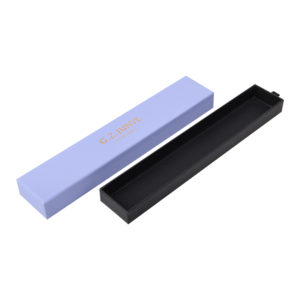
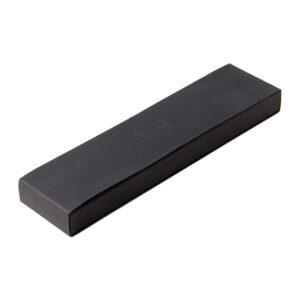
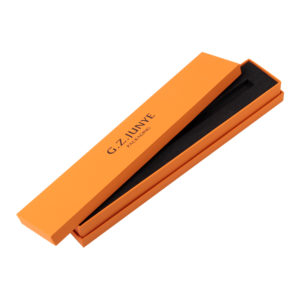
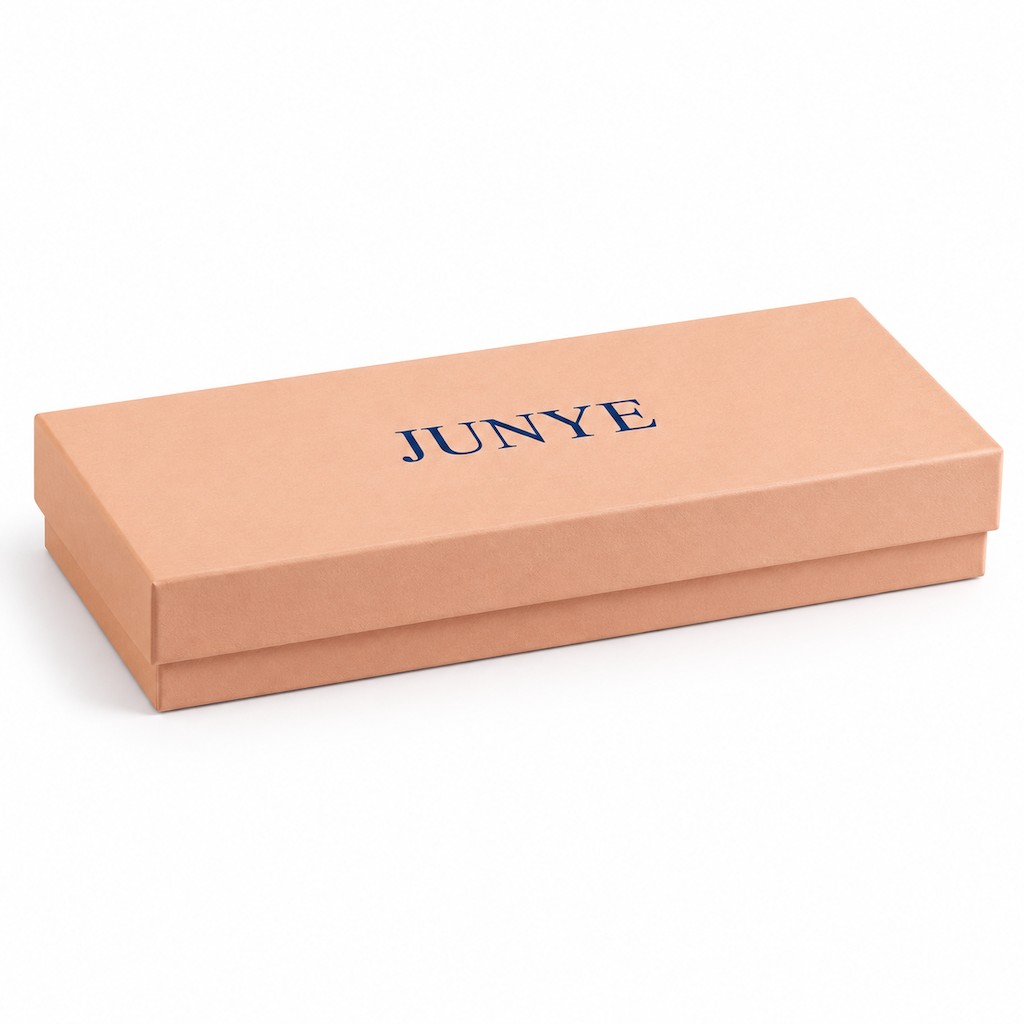
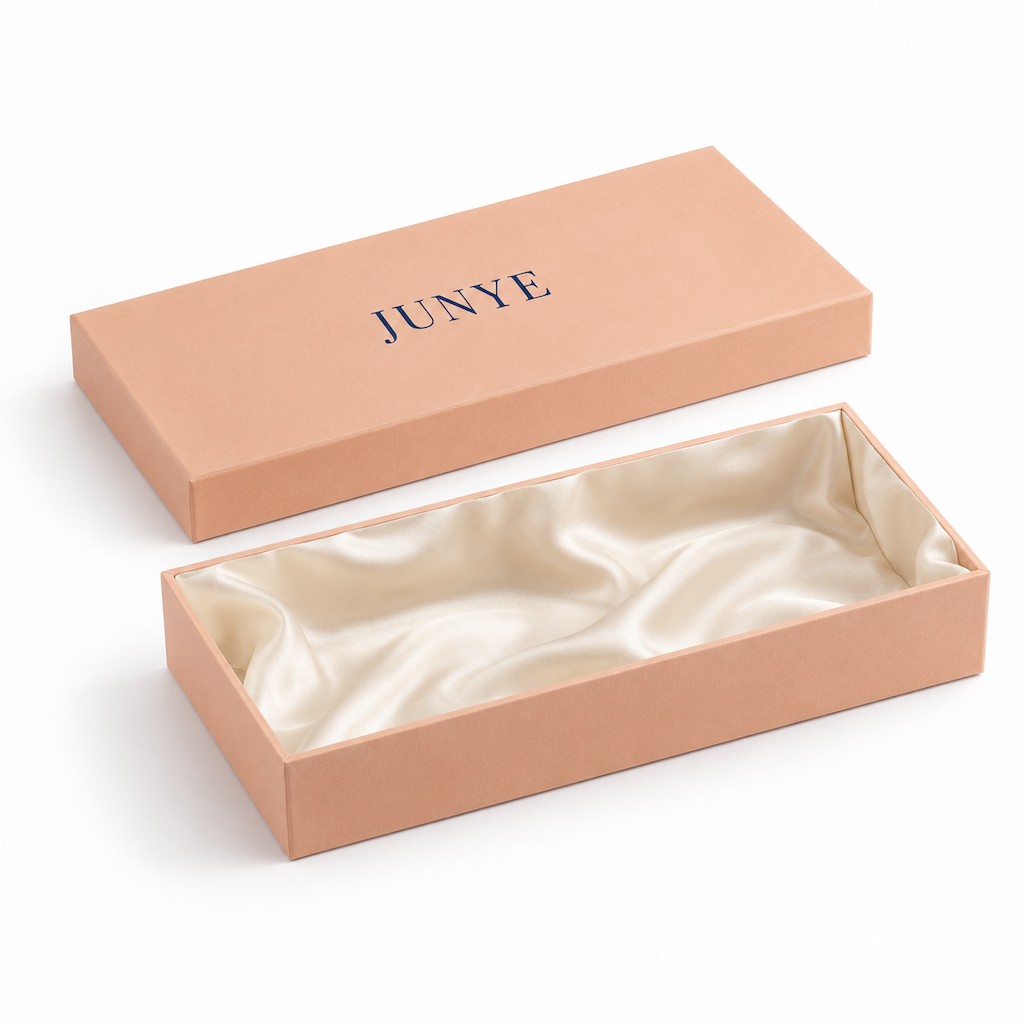
This is the second kind. Exterior 19 x 9 x 3.5 cm, two pieces, half-depth lid. It counts as large paper packaging for one reason only: the length carries the volume, and the height stays low enough for a tool to sit in it without a tower of filler.
| Measured item | Value |
|---|---|
| Base | 19 x 9 cm, ratio 2.11:1 |
| Height, outside | 3.5 cm |
| Skirt of the lid | 2.0 cm, 57.1% of the shut side |
| Tray left uncovered | 1.5 cm, 42.9% of the shut side |
| Lid lip beyond the tray | roughly 2.5 mm each side |
| Height, inside | roughly 3.2 cm |
| Interior | ivory satin, laid as one sheet |
| One box, packed | about 0.5 kg |
| Minimum order | 300 pcs at this size |
Why 2.11:1 Changes What You Can Put In It
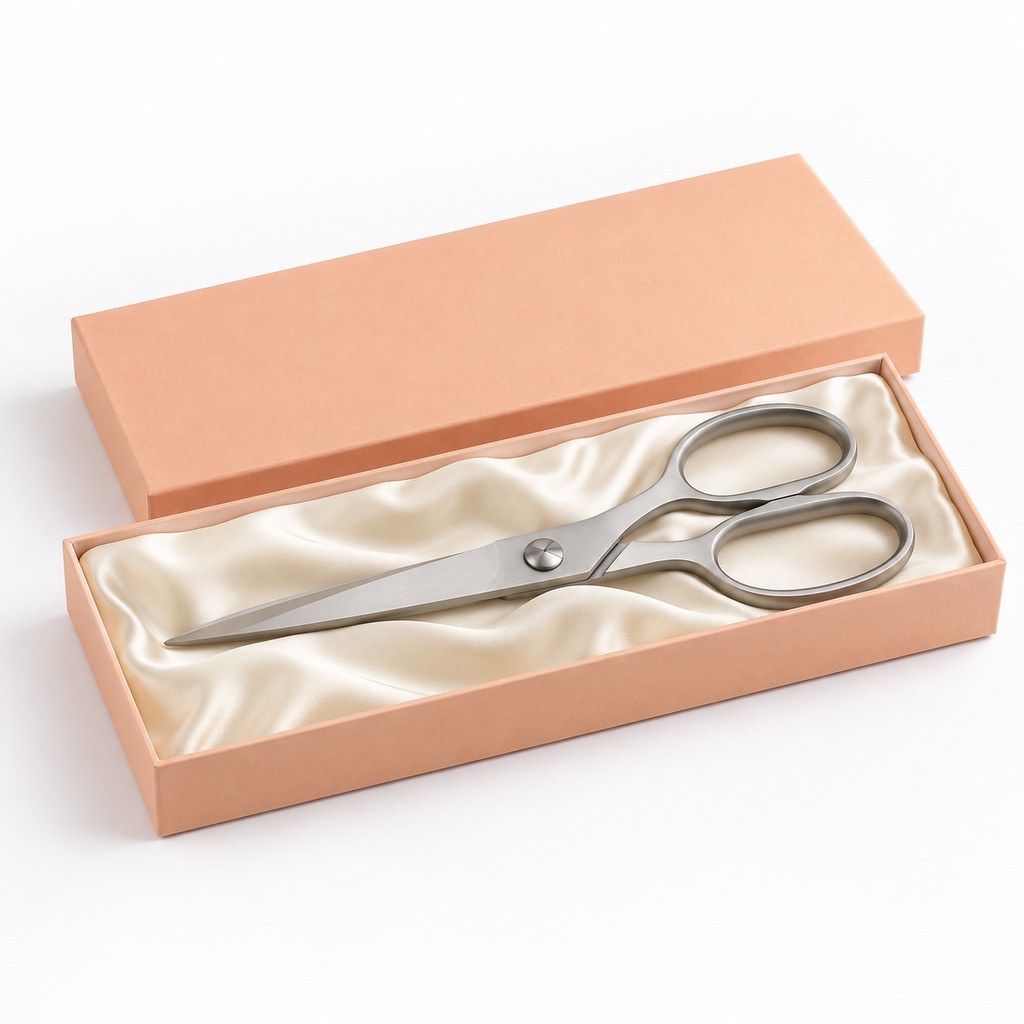
The diagonal of a 19 x 9 tray runs about 21 cm, and that number quietly decides half the jobs this box gets. A 20 cm tool cannot lie flat across a 9 cm width; it can only lie along the length. Once the length is there, the tool stops being a diagonal problem and becomes a straight-line one, which is the easy kind to solve.
Two practical consequences:
- There is one axis of movement, not two. The item slides end to end instead of wandering sideways, so whatever resists it only has to resist one direction.
- The wall does the locating. At roughly 3.2 cm of clear height, a closed pair of shears or a folding knife sits under the rim rather than pressing on the lid panel.
Match the same volume in a square and you get about 13 x 13 cm. It holds the tool. It holds it on the bias, with corners of empty board either side, and the buyer sees those corners the instant the lid comes away.
Three Bands On The Side
The strip along the bottom is the part buyers query, so here it is without ornament.
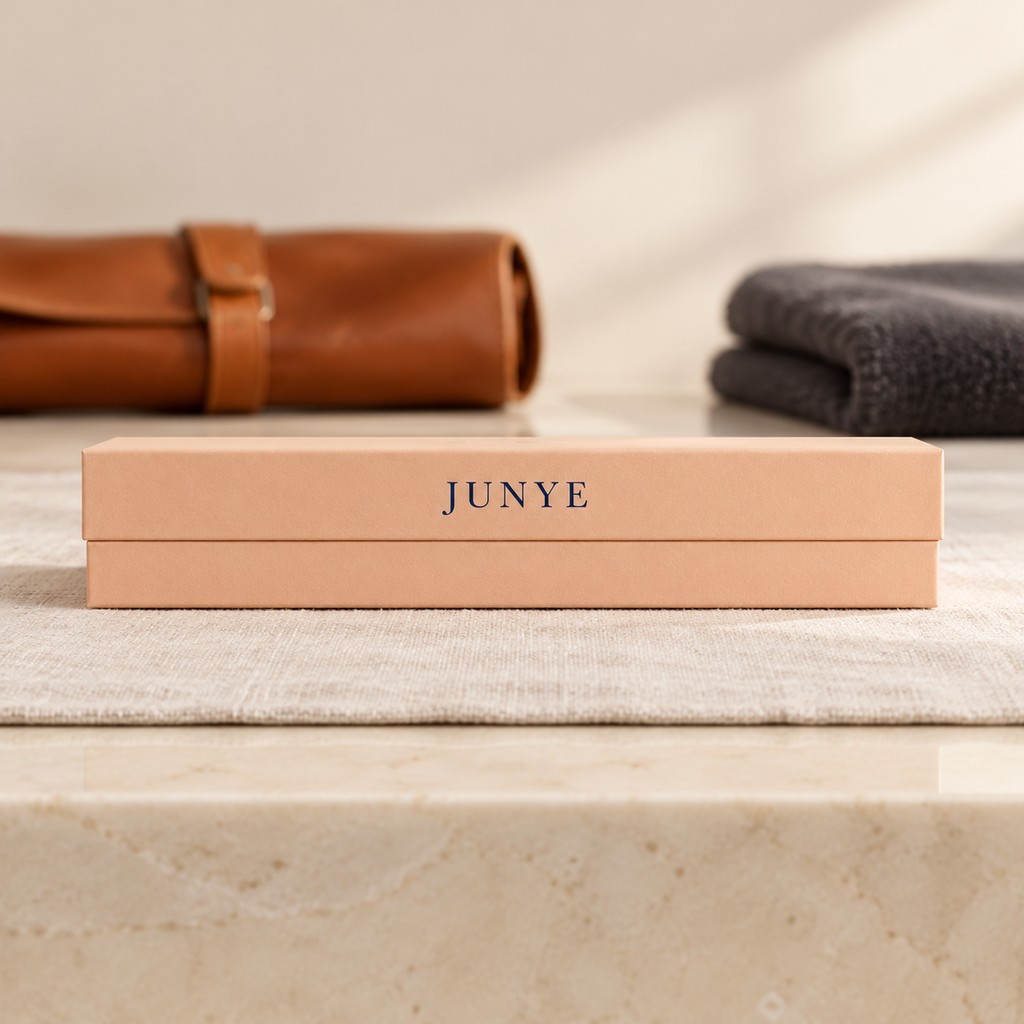
The tray’s opening is covered. The lid closes over it fully. What remains in view under the skirt is the lower outer wall of the tray – the height the skirt never reaches. Nothing is open, nothing is missing; the strip is a proportion.
It earns its place three times over:
- fingers go under the skirt instead of hunting for a seam
- the closed box stops reading as one solid slab
- the tray can take a different colour later without a printed band being glued on
Two marks come with the process and should be expected rather than reported as faults: a soft shadow under the lip, and a narrow sliver of wrap inside the lid mouth where the paper turns inward.
How The Corner And The Step Are Formed
Each corner starts as a scored board, not a folded one. The score is cut away in a V, the panel is turned a right angle on that line, and the result is an edge rather than a curve. Only then is the paper laid over the whole shell, worked into the mouths, and pressed down.
Working in that order is what keeps the step crisp. Paper that goes on after the corner is formed follows the profile instead of spanning it, so the line stays a line on all four sides and never slumps into a ramp. The lip is set while wrapping, and its 2.5 mm is the reason a photograph reads the step without the lid looking like a separate cap.
The Lining: A Sheet, Not A Tray
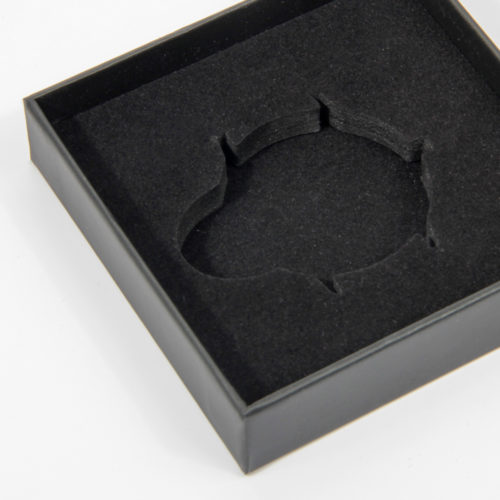
Inside, there is no foam block and no compartment. The tray holds ivory satin, cut as a single sheet, worked into the corners and left to fall where it wants. Whatever you lay on it presses a shape into the cloth, and the cloth throws light back up at the item.
That is the trade:
- Presence. The item sits in a lit setting rather than on a surface.
- Contact. Metal and lacquer meet fabric, not board.
- No grip. Cloth does not hold anything down. A heavy piece will move in transit; that is a job for an insert, not a lining.
What Fits, And What Does Not
The shape was drawn for things that are long and shallow. What has gone into it so far:
- salon shears, straight or offset, plus thinners
- manicure and pedicure sets, cuticle tools, straight razors
- craft knives, folding knives, paring and utility blades
- award cards, commemorative cards, certificate folders
- slim tool rolls laid flat along the length
Where it stops:
- Past about 1 kg, cloth is the wrong interior; ask for a hard insert and a heavier board.
- Pieces that must not meet need separated compartments – EVA, sponge or EPE, not this lining.
- Anything wet needs its own sealed vessel. Paper is not a barrier.
- Past 19 cm, order a longer box. Do not lay the item on the bias.
When To Add An Insert
Three signals that a sheet of satin is the wrong answer:
- the piece is heavy enough to shift when the shut box is tipped
- it has a point or an edge that must never meet the wall
- two or more pieces travel together and must arrive apart
Any of those, and moulded EVA, sponge, EPE or a folded paper tray replaces the cloth. The outside of the box stays as drawn; the inside is cut around the item. Decide before the sample, because the insert sets the interior height the sample is built to.
Custom Sizes And Options
Every dimension is made to order, and the structure survives the change: when the height moves, the skirt and the step are recut to suit it rather than stretched by eye.
| To change | What happens |
|---|---|
| Base | any length and width, half-lid ratio kept |
| Height | taller for a fat handle, shallower for cards |
| Paper | any colour to Pantone; blush peach is the stock here |
| Decoration | foil, emboss, spot UV, screen print, or your mark on the lid |
| Interior | ivory satin standard; flock, EVA, sponge, paper tray, compartments on request |
| Volume | 300 pcs at this size, 500 pcs if the size changes, 1000 pcs for new tooling or a spot colour |
Quality
The factory behind this box has been making rigid paper boxes in Guangzhou since 2004, under ISO 9001:2015, certificate ZYC24Q00141R1S. Its scope covers paper boxes and paper bags.
Food-contact inner packaging sits outside that scope, and this box is not offered for it.
What We Need Before Quoting
Send four things and the reply is a number, not a range:
- length of the item and its thickness, taken as it will be packed
- whether it will be carried or only displayed – that single answer decides cloth or insert
- the artwork, vector, and how many colours or whether it foils
- a colour reference, ideally a Pantone code
Photographs help with finish and proportion. They cannot stand in for the two measurements, because no photo gives the thickness at the widest point of a handle.
Related Reading
- Scissors packaging box: the 16 x 8 x 3.5 cm version, drawn around a single pair.
- Half lid packaging box: how a half-depth lid is told apart from a full one.
- Long flat gift box: why the footprint ratio, not the volume, decides what fits.
- Flat scarf box: a long flat box holding something soft rather than something edged.