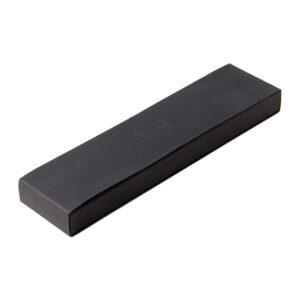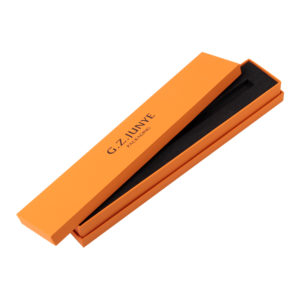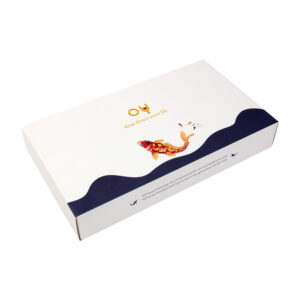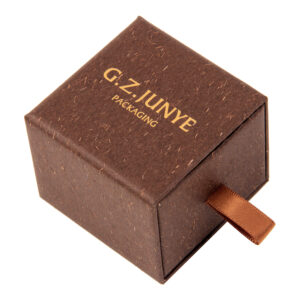
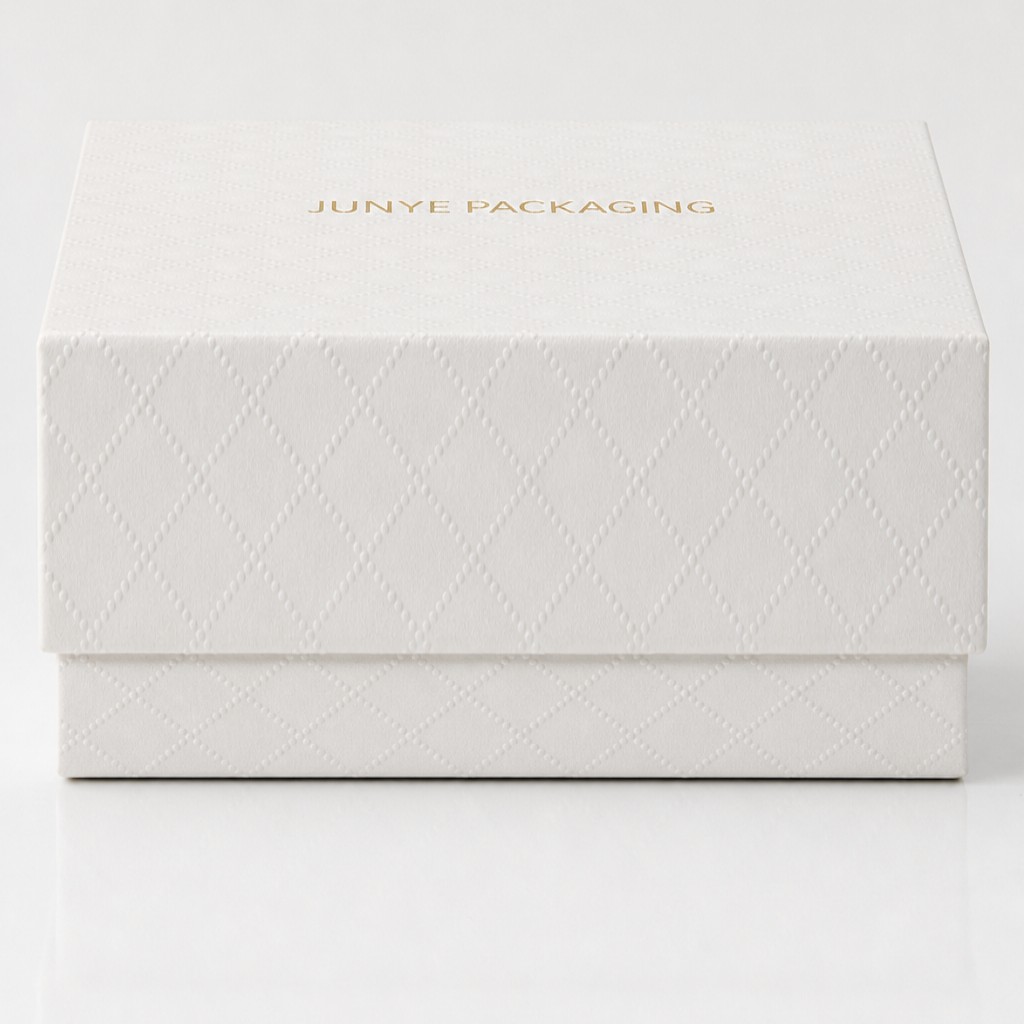
A two piece lid box can close in three ways: the lid runs to the table, the lid stops partway, or a separate piece inside the base does the closing. This one stops partway. On a 7 x 7 x 3.5 cm box the skirt covers about seven tenths of the height and the lower 27% of the base stays visible, so the box closes with a step rather than a flush seam.
A Lid That Covers Seven Tenths
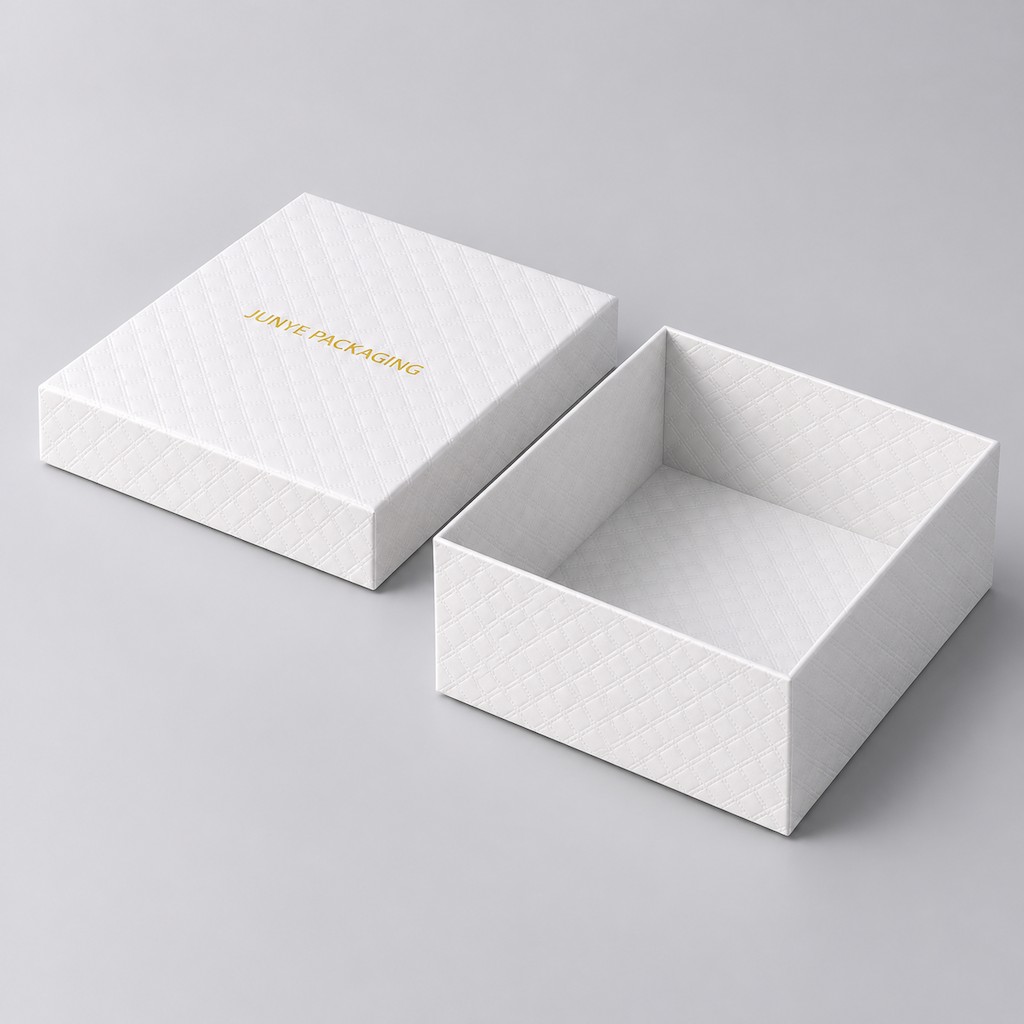
Two pieces: a tray and a shell. The shell has a top panel and four skirt panels and no bottom board. It drops over the tray, and because its inner dimension is slightly larger than the tray’s outer dimension, it stops where the skirt ends, not where the tray does.
| Closed height | Share | What it is |
|---|---|---|
| Lid skirt | about 73% | the four walls of the shell, about 25.6 mm on a 3.5 cm box |
| Base showing | about 27% | the lower part of the tray wall, about 9.4 mm |
| Step | at 73% | where the skirt’s lower edge stands clear of the tray wall |
What a Short Skirt Buys You
A visible base. That is the whole point, and it is worth being precise about why it helps. A box that runs to the table reads as one block, and the eye has no place to rest at the bottom. A box with a quarter of its base showing reads as a lid on a tray, and the tray looks like it is holding something up.
It also gives your hand somewhere to go. On a 7 cm box the skirt’s lower edge is the grip: you hold the base and lift the lid, and the two do not need a notch, a ribbon or a thumb cut to separate.
Three Planes on the Side, One Step
Shut, the side shows the lid’s top face, the skirt, and the exposed base, with a small step where the skirt’s edge stands proud. The step is not a printed line: it is the lid being wider than the base, so its lower edge has nothing to sit against and throws a shadow instead.
That shadow is the reason the joint reads cleanly even in a flat light. A flush joint on a matte white box disappears in a photograph; a step gives the eye an edge to find.
Why Not Just Make the Skirt Longer
You can, and then it becomes a different box. Push the skirt down to the table and the base disappears, the box reads as a single block, and the lid needs a tighter fit because there is no visible ledge to hold. That is the full-depth variant, and it is the right answer when the box has to look monolithic.
Stop the skirt earlier and you get the opposite effect: more base, less lid, and a box that reads as a shallow tray with a cover. The useful range is narrow, roughly between two thirds and three quarters of the height, and 73% sits in the middle of it.
Where the Short Lid Fails
Two places. If the product is taller than the cavity, a longer skirt does not help, because the skirt is outside the tray and adds no depth; you need a taller tray instead. And if the box is stacked in a carton, the exposed base is the part that takes the wear, so a printed base will scuff before a printed lid does.
For a box that will be handled a great deal, that is worth knowing at the artwork stage: put the mark on the lid, keep the base plain, and the wear lands on an unprinted surface.
What It Changes for Printing
The lid is one continuous surface from the top face round the skirt, so a wrap or a pattern can run across the edge without a break. The base is a separate panel below the step, which means it can carry a second colour without touching the lid, or be left blank.
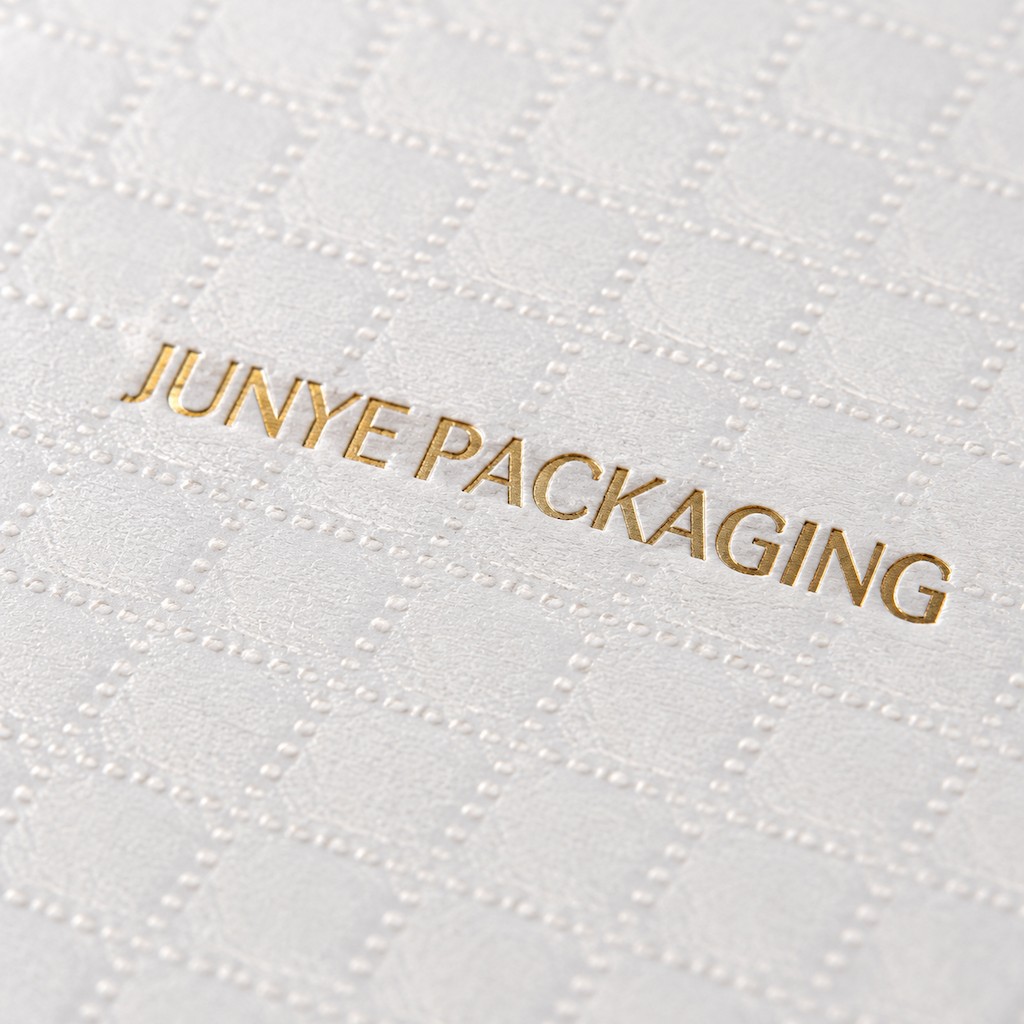
On this sample the lid carries a fine diamond emboss and a single line of gold foil, and the base is plain white. That split is the simplest way to look considered: one decorated plane, one quiet one, and a step between them doing the separating.
Three Things to Send With the Drawing
Send the product outline with its thickest point, the skirt percentage you want (or say “like this one” and we will hold 73%), and the artwork if the lid is printed. The first fixes the depth, the second fixes the proportion, the third only affects the lid face.
Sampling takes 5 to 7 days, and a die cut drawing and 3D mockup come back free in 1 to 3 days. The box itself is on the half lid packaging box page, and the rest of the range sits under lid and base boxes.