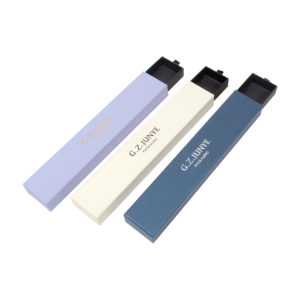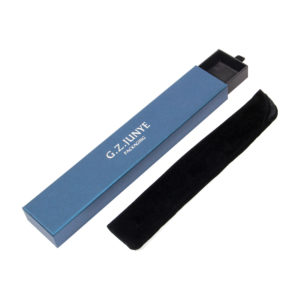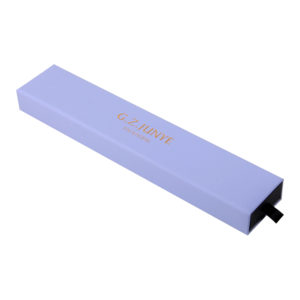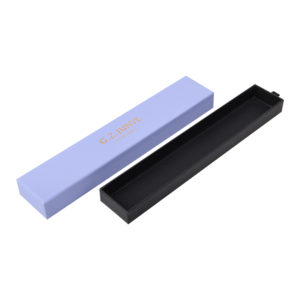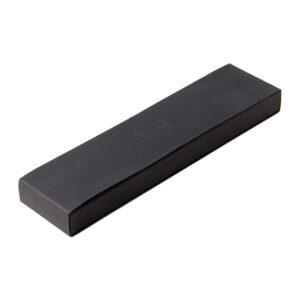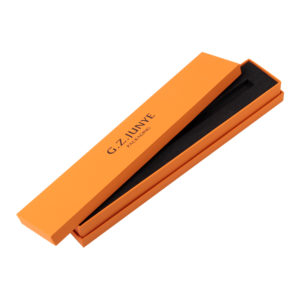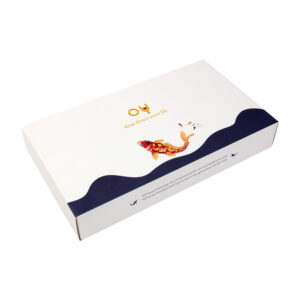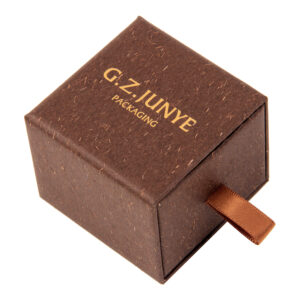
The demand for the grammage (measured in gsm, grams per square meter) of paperboard materials used in common paper packaging varies significantly across different industries. Grammage directly affects the thickness, strength, and applicable scenarios of the paperboard. Industries select different grammage ranges based on product characteristics, protection requirements, cost control, and environmental considerations. For instance, Jewelry Packaging Boxes differ markedly from many other special paper boxes in their specifications. Below is a detailed analysis: Characteristics of Common Paper Packaging for Electronics: High-value products require shock resistance, compression resistance, and protection against transportation damage. Typical Grammage: 1.Outer boxes typically use 300-500gsm grey-backed whiteboard paper or kraft paper, paired with corrugated board liners (e.g., B-flute/E-flute). 2.Precision instruments may adopt multi-layer structures with higher grammage facing paper (e.g., above 400gsm) and additional cushioning materials. The demand characteristics for common paper packaging in cosmetics and luxury goods: Emphasize high-end texture, exquisite printing, and tactile feel. Typical basis weight: 1. High-end gift boxes often choose special paper with a basis weight of 300-600gsm (such as tactile paper, pearlescent paper), and even use composite processes (hot stamping, UV, etc.). 2. Liners or drawer boxes may use lightweight paperboard with a basis weight of 250-350gsm, balancing strength and lightness.

In the production process of custom paper packaging boxes, the process of registration is a core link that determines the quality of the finished product. However, unlike special paper boxes, the precision of registration directly affects the appearance, functionality, and brand value of the packaging box. Due to the complexity of factors such as paper characteristics, equipment precision, and process sequence, registration deviation issues are common. Many Jewelry Packaging Boxes also choose to register multiple processes to achieve a desired design effect, and then pair with pouch bags to highlight the theme. This article will systematically analyze from three aspects: common problems, technical difficulties, and optimization directions. 1.The core difficulty of process positioning is the accumulation of errors in multi-process superposition. For example, in the three processes of printing → hot stamping → die-cutting, if there is a 0.2mm deviation in the printing positioning marks, after subsequent high-temperature hot stamping (paper shrinkage) and die-cutting pressure deformation, the error may be magnified to more than 0.5mm. Key parameters: paper expansion rate (usually offset paper is ±0.3%, cardboard is ±0.5%), equipment repeat positioning accuracy (high-end die-cutting machines can reach ±0.1mm).

In the special paper box industry, optimizing the physical structure of the craft design can indeed significantly enhance the aesthetics and visual appeal of the boxes, and many Jewelry Packaging Boxes are gradually learning in this direction. Innovations in physical structure not only enhance the functionality of the packaging but also convey brand value through the unique shape, sense of hierarchy, and interactivity of Custom lid paper boxes. Here are several common physical structure processes and their impact on aesthetics: 1. special paper box Die-Cut Shapes Design Principle: By using die-cutting technology to cut paper boxes into non-standard shapes (such as circles, polygons, biomimetic forms, etc.), it breaks the monotony of traditional square boxes. special paper box Aesthetic Appeal: Uniquely shaped special paper boxes capture visual focus, such as heart-shaped gift boxes and petal-edged designs; integrating product features into unconventional structures (like the curve-fitting design of a wine bottle box) enhances overall harmony; showcasing the contents through die-cut windows or three-dimensional structures adds a sense of mystery or direct visibility. 2. Folding and Interlocking Structural Principles: Utilizing the foldability of paper, complex three-dimensional structures are achieved through designs such as interlocking, locking, and flap mechanisms.

The cost of color difference 0.5 in cosmetic packaging boxes: Data from the International Color Association shows that 76% of consumers will question the quality of the product due to packaging color differences, and 63% of buyers will list color difference standards for printing paper boxes as the top reason for terminating cooperation. Traditional packaging suppliers often take ΔE≤3 as the industry standard, but this is exactly the critical value that is visually discernible. We are well aware that true brand protection requires advancing color difference control to a professional level standard of ΔE≤1.5, which is the key turning point for an international jewelry group to switch to us after three consecutive batches of paper jewelry box returns. Three major technological innovations are reshaping printing standards: 1. AI Pre-coloring System: During the proofing stage, intelligent algorithms predict the color performance of different materials and ink combinations, reducing the traditional seven-color adjustments to just two. A perfume brand’s Perfume box has shortened the new product launch cycle by 40% with this technology. 2. Nano-level Ink Path Control: Utilizing a high-precision ink supply system, it achieves ink volume control of ±0.2μl, ensuring color consistency in prints of up to one million units.

There are various ways to custom logo jewelry box, and the key is to cleverly incorporate brand elements into the design of the jewelry packaging box while maintaining both aesthetics and practicality to attract consumers. Many custom jewelry boxes think that simply attaching their logo to the surface of the box is enough, but in fact, it is not that simple. Here are some common suggestions for logo display in jewelry paper packaging: 1.Box Design: Foil Stamping (Gold/Silver): The logo is embossed on the surface of the jewelry box using gold or silver foil stamping techniques, which not only looks high-end but also enhances the recognizability. Embossing/Debossing: The logo is presented in a raised or recessed form, adding a sense of three-dimensionality and improving the texture of the jewelry box. 2.Color Matching: Brand Colors – Select colors that match the brand logo as the main color for the jewelry box to enhance brand recognition. 3.Packaging Design: Outer Packaging: Print the logo on the outer packaging of the jewelry box so that the brand image can be displayed even before it is opened. 4.Detail Processing: Metal Accessories: If the jewelry box has metal accessories, such as locks, clasps, etc., the logo can be engraved on these accessories.

Behind many luxurious jewelry packaging boxes, there are numerous labels, and ECO friendly jewelry box is one of them. However, can these so-called ECO jewelry boxes really be recycled? Is there any feasibility? In fact, at present, many paper jewelry boxes on the market are recyclable, which is the result of the unremitting efforts of many environmentalists. Here are some key points about recycling jewelry paper packaging: 1. Recyclability: Paper boxes are primarily made from pulp, which is a renewable resource. Under the right conditions, paper boxes can be recycled and turned into new paper products. 2. Recycling Process: The recycling process for paper boxes includes collection, sorting, cleaning, pulping, and remanufacturing. This process can reduce the demand for new pulp, thereby reducing deforestation. 3. Environmental Impact: Recycling paper boxes helps to decrease the amount of waste in landfills and reduces environmental pollution. Moreover, compared to producing new paper boxes, recycling paper boxes requires less energy, which contributes to the reduction of greenhouse gas emissions. 4. Economic Benefits: Recycling paper boxes can provide raw materials for recycling companies, reducing production costs, and at the same time creating job opportunities.

Currently, ECO jewelry boxes are one of the core demands of many merchants. However, the choice of paper thickness for custom jewelry boxes depends on various factors, including the purpose of the paper jewelry box, the required load-bearing capacity, durability requirements, and cost considerations. Here are some common paper thickness options for Jewelry Packaging Boxes: 1. 250gsm (grams per square meter): This is the thickness for thinner paperboard, suitable for packaging light items such as cosmetics, small jewelry, etc. Paperboard boxes with 250gsm are lighter and less expensive, but have limited load-bearing capacity. 2. 300gsm: This is the medium thickness paperboard, suitable for packaging most everyday goods, such as food, electronic products, etc. Paperboard boxes with 300gsm offer good protection and durability while maintaining a reasonable cost. 3. 350gsm: This thickness of paperboard is suitable for products that require additional protection and load-bearing capacity, such as heavier electronic products, home furnishings, etc. Paperboard boxes with 350gsm are more robust and durable, but the cost is relatively higher. 4. 400gsm and above: For packaging that requires very high load-bearing and protection, such as heavy machinery parts, large home furnishings, etc., paperboard with 400gsm or thicker may be chosen.

The V-groove, a seemingly insignificant detail in Jewelry Packaging Box design, actually plays a crucial role. The V-groove refers to the V-shaped notches cut along the edges of the cardboard material inside the packaging jewelry box. The main purpose of this design is to create a sharp and precise fold line when folding, enhancing the structural stability and aesthetic appeal of the packaging box. This design is often reflected in the design of ribbon jewelry boxes. In the process of making packaging boxes, the design and cutting precision of V-grooves directly affect the quality of the final product. A well-designed V-groove can ensure that the edges of the box are neat and tight after folding, with no excess paper overlap or gaps. This not only enhances the overall appearance of the packaging box but also makes it more durable and sturdy. In addition, V-grooves can reduce the stretching and tearing of paper during the folding process, extending the service life of the packaging box. This can also be considered an ECO jewelry box. The depth and angle of the V-groove are also factors that need to be considered in the design.

In today’s world where environmental awareness is increasingly valued, the eco-friendliness of paper jewelry boxes has become a topic of common concern for both consumers and merchants. As one of the main forms of jewelry packaging, how environmentally friendly are jewelry packaging boxes? With so many products on the market claiming to be ECO jewelry boxes, do they really meet environmental requirements? Firstly, the primary material of paper jewelry box is paper, which is made from wood, a renewable resource. Compared to non-renewable materials like plastic, paper jewelry box have an advantage in terms of the sustainability of their raw materials. However, just because a paper box is made of paper does not mean it is entirely environmentally friendly. In the production process of paper boxes, some chemical additives may be used, such as waterproofing agents and brighteners. If these chemicals are not handled properly, they could cause environmental pollution. Therefore, choosing paper jewelry box that do not use or use fewer chemical additives is an important way to enhance the environmental friendliness of paper boxes. In addition, the recycling and processing of paper boxes are also important factors affecting their environmental friendliness.

Last month, a Turkish jeweler came to our office. He wanted to consult on some issues regarding ECO jewelry boxes. He had custom-made a batch of necklace boxes from another packaging supplier. However, when his QC inspected the goods, they found that a significant number of the jewelry packaging boxes had issues with their surfaces. The color of the paper covering was not opaque enough to hide the color of the underlying material, which would show through as a faint gray or black. In simpler terms, the color of the paper he used could not effectively conceal the gray or black of the inner material. We immediately concluded that this was an issue that should not have arisen. Even for larger necklace packaging boxes, as long as the design is reasonable, the material quality is up to standard, and the craftsmanship is appropriate, such mistakes should not occur. Therefore, we took his box and conducted a study, finding that there were indeed problems in every step, to varying degrees. After careful research, we agreed to provide him with a solution and promised that such errors would not happen again.